

Gluten-Free Dairy-Free But Still Struggling? 9 Common Reasons
You cleared out the cupboards. You started reading labels. You’re trying to be careful. And still… this feels harder than you expected. Maybe you still don’t feel quite right and still getting symptoms. Maybe meals feel more complicated, less satisfying, or harder to stay consistent with. Or maybe you’re just exhausted by how much thought this requires.
If that’s where you are, I want to say this first: you’re probably not doing a bad job.
More often, what’s happening is that you’ve run into a few very normal mistakes, the kind everyone makes at first, especially when nobody really explains how to make this work in real life.
Because gluten-free and dairy-free eating is not just about removing foods. It’s also about learning a new rhythm around meals, shopping, cooking, eating out, and expectations.
And that part takes time.
If you’re brand new to this, I’d start with Gluten-Free and Dairy-Free 101: Starting Point first.
And if you’ve already read that and you’re thinking, yes, but why does this still feel so hard? This post is for you.
1. You’re trying to replace everything instead of rethinking your meals
This is one of the most common mistakes in the beginning.
You go gluten-free and dairy-free, so the next logical step seems to be finding a replacement for everything: bread, pasta, butter, cheese, yogurt, crackers, snacks, cereal, desserts, all of it.
And then what happens?
Half of it tastes disappointing. Some of it is weirdly expensive. And instead of feeling relieved, you feel like you’re eating sad versions of foods you used to enjoy.
The problem is not wanting substitutes.
The problem is trying to rebuild your old way of eating piece by piece, instead of stepping back and asking: what meals are already naturally gluten-free and dairy-free?
That question usually makes everything easier.
Think rice bowls. Chili. Bean soup. A Thai curry with coconut milk. Roast chicken with potatoes and vegetables. Stir-fries. Eggs with avocado and fruit. Salmon with sweet potato and salad.
These meals do not feel like “special diet food.” They’re just real food.
That’s a much calmer place to begin.
Once you have a few naturally gluten-free, dairy-free meals that you genuinely enjoy, then you can add in substitutes where they actually help.
If meal-building still feels fuzzy, see How To Build a Healthy Balanced Plate.
2. You’re relying too much on specialty products
This one often sneaks in right after the first mistake.
Once people realize there are gluten-free and dairy-free versions of so many foods, it’s easy to start depending on them too much. Gluten-free bread. Dairy-free cheese. Packaged snack bars. Gluten-free crackers. Free-from cookies. Plant-based desserts.
Some of those can absolutely be helpful.
But if too much of your diet starts revolving around packaged substitutes, things often begin to feel more expensive, less satisfying, and strangely less nourishing.
A gluten-free label doesn’t mean a food will keep you full and a dairy-free label doesn’t mean the product is nourishing.
And something being free from gluten and dairy doesn’t automatically make it a better everyday choice.
This is where people often say, “I’m doing all this work, so why do I still feel hungry?” or “Why does this still feel so unsatisfying?”
Usually, the answer is that too much of the diet is built around products instead of meals.
The fix is simple, even if it takes practice: let whole foods do the heavy lifting.
Build around proteins, vegetables, fruit, rice, potatoes, beans, lentils, eggs, gluten-free grains, nuts, seeds, and healthy fats. Let the specialty products fill in the gaps, not become the entire foundation.
3. You’re not fully clear on why you’re doing this
This matters more than people think. Not everyone goes gluten-free and dairy-free for the same reason. And not everyone needs the same level of strictness.
If you have celiac disease, your relationship with gluten needs to be very different from someone doing a short elimination trial because they suspect a sensitivity. If you have a dairy allergy, that is different from lactose intolerance. If you’re doing this because of digestive symptoms, brain fog, or skin flare-ups, that’s different again.
When you’re not clear on your reason, two things tend to happen:
Either you become stricter than necessary and burn out fast (becoming hyper-vigilant around food, overchecking, overthinking, feeling anxious in social situations, and staying so tense about “getting it right” that the diet starts draining you emotionally and physically instead of helping you feel better). Stress can make food reactions feel worse.
Or you stay too relaxed for your situation and keep getting symptoms that leave you confused and discouraged.
Knowing your “why” helps you answer important questions like:
- How strict do I really need to be?
- Do trace amounts matter in my case?
- Is this forever, or am I learning something for now?
- What kind of results should I realistically expect?
Clarity makes this feel a lot less emotionally exhausting.
4. You don’t yet know all the hidden names for gluten and dairy
This is one of the most frustrating stages. You’re reading labels. You’re trying to be careful. And somehow, things still slip through.
That usually happens because gluten and dairy do not always show up under obvious names.
Gluten can hide in ingredients like malt, malt extract, malt vinegar, semolina, durum, bulgur, farro, spelt, kamut, triticale, and regular soy sauce. It also shows up in sauces, soups, seasoning mixes, deli meats, marinades, and foods thickened with wheat-based ingredients.
Dairy can hide under names like casein, sodium caseinate, whey, whey protein, milk solids, and milk powder. It can also sneak into non-dairy creamers, protein bars, chocolate, deli meats, and processed snack foods.
This is the part that makes beginners feel like gluten and dairy are suddenly everywhere.
But it does get easier.
At first, label reading feels slow and annoying. Then, little by little, you stop starting from zero every time. You begin recognizing your red flags. You remember which brands are safe. Shopping gets faster and meals get easier.
This is also why it helps to have a few reliable convenience foods on hand.
5. You may be overlooking cross-contact
Sometimes it’s not the food itself that’s the problem. It’s what touched the food before you ate it.
If you have celiac disease, a dairy allergy, or a strong sensitivity, cross-contact can matter more than you think.
A shared toaster is a big one. So is a pasta colander. Wooden spoons, cutting boards, butter dishes, shared spreads, and prep surfaces can also be part of the problem.
This does not mean everyone eating gluten-free and dairy-free needs a separate kitchen.
But if you’re being careful and still reacting, it may be worth looking beyond ingredients and checking your setup.
Sometimes a few small changes help more than expected:
- a separate toaster
- a separate colander
- one designated cutting board
- separate condiments or spreads
- clearer prep habits in a shared kitchen
For people doing this for general wellness, this may not be a big issue at all. For celiac disease and true food allergy, it matters a lot more.
6. You don’t have a real plan for breakfast and snacks
Lunch and dinner are usually easier to rebuild because it focuses around a protein, vegetables, and a starch. But breakfast and snacks are where people often relied on convenience foods before: toast, cereal, yogurt, crackers, cheese, bars, pastries, quick on-the-go things.
Once those are gone, the whole day can start feeling stressful. And when breakfast feels hard, everything feels harder.
That’s why I think breakfast and snacks deserve way more attention than people give them.
It helps to choose a few very easy defaults and repeat them:
- omelette, frittata, potatoes
- gluten-free oats
- chia pudding
- smoothies
- leftover dinner
- hummus with vegetables
- nuts and fruit
- rice cakes with nut butter
- boiled eggs
- simple homemade bars or muffins
Helpful GF/DF Breakfast Ideas:
- Gluten-Free Dairy-Free Breakfast Ideas (Part 1: Home Rotation)
- GF Df Breakfast On the Go (Make-Ahead +Work/School Friendly)
- Vegan Gluten-Free Breakfast Ideas (Egg-Free)
For Snacks:
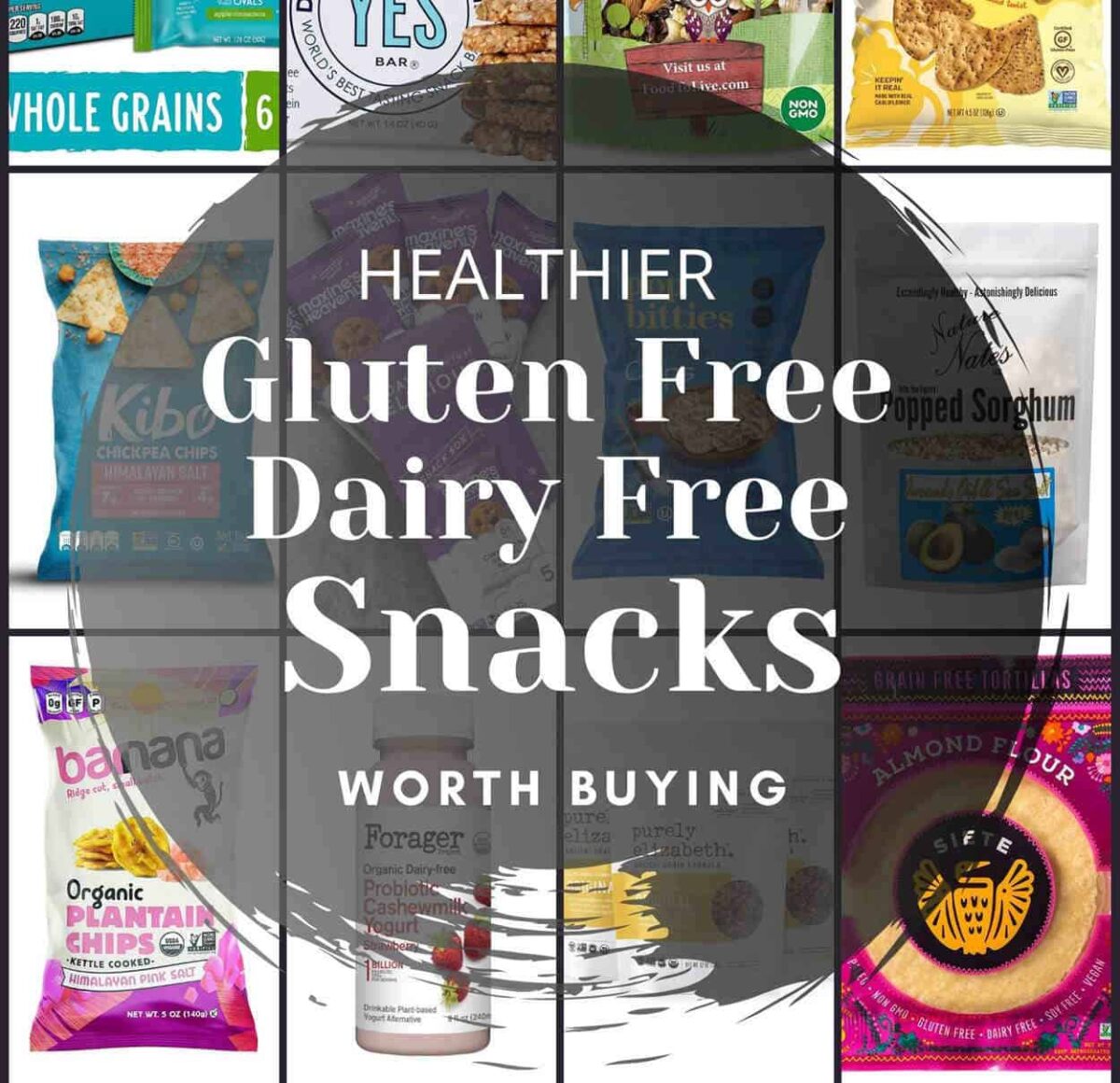
See 50 Gluten Free Dairy Free Snacks Worth Buying: Video or Wholesome Gluten Free Dairy Free Snack Recipes.
7. You’re making social situations harder than they need to be
This one is so common. A lot of people try to “be easy” about it. They say nothing before going somewhere. They show up hoping there will be something safe. They apologize too much. They nibble around the edges of the meal and go home hungry.
Or they stay tense the entire time, mentally scanning the table and wondering what’s safe.
That is exhausting. A much better approach is simple, calm communication.
If you’re going to someone’s house, you can say:
“Just so you know, I’m gluten-free and dairy-free right now. Don’t worry about me, I’m happy to bring something.”
If you’re eating out, keep it clear and simple: “I need to avoid gluten and dairy for health reasons.”
That usually does the job without making it dramatic.
And over time, another shift happens too: you stop making the food the center of the whole event. In the beginning that’s hard, because you’re still learning. But once you have a few safe strategies, you can relax more and remember that the occasion is about the people, not just the menu.
8. You expected to feel better faster
A lot of people quietly expect that once they remove gluten and dairy, they’ll feel dramatically better almost immediately. Sometimes that happens.
But sometimes it doesn’t. Sometimes you’re still accidentally getting exposed. Sometimes your meals are not balanced yet. Sometimes your body needs time to adjust. Sometimes you’re still learning what actually works for you. And sometimes the issue is bigger than gluten and dairy, because digestion is not controlled by food alone.
And when symptoms have been going on for a long time, improvement can be slower and less linear than people hoped.
That doesn’t always mean the diet is not helping. It mean your nervous system is adapting too, it takes time until it feels safer. And improvement happens when we transition from “alert mode: fight or fligh” to “relax mode: rest and digest”.
Sometimes the first sign of progress is not a huge physical change, but a change in how you perceive things. You mind is more at ease. Sometimes it’s simply that you finally know what to eat for breakfast, you’re less confused at the store, and your symptoms are becoming easier to track.
Try not to decide too quickly that “this isn’t working.” Give yourself enough time to settle into the routine before judging the entire process.
9. You’re focusing so much on elimination that nourishment gets lost
When you first go gluten-free and dairy-free, most of your attention goes to avoiding the problem foods. But after a while, you may realize that removing gluten and dairy does not automatically mean your meals are actually nourishing.
They can become too light, too snacky, too repetitive, not satisfying enough or just not nourishing enough. And that’s when people start feeling deprived, hungry, or weirdly low-energy even though they’re technically eating “cleaner.”
A few gluten-free crackers is not a proper snack/meal. A fruit-only smoothie may not hold you long. A salad with almost no protein or fat will often leave you hungry again an hour later. And if too much of your food comes from substitutes made with refined starches, fillers, gums, additives, artificial flavors/colors or low-quality oils, your body may not feel especially supported by that either. Our gut health depends on what we eat.
This is where I think it helps to ask a different question. Not just, Is this gluten-free and dairy-free? But also,
- Is this real food?
- What is this food actually made of?
- How was it grown, raised, processed, or stored?
- How is this going to affect my gut health?
- And will it actually nourish me or just satisfy my taste buds?
That can mean choosing more whole foods, better-quality ingredients, shorter ingredient lists, less packaging, fewer additives, and foods that still feel close to their original form. Things like good-quality proteins (organic, pasture raised/ meats and eggs), vegetables, fruit, beans, roots and tubers, proper fats, and gluten-free whole grains that still bring some substance to the plate.
Removing gluten and dairy is only part of the picture. What matters just as much is whether the food you’re eating now is nourishing enough. Here’s a guide to choosing anti-inflammatory quality foods.
The common thread
If there’s one common thread running through all of these mistakes, it’s this: the focus often stays too much on what’s being taken away.
Remove the bread. Remove the milk. Remove the snacks. Remove the old favorites. Then hope the rest somehow works itself out.
That mindset is understandable, especially in the beginning. But when everything revolves around avoiding, removing, and restricting, the whole way of eating can start to feel emotionally heavy and hard. You feel like the food has become one long stress-management task.
What usually helps is shifting your attention toward what you’re adding in.
- Better meal structure.
- More nourishing foods.
- More filling breakfasts.
- More reliable snacks.
- More meals that feel easy and familiar.
- More confidence in what works for your body.
That is when this starts to feel less like a constant list of “no’s”. You move from a restrictive mindset into something more supportive, a rhythm you can actually live with.
That shift doesn’t happen overnight. But once it starts happening, this begins to feel much more normal.
Related: Restore Rhythm for Gut Healing: The Daily Routine That Calms Symptoms
What to do instead
If gluten-free and dairy-free eating still feels hard, simplify.
Start here:
- choose 5 to 7 meals you can repeat easily
- pick 3 breakfasts that work and keep them on rotation
- keep 3 safe snacks on hand at all times
- build from whole foods first
- use substitutes only when they truly help/ or necessary
- learn the most common hidden ingredient names
- get clear on how strict you really need to be
- make your kitchen setup easier if cross-contact matters (if needed)
- focus on meals that actually satisfy you
That is what makes this sustainable. Not endless product hunting or trying to become an expert overnight.
Start with fewer decisions, better defaults, and a simpler rhythm.
Read next: The Hidden Rhythms That Run Your Health
If You’re Tired of Conflicting Nutrition And Health Advice + Want a Simpler Approach To Healthy Eating and Living
Join My Newsletter 👇
I share insights on food quality, gut health + whole-food recipes that support long-term health, without strict rules or complicated meal plans. And much more including holistic health coaching tips beyond nutrition!
Plus, you’ll get access to exclusive resources I don’t always share on the website.
If this still feels harder than it should, you’re not alone.
Most people are not struggling because they are bad at this. But because they’re trying to learn a whole new system while still feeding themselves, shopping for a household, dealing with cravings, social situations, routines, and real life.
That’s a lot. But it does get easier.
Once you know what to buy, what to cook, what to keep on hand, what actually satisfies you, and how careful you really need to be, gluten-free and dairy-free eating starts to feel less like a constant restriction and more like a rhythm you can actually live with.
Where to go next
If this post helped, these are the most useful next reads:






Disclaimer: The information, including but not limited to, text, graphics, images and other material contained on this website are for informational purposes only and should not be considered to be a specific diagnosis or treatment plan for any individual situation. Seek the direct advice of your own doctor if you have any questions or issues. Please refer to my full disclaimer for more info.