
Can Stress Trigger Food Sensitivities? Why You React to More Foods
Have you ever gone through a phase where it felt like every food suddenly turned against you? Even the “healthy” ones? You start cutting things out, reading every label, eating cleaner than ever, yet somehow your body keeps reacting. It’s frustrating, confusing, and easy to blame the food.
But sometimes, it’s not the food at all!
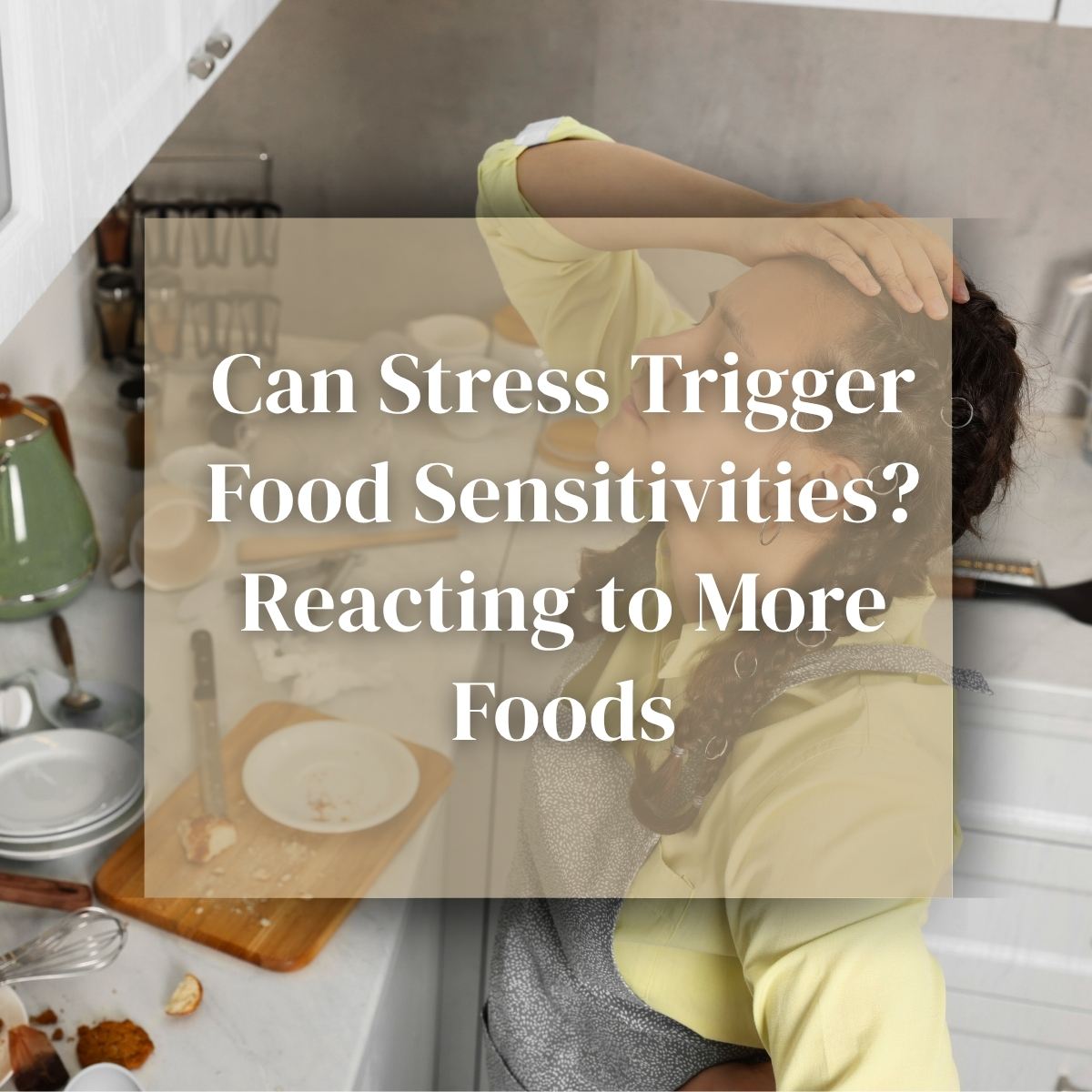
Stress, fear, and constant worry around food can quietly shift your body into a defensive mode where digestion slows, inflammation rises, and sensitivities seem to multiply.
Let’s look at how your mindset shapes these reactions and the simple shifts that helped me personally break out of that cycle of control, fear, and frustration. Because real healing isn’t just about what’s on your plate, it’s also about what’s happening “outside your plate” as well – in your mind.
Every Cell in Your Body Is Listening
When you’re anxious, even your “safe” foods seem to bother you. Science is beginning to explain why. Every single cell in the body listens and responds to the environment , including your inner environment made of thoughts, beliefs, and emotions.
At a biological level, your attitude / emotional tone – is energy, and that energy shapes your chemistry. Stress, fear, and constant vigilance about food can send “danger” signals through your nervous system. Those signals, in turn, tell your DNA which genes to switch on or off, influencing digestion, immunity, and inflammation.
This isn’t a metaphor, it’s how epigenetics works. The environment (including your emotional state) literally programs your genes.
When Worry Becomes the New Allergy
If you’re following a restrictive diet like gluten-free, dairy-free, vegan, paleo, or any elimination plan, you’re probably doing it for good reason. Maybe you’re healing inflammation, balancing your hormones, or calming your gut lining. But what happens when you start worrying about every single ingredient?
That’s when healthy caution can turn into chronic food anxiety.
Your body reads that anxiety as danger, not nourishment.
When your brain senses stress, it activates the sympathetic nervous system (your fight-or-flight mode).
Here’s what happens inside:
- Blood flow is diverted away from digestion toward muscles.
- Stomach acid and digestive enzymes drop – making it harder to break down food.
- The gut lining becomes more permeable, which may increase reactivity.
- The immune system shifts into an alert state, releasing histamine and inflammatory messengers.
- Cortisol (the stress hormone) rises, which can disturb gut flora balance and slow detoxification.
In other words, your body is too busy preparing for danger to properly process food, even the healthiest kind.
Keep Reading: Why A Healthy Diet Migh Not Be Enough For Gut Issues and Autoimmune Conditions.
Can Stress Really Cause Food Sensitivities?
Yes, but indirectly.
Stress doesn’t create gluten or dairy molecules that weren’t there before, but it can make your body react to them more intensely. Here’s how:
- Altered Gut Permeability: High cortisol can thin the gut lining, letting larger food particles slip into the bloodstream. The immune system flags these as invaders, creating sensitivities.
- Histamine Overload: Chronic stress depletes enzymes like DAO that break down histamine, increasing reactions to foods that never bothered you before.
- Microbiome Imbalance: Stress chemistry shifts the gut microbiome, suppressing beneficial bacteria that keep inflammation in check.
- Reduced Detox Efficiency: Your liver’s detox pathways slow down under stress, leaving you more reactive to food chemicals or environmental toxins.
All of this can make it seem like you’ve suddenly developed a dozen new intolerances, when, in reality, your body’s stress response is amplifying them.
Related read: Hidden Symptoms Your Body Isn’t Detoxing Properly – how chronic stress and toxin buildup affect your body’s ability to cleanse.
The Nocebo Effect: When Expectation Creates a Reaction
You’ve heard of the placebo effect: when the body heals when it believes it’s receiving something beneficial.
The nocebo effect is the opposite: when the expectation of harm actually triggers a real physiological response.
In the context of food, it can look like this:
- Reading “may contain traces of gluten or dairy” and feeling your stomach tighten before even tasting it.
- Eating out at a restaurant and mentally bracing for a reaction because “they probably used the wrong oil.”
- Traveling and skipping meals entirely out of fear there will be nothing safe to eat.
- Eating while constantly “waiting for symptoms to show up” instead of enjoying the food in front of you.
- Feeling anxious about social gatherings because you’ll have to explain your dietary needs, so you end up avoiding them altogether.
Your nervous system doesn’t know the difference between a real external threat and an internally imagined one.
If your brain associates certain foods or situations with danger, it sends the same biochemical “fight-or-flight” signals as it would if you were in physical danger. That electrical signal then influences hormones, immunity, and digestion – all the way down to gene expression.
This cascade – adrenaline, cortisol, digestive shutdown, then amplifies symptoms, confirming the very fear that started it. It’s a self-reinforcing loop.
The Epigenetic Conversation Between Mind and Food
Every meal is a dialogue between your environment and your genes.
Epigenetics teaches us that genes aren’t fixed instructions, they’re more like switches waiting for a signal. And those signals come not only from nutrients, but also from your emotional tone.
- A calm, grateful state before eating tells the body: You’re safe to digest.
- An anxious, hyper-vigilant state says: Danger ahead, shut it down.
When you eat in stress mode, your DNA receives a low-frequency signal that may turn on inflammatory genes.
When you eat in a peaceful, appreciative state, it receives a high-frequency signal that supports healing and regeneration.
Helpful: Building a Healthy Plate – how balanced meals (and balanced mindset) influence nutrient absorption and energy.
How I Noticed This in My Own Healing Journey
As a health coach, I’ve lived both sides of this.
Years ago, while healing my digestion, I ate a very “clean” diet (I still do 80-90% of the time) free of gluten, dairy, soy, and processed foods. But I also lived in constant fear of “messing up.” I checked every label twice, avoided social gatherings, and carried snacks “just in case.”
I felt like I was doing everything right: right foods, right supplements, best quality – but somehow not getting anywhere. Just keeping me afloat.
Then I’d eat something (that had inflamed me before), even a tiny bit, and my first thought would be: “This is trouble, here we go again.”
My body would tense up, and I’d brace for impact, waiting for discomfort. Sometimes, I’d feel symptoms almost instantly or the day after. That’s how strong expectation can be.
I also avoided social gatherings because there was “nothing safe” to eat.
If we traveled, I’d pack entire meal bags, worrying about what to bring that wouldn’t draw attention or make me feel awkward.
Sometimes I’d choose not to eat at all until we got back home. That constant vigilance left me exhausted physically and emotionally.
And when I finally “relaxed,” it often came as a rebound:
After days of restriction, my husband would bring home some delicious pastries – I’d resist, resist, then give in, binge, and immediately feel guilt and regret.
The inflammation would return, and I’d spiral into another cycle of self-blame and more restriction. It was like a subconscious form of auto-sabotage, a kind of punishment wrapped in perfectionism.
Only when I began to understand that fear itself was feeding my symptoms and when I realized: it’s not only what you eat – it’s how you feel when you eat it, did things begin to shift.
I learned to observe my reactions with curiosity instead of judgment, to eat calmly even when uncertain, and to rebuild trust with my body one meal at a time.
Other Hidden Triggers: When Food Isn’t the Real Problem
Sometimes, the anxiety we feel around eating isn’t even about the food itself.
It’s about everything else simmering in the background – unresolved stress that spills into mealtime.
Here are a few non-food factors that can silently activate your body’s “danger mode”:
- Emotional tension: unresolved conflict, grief, or guilt that occupies your thoughts while eating.
- Chronic overthinking: worrying about work, finances, or family while you chew. Your body can’t relax if your mind can’t.
- Perfectionism and control: needing every meal to be “perfectly healthy” creates constant performance pressure.
- Comparison and social media: scrolling wellness accounts and subconsciously judging your plate as “not enough.” Racing after the next buzz superfood.
- Unconscious fear of losing progress: after months of healing, even a small slip feels catastrophic, keeping your nervous system on high alert.
When this background noise runs nonstop, your nervous system remains in partial fight-or-flight.
Even if your meal is nutrient-dense and beautifully balanced, your body can’t fully receive it.
That’s why inner calm is just as essential as clean ingredients.
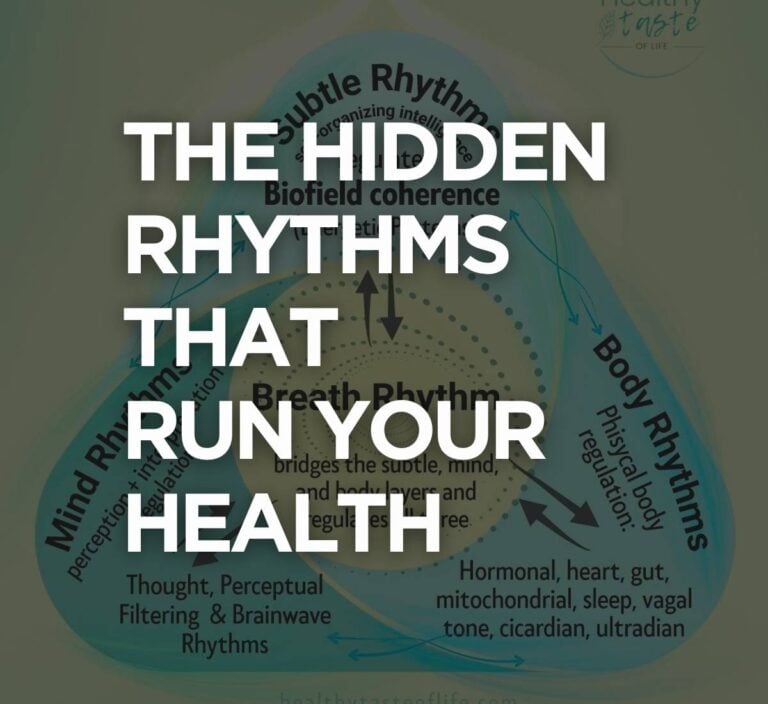
For deeper understanding I encourage you to read about The Hidden Rhythms That Run Your Health.
Finding Balance: When Restriction Becomes a New Stressor
Food restrictions have a place, especially when you’re healing inflammation, repairing the gut, or rebalancing hormones.
Short-term, they bring clarity and relief.
But staying stuck in hyper-control mode long-term can backfire and create new layers of stress.
Over time, your nervous system becomes conditioned to associate eating with anxiety, and your world of “safe foods” shrinks smaller and smaller.
Here’s how to restore balance without losing awareness:
- Use restrictions as a temporary tool, not a lifelong rule. Once inflammation calms down, start reintroducing foods gradually and observe. Re-evaluate every few months; your body changes, and your tolerance might too.
- Avoid all-or-nothing thinking. A single “off-plan” meal doesn’t undo your health progress, unless guilt turns it into a stress event.
- Shift your focus from “avoidance” to “inclusion.” Instead of asking “what can’t I eat,” focus on what nourishes me right now? This keeps your mindset open rather than fearful.
- Adopt the 90/10 principle. Eat 80-90% nourishing, whole foods that truly make you feel good, and leave 10% for flexibility – family meals, holidays, eating out.
- Practice food neutrality. No food is inherently “ 100% good” or “ 100% bad.” The emotional charge you attach to it often has more impact than the ingredient itself.
- Let joy be part of nourishment. Eating with gratitude activates the parasympathetic (“rest and digest”) mode, your natural healing state.
- Listen to your body, not every headline. Nutrition trends change constantly, but your inner signals are consistent. Cultivate trust instead of outsourcing all authority.
Anti-Inflammatory Foods List – focusing on foods that calm inflammation instead of fueling anxiety about avoidance.
How to Eat in a Way That Calms the Nervous System
These are small but powerful shifts you can try today:
- Pause Before Eating. Take 3–5 slow deep breaths before the first bite. This simple ritual stimulates your vagus nerve and “tells” your body: “You’re safe.”
- Create a Peaceful Eating Environment. Sit down, remove distractions, soften the indoor lighting after dark (signals of safety).
- Chew Thoroughly. Digestion starts in the mouth. Slow chewing increases enzyme secretion and decreases bloating.
- Express Gratitude. Gratitude increases dopamine and serotonin, balancing stress hormones.
- Observe, Don’t Judge. If you react to a meal, note it with curiosity, not fear. “Interesting, my body is giving feedback” is calmer than “Oh no, I ruined everything!”
Related: Self Care Planner (PDF) Journal – Assess, Track and Plan
The Mind–Body Reset Loop
When you calm your mind, your digestion begins to work more efficiently. As digestion improves, inflammation lessens, sensitivities ease, and your body feels safer – which in turn helps your mind relax even more. This positive feedback loop is the essence of healing from the inside out.
That’s why mindset work isn’t “woo-woo.” It’s physiology.
Your gut-brain axis, vagus nerve, and hormones all respond to your emotional frequency.
So next time you find yourself scanning every label with dread, remind yourself:
Your body is already listening.
Feed it calm, not fear.
FAQs
Not directly, stress won’t create a true IgE allergy, but it can amplify sensitivities and make you react more strongly to foods. It changes gut permeability, histamine response, and digestion efficiency.
Often, it’s a combination of gut inflammation, chronic stress, and disrupted microbiome balance. A stressed system can lose tolerance temporarily. Calming the nervous system is a key part of recovery.
If symptoms appear immediately after seeing, smelling, or thinking about a food, before digestion begins stress might be playing a role. But it’s not always immediate, stress reactions can appear hours or even the next day. If the same food sometimes causes symptoms and other times doesn’t, that’s a clue your nervous system and stress level may be influencing the response as much as the food itself. Keeping a mindful food-mood journal can help you spot patterns.
Improvements can begin within days. For deeper nervous-system regulation and microbiome repair, allow several weeks to months. Pair stress work with gentle nutrition, hydration, and rest.
If symptoms return when you reintroduce them, continue to limit for now. But remain open, your sensitivities can shift as your gut and nervous system get better. I had times when I could eat “forbidden foods” for years without sysmptoms and then after a stressful period in my life I had to revert back.
The Takeaway: Balance in Mind Creates Balance in Body
It’s natural to care deeply about what you eat, especially in a world of processed, inflammatory foods. But if that care turns into fear, your biology responds as if food itself were an enemy.
So yes, stress can trigger food sensitivities, not because the food changed, but because your internal environment did.
The most healing diet begins in the mind: calm, trusting, and grateful.
Your attitude – the emotional tone behind every bite – is the healthiest ingredient you can bring to the table; it has the deepest and most lasting impact.
If You’re Tired of Conflicting Nutrition And Health Advice + Want a Simpler Approach To Healthy Eating and Living
Join My Newsletter 👇
I share insights on food quality, gut health + whole-food recipes that support long-term health, without strict rules or complicated meal plans. And much more including holistic health coaching tips beyond nutrition!
Plus, you’ll get access to exclusive resources I don’t always share on the website.
👇 Save this for later and share with someone who stresses about food.

©HealthyTasteOfLife. Content and photographs are copyright protected and need prior permission to use. Copying and/or pasting full recipes to other websites and any social media is strictly prohibited. Sharing and using the link of this recipe is both encouraged and appreciated!
Disclaimer: The information, including but not limited to, text, graphics, images and other material contained on this website are for informational purposes only and should not be considered to be a specific diagnosis or treatment plan for any individual situation. Seek the direct advice of your own doctor if you have any questions or issues. Please refer to my full disclaimer for more info.