
Restore Rhythm for Gut Healing: The Daily Routine That Calms Symptoms
You cleaned up your diet. You removed the obvious triggers, added the probiotics, cut back on the things that seemed to cause problems. And your gut and health state still feels off. Here’s what most gut health advice doesn’t tell you: digestion is not just a chemistry problem, it’s just one part of it.
This post is meant to educate and simplify, not replace medical care.
If you’re doing everything right and still don’t see results, it could be a timing problem (when and how you do things). Your gut runs on a 24-hour internal clock – and when that clock is disrupted your body is not getting clear signals when to move from “survival mode” into “digest and repair” mode. Even on a perfect diet (resources). This is about rhythm. And once you understand it, a lot of things that never made sense about your health suddenly do.
Many people try to fix food first (and there’s nothing wrong with it), but digestion is a rhythm-based system. It becomes a problem when you narrow your focus on diet alone and ignore the other components of health (multilayered and is rhythm based). When rhythm is off (meal timing, sleep, stress, movement), the gut can’t coordinate breakdown, motility, assimilation and repair regularly, even with a clean diet.
That’s what I mean by rhythm.
Rhythm is the body’s built-in timing system. When it’s steady, digestion tends to feel steadier too. When it’s chaotic your gut can become more sensitive and reactive, even on a “perfect” diet. In science terms, this timing system is your circadian rhythm: the body’s internal clock that helps coordinate digestion, hormones, immune activity, and sleep.
And you might ask, ‘How do I know this? Maybe I’m exaggerating the impact.’ I know because I’ve been there. I didn’t take this seriously at first, thinking everything could be fixed with just the right nutrients. I had to learn the hard way, I had to swallow my pride and try a new approach that proved me wrong.
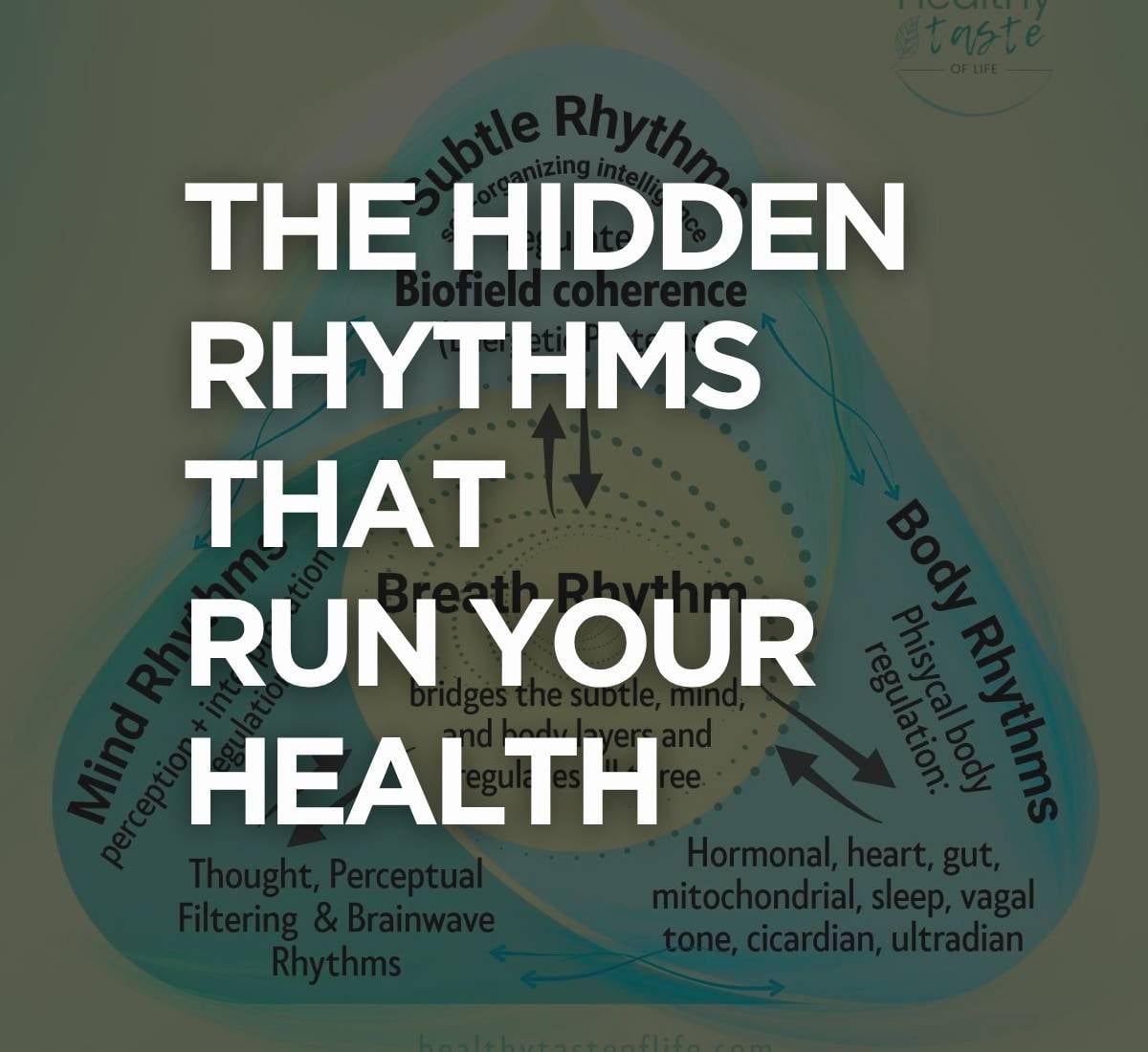
If you want the bigger-picture concept behind this (even beyond the cicardian rhythm), you can read my deeper article on rhythms here: The Hidden Rhythms That Run Your Health.
What “rhythm” means For Digestion
Rhythm is all about timing signals: when the gut turns on, when it cleans house, when hormones rise/fall, when inflammation quiets.
Your digestive system is not meant to be “on” all day long. Aligning your food intake with your body’s internal 24-hour circadian clock allows the body to anticipate meals, prep the gut with necessary enzymes and acid in advance.
Generally the digestive system works best in cycles:
- You eat – your body turns digestion on (acid, enzymes, bile, motility)
- You stop eating – your gut gets a break, cleans up, and resets
- You sleep – your body repairs and rebalances
When your rhythm is off, digestion gets messy:
- motility can slow down (constipation, heaviness, bloating)
- or speed up (urgency, loose stools)
- reflux can flare
- cravings can rise
- energy can drop
- sensitivities can feel worse
Restoring rhythm doesn’t “fix everything overnight,” but it often lowers the overall agitation in the system so other changes work better.
If you’re brand new to how digestion works overall, start here first: Gut Health Basics: Digestive System – the Body’s Core Engine
One more interesting point: intestinal cells and gut microbes also follow circadian rhythms, which shows how deep this goes – timing affects digestion all the way down to the cellular level.
The gut rhythms that control symptoms (circadian rhythm)
When I say “restore rhythm,” I don’t mean a strict schedule. I mean giving your body a few steady timing signals so digestion can turn on, reset, and repair more smoothly. These are the rhythms that tend to matter most:
1) Meal rhythm (consistency and spacing)
Your gut likes a clear start and stop. If you’re nibbling all day (bites while cooking, constant snacks, sweet drinks, late-night eating) your digestion may never fully reset.
Between meals, your small intestine runs a natural housekeeping pattern that helps move leftover food and bacteria along. When you’re constantly snacking, this clean-up rhythm may not fully kick in, which can leave you feeling more bloated or “fermenty” over time.
How this looks:
- reflux or burping
- constipation or incomplete emptying
- bloating that builds through the day
- feeling hungry but not satisfied
- extreme cravings that don’t match your actual needs
If you want a practical meal structure that supports rhythm, use this template: How to Build a Healthy Blanaced Plate, so you don’t have cravings and need to snack later.
This is one reason some people do better when they reduce grazing and give their gut a little more space between eating windows.
Knowing when to eat the last meal of the day is important too. Overnight fasting actually proves to be essential for changes in metabolic processes, cell repair and restoration. A chaotic pattern of eating is usually common for shift workers – these people seem to have metabolic issues the most.
2) Light + sleep rhythm (your repair schedule)
Light and sleep work together like your body’s timekeeper.
Light is one of the strongest “timing signals” your body uses. It basically tells your brain: Is it daytime or nighttime. And that message affects almost everything that touches digestion: energy, appetite, hormones, stress chemistry, and sleep quality.
Morning light (sunrise) tells your brain, “It’s daytime: turn on energy (cortisol rises in a healthy way), start movement and digestion.” As the day goes on and light fades, your system gets the signal to slow down so nighttime repair can happen.
If you stay under bright blue screens late at night, your body interprets that as – “repair should be delayed”. The melatonin gets disregulated and then you feel tired in the morning.
Sleep is the other half of the equation. It isn’t just “rest.” It’s when the body does a lot of recalibration and repair (immune regulation, inflammation signals, stress chemistry and hormone balance).
When sleep is short, late, or fragmented, many people notice: fatigue, increased emotional instability (cortisol rises), irritability, impaired gut motility + more inflammation and food sensitivities.
3) Hydration rhythm (keep things moving)
Constipation and sluggish digestion often worsen when hydration is inconsistent. And sometimes it’s not just “more water”, it’s also minerals that help water move where it needs to go and keep muscles working well, including the muscles that move your gut.
Low hydration can show up as hard, dry stools, straining, headaches, fatigue that feels “flat” and dizziness for some people.
So drinking earlier in the day (not only at night) helps. Plus if you sweat a lot, drink lots of coffee, or feel sluggish – minerals matter too (food first, then consider minerals if needed). I use concentrace in my water, but you can choose your own source, there are many options.
4) Movement rhythm (your gut loves gentle motion)
You don’t need intense workouts to support digestion. Gentle, consistent movement is often more helpful when symptoms are active. This can include walking, dancing, stretching, house cleaning etc. especially after a meal.
It can help with: moving gas along, support motility, reduce blood sugar spikes (which helps cravings and inflammation patterns) and calm stress. This is one of the most underrated “gut supplements,” and it’s free.
5) Blood sugar rhythm (spikes and crashes affect digestion)
Blood sugar affects stress hormones and gut movement. Big spikes (when consuming refined carbs, sugary beverages and processed foods) and followed by crashes (typically 1 to 3 hours after) can increase cravings, anxiety-like feelings, and digestive swings.
Steadier meals that actually fill you up (especially with enough protein) often calm both appetite and gut symptoms.
6) Menstrual cycle rhythm (for women)
Many women notice predictable gut shifts across the month. Progesterone tends to slow things down (more constipation and bloating in the second half of the cycle), and some women get looser stools around their period.
Tracking this can help identify your personal hormonal patterns (usually shows in 4 stages). Knowing when to focus on rest and nourishing foods and when is the best time for peak performance can be surprisingly helpful.
7) Stress–recovery rhythm (not stress… but lack of slow-downs)
It’s not only how much stress you have. It’s whether your body ever truly comes down from it. How you process it and release it.
There is a cycle that we have throughout the day with high energy peaks and dips – is called ultradian rhythm. Humans experience roughly 90-minute cycles of high-frequency brain activity followed by a 20-30 minute trough of lower energy.
If your day is constant “go-go-go” with constant stress and no real rest, the body enters a state of high-alert with HPA axis activation and digestion often stays half-on. Even small moments of recovery during the day (breath, a walk, quiet time, nature, connection) can help restore the rhythm your gut needs (and not only your gut).
Read more: Beyond Nutrition: The stress – immune – Inflammation connection
Signs your rhythm is off (common patterns)
Here are a few everyday clues:
- you feel best on weekends or vacation, worse during busy weeks
- symptoms swing without a clear food pattern (even though you keep eating same foods)
- bloating increases later in the day (your belly looks swollen, larger-than-normal)
- persistent gas: gut microbes follow their own daily cycles
- constipation alternates with looser stools
- no “morning urge“ the loss of the natural drive to go after waking up
- late-night cravings for high-calorie foods
- afternoon cravings increase, especially after poor sleep
- acid reflux and nighttime heartburn: (if you had a late meal) stomach processes food more slowly at night
- you’re “tired but wired” at night
- overall poor sleep quality (waking at 3 a.m. or insomnia)
- increased gut permeability (“leaky gut”): new food sensitivities + gut sensitivity (more abdominal pain and discomfort)
- people with auto-immune conditions may observe pain and stiffness peaking in the morning
If this sounds familiar, rhythm is a great foundation to address first. Before adding supplements and doing domething extreme.
How rhythm connects to stress, hormones, and inflammation
When your circadian rhythm is disrupted, it creates a “cascade of chaos” because your internal clock is the primary regulator of the Hypothalamic-Pituitary-Adrenal (HPA) axis, which manages your body’s stress and immune responses. Chronic disruption can lead to a “blunted cortisol awakening response,” meaning your body no longer gets that natural morning energy surge, impairing your ability to handle daily stress.
Your internal clock also coordinates the release of several key hormones so they don’t interfere with one another. For example: insulin sensitivity follows a strict rhythm, peaking during the day. Hormones like Leptin (fullness) and Ghrelin (hunger) when not in sync can cause late-night cravings for high-calorie foods. And the growth hormone, released during the first half of the night, if your rhythm is diregulated, you may miss this critical window for tissue repair.
As for the inflammation connection: the circadian rhythms act as a “gatekeeper” for your immune system, preventing it from overreacting. Continued circadian disruptions increases markers of systemic inflammation, such as C-reactive protein (CRP) and pro-inflammatory cytokines like IL-6. As a result the intestinal barrier weakens and autoimmune flare-ups increase. It shows with pain and stiffness peaking in the morning when the body’s internal anti-inflammatory signals (like cortisol) are misaligned.
The Cumulative Impact
What’s worth pausing on here is where this disruption often begins. It rarely starts in the gut. It starts much earlier: in your environment.
A stream of distressing news, a spike of anxiety scrolling through social media, a low-grade sense of dread that becomes the background noise of daily life. Each of these shifts your nervous system toward sympathetic dominance, and that shift (repeated daily) is enough to blunt your cortisol rhythm, slow digestion, disregulate your hormones and raise baseline inflammation over time.
Add to that the compounding burden many of us carry without naming it: food grown in depleted soils, air laced with VOCs from household materials, water containing trace contaminants, skin exposed daily to synthetic chemicals and cosmetics, and the constant low-level electromagnetic hum of modern devices.
Each of these stressors, in isolation, might seem negligible. But the body does not experience them in isolation. It experiences them simultaneously, continuously, and cumulatively. The total burden exceeds what the body’s repair and adaptation mechanisms can keep pace with. Over time, this is not bad luck or genetic fate. It is the predictable result of a thousand small, invisible insults, compounding quietly until they are no longer invisible at all.
Much like ocean waves that appear gentle against a cliff, yet carve enormous cave systems, or a single drop of water that, repeated consistently, hollows out solid rock – these micro-disruptions accumulate. What begins as a momentary stress response, repeated daily, rewires the nervous system, dysregulates hormones, and lays the groundwork for chronic conditions: digestive disorders, autoimmune dysfunction, cardiovascular disease, metabolic imbalance, and more.
The Gut Rhythm Reset (a simple daily template)
Aligning your internal clock is ultimately about environmental predictability: your body thrives when it can anticipate exactly when to digest food, when to surge with energy, and when to repair itself.
How you start and spend your day matters. Implementing something simple such as exposure to bright morning light or keeping your meals confined to daylight hours, you provide the consistent signals your brain and gut need to communicate well, lowering the systemic inflammation.
Put this into practice:
Morning: set the tone
- get daylight exposure soon after waking
- hydrate earlier in the day (warm water if you tend to have cold hands and feet)
- eat your first meal without rushing when possible (even 3 slow breaths helps)
- choose a protein-rich meal so you’re not chasing cravings later
Midday: keep it stable
- eat a real meal, not five mini meals
- aim for more consistency
- choose real whole foods that you will enjoy
- limit daytime naps (nap before 2PM and not more than 30-60 min)
Evening: protect digestion + sleep
- if reflux/bloating are issues, test an earlier dinner
- eat your last meal three hours before sleep (or finish eating by sunset)
- take a short walk after dinner
- avoid caffeine, nicotine, alcohol, physical activity in the evenings
- reduce stimulation at night (dim lights, less screen time, quiet routine) to allow melatonin production
When you synchronize your lifestyle with the natural light-dark cycle, you transition your nervous system from a state of constant emergency (high cortisol and gut sensitivity) to a state of rhythmic recovery.
This harmony stabilizes your hormones, allows your digestive tract to maintain its protective barrier, and ensures that your stress response only activates when truly necessary.
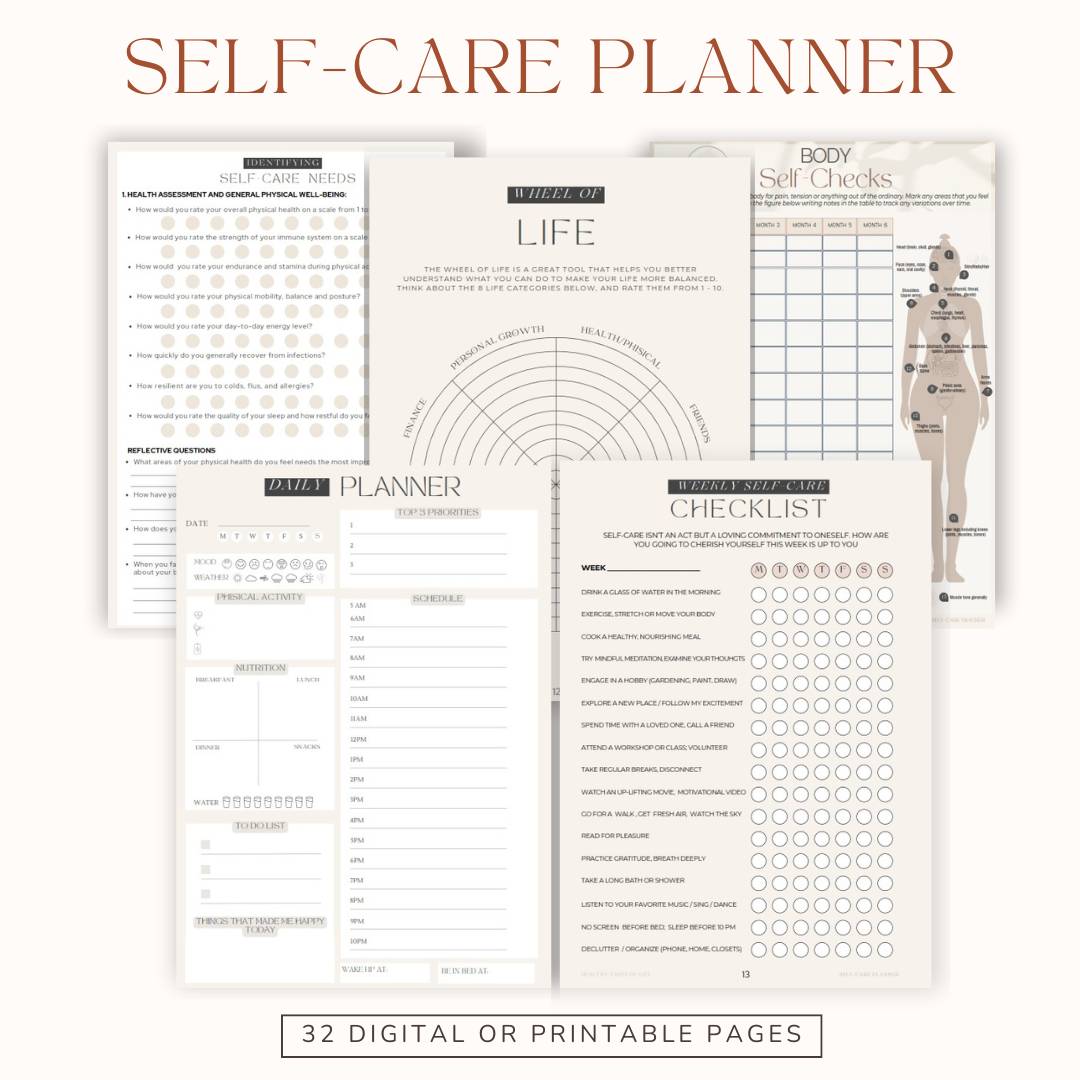
If you want to go deeper and take practical steps for regulating your body’s internal 24-hour clock, you can check out my detailed rhythm regulating guide where I address real situations and limitations:
- anyone living with gut symptoms, abnormal cravings, poor sleep, energy crashes, chronic fatigue, permanently inflamed or just slightly off, despite having a perfect diet
- parents with small kids (with interrupted sleep) and chronic stress
- night shift workers
- frequent travellers
- women navigating hormonal shifts
- people who fast and prefer to eat once a day and
- anyone who simply wants their body to stop compensating and start functioning the way it was designed to
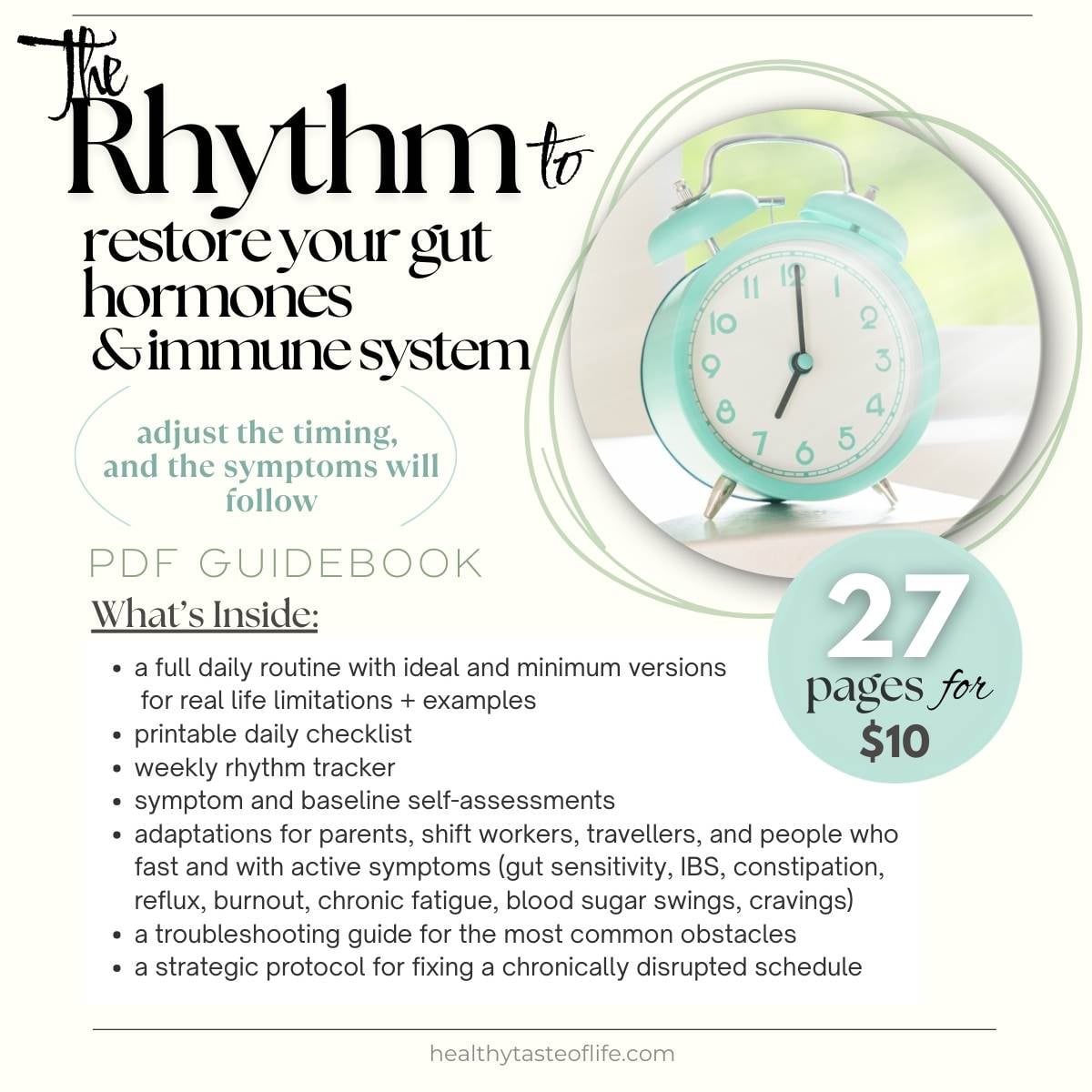
Inside:
- a full daily routine with ideal and minimum versions for real life
- printable daily checklist
- weekly rhythm tracker
- symptom and baseline self-assessments
- constraint-friendly adaptations for parents, shift workers, travellers, and people with active symptoms
- a troubleshooting guide for the most common obstacles
- a strategic protocol for fixing a chronically disrupted schedule
- and a closing section on the deeper layers when physical changes alone aren’t enough.
If this post helped, leave a comment and share which rhythm piece you find the most diffcult for you!
If You’re Tired of Conflicting Nutrition And Health Advice + Want a Simpler Approach To Healthy Eating and Living
Join My Newsletter 👇
I share insights on food quality, gut health + whole-food recipes that support long-term health, without strict rules or complicated meal plans. And much more including holistic health coaching tips beyond nutrition!
Plus, you’ll get access to exclusive resources I don’t always share on the website.
Just to be clear, this isn’t medical advice, it’s my perspective based on experience, research, and working with my own health.