
Why Healthy Eating Feels Hard and Becomes Its Own Kind of Stress
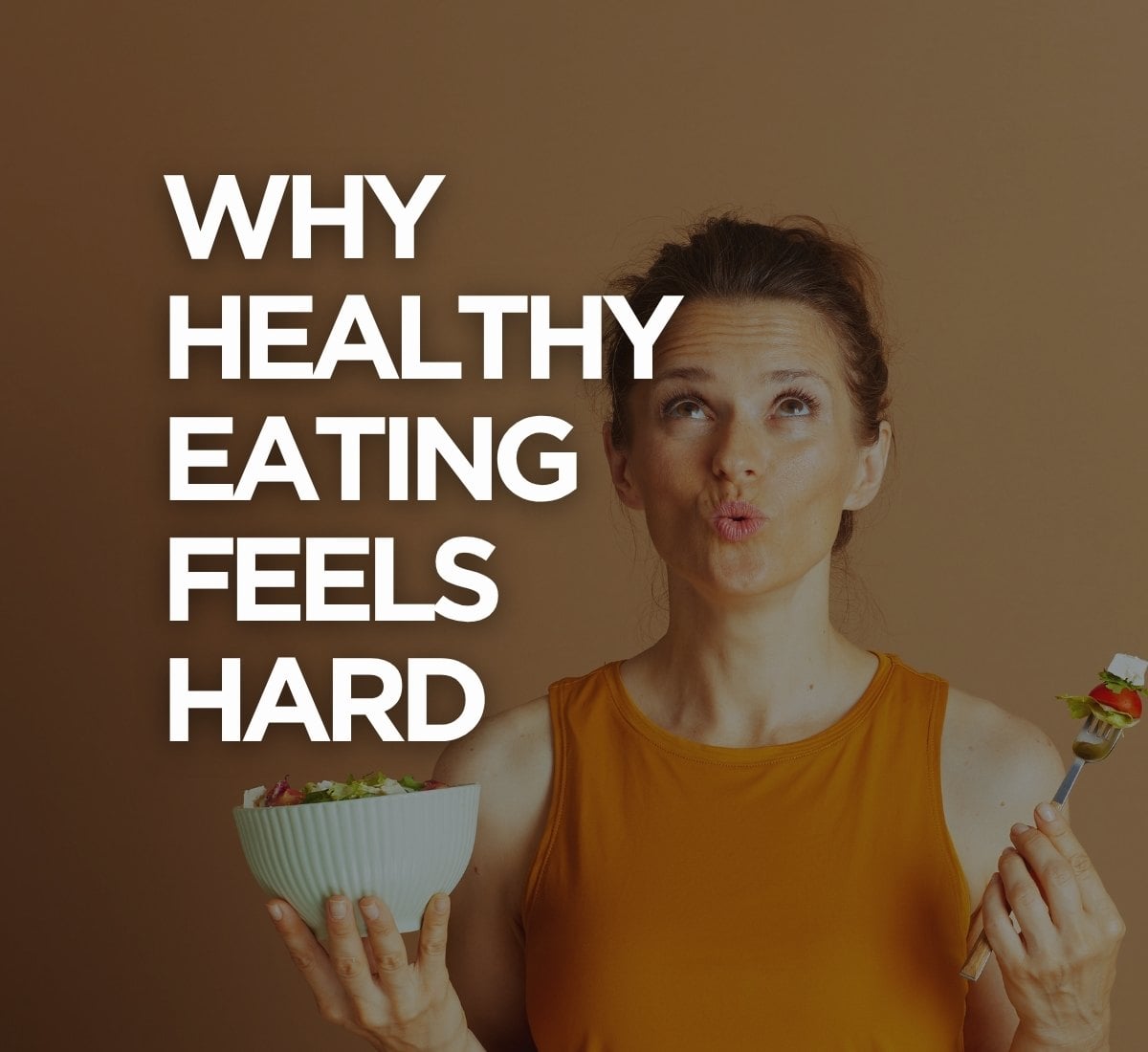
You know what to eat. You’ve read the books, followed the plans your nutritionist gave you, maybe even seen results for a while. And yet somehow, you find yourself here again: tired, frustrated, and wondering why something that seems so simple keeps feeling so hard. And guess what, it’s not about discipline.
This post is for educational purposes only and is not medical advice.
Most people in this position assume they need more motivation, better information, or stronger willpower. What’s often happening instead, is something deeper and harder to spot: healthy eating has gradually moved from feeling like something you do for yourself, into something you’re doing to yourself.
And once that shift happens, the effort you put in can actually start working against you rather than for you.
What It Actually Looks Like From the Inside
Healthy eating may look like a food issue or a discipline issue on the surface, but underneath it can be driven by fear, perfectionism, lack of safety, nervous system overload, or false and limiting beliefs.
That’s why so many people can genuinely want to eat better and still find themselves stuck in the same cycle: trying harder, tightening the rules, seeking more advice, telling themselves to be more disciplined, and somehow ending up with more cravings, more guilt, more resentment, more overeating, more obsessing, and more starting over.
If that sounds familiar, the issue may not be that you’re not doing enough. It may be that healthy eating has come to carry a lot of pressure, and pressure changes everything. How you think about food, how your body feels, how you behave, and how you make choices.
From the outside, that pressure can easily be mistaken for dedication. Someone who reads every label, follows the latest protocol, tracks their meals carefully, and cuts out entire food groups can look like someone who is deeply committed to their health. But the internal experience of that same person is often something very different.
Inside (in your head) it tends to sound like this:
“I ate so badly today, I’ll just have salad tomorrow.” All-or-nothing thinking, followed by self-punishment.
“I already ruined it, so it doesn’t matter what I eat for the rest of the day.” A subconscious belief that anything short of perfect equals complete failure.
“I need to be stricter. Why can’t I just have more self-control?“ Framing an eating struggle as a personal flaw rather than a behavioral or structural pattern that needs to be understood.
“Other people can stay on track. Why can’t I?” A comparison trap rooted in shame, where other people’s perceived consistency becomes evidence of your own failure.
“I’m too busy to eat healthily, I need a quick fix”: Seeking easy, immediate results over building long-term habits. Usually rooted in decision fatigue and modern environmental pressures.
“I can’t be trusted around this food. I need to avoid it forever.” A fear-based relationship with specific foods that tends to be both the cause and the result of the restrict-binge cycle.
“If I let go, I’ll lose control.” A belief that rigid rules are the only thing standing between you and complete chaos around food.
“I know what to do, so why am I not doing it?“. Arises from restriction-rebound cycles, decision fatigue, or using food to manage emotions (nervous system regulation).
And beyond the internal dialogue, it shows up in behavior too:
- jumping between food rules without giving them enough time to check how your body actually responds,
- cutting out more and more foods every time a symptom appears,
- treating every craving as evidence of failure,
- following advice because it sounds credible even when it leaves you underfed or preoccupied with food,
- using guilt or self-criticism as the primary source of motivation to keep going.
One of the reasons this is so disorienting, is that it can look like commitment from the outside while feeling like suffering from the inside. And the more effort you pour into it, the more stuck you tend to feel. That’s usually the first sign that something beyond food knowledge or willpower is happening.
Why Pressure Makes the Problem Worse
There is a pattern worth understanding here, and it shows up far beyond food. When you try to force your way through something from a place of fear or urgency, the thing you’re fighting tends to grow rather than shrink.
The more energy you direct toward controlling it, the more mental and emotional space it occupies. It becomes heavier, more charged and harder to escape.
With food, this plays out in a very specific way. The more you tell yourself you have to eat perfectly, the more emotionally loaded every meal becomes. The more you battle cravings through resistance, the more mentally consuming those cravings get.
The more rigidly you hold to getting it right, the more a single imperfect meal can feel like everything has fallen apart. And the harder you try to force your body into compliance, the more backlash tends to follow:
- cravings
- overeating
- resentment
- “cheating”
- quitting
- obsessing
- rebound eating
- food anxiety
- guilt
- harsh self-talk
eventually a complete collapse of the effort before the cycle starts again.
So the problem is not always healthy eating itself. But the thinking/beliefs, the pressure, fear, and self-aggression wrapped around it.
Why Healthy Eating Can Trigger Resistance in the First Place
Healthy eating can trigger resistance when it gets linked to pressure instead of care/support.
It typically starts with a concrete intention. You want less bloating, fewer symptoms, more energy, better digestion. So you begin making changes, and in the beginning that makes sense. But then a deeper pattern starts running underneath the surface.
What begins as “I’m learning how to support my body” quietly becomes “I have to get this right.” What starts as “I’m noticing what works for me” turns into “I can’t afford to mess this up.” What feels at first like building a better foundation starts to carry an emotional tone of “if I’m strict enough, maybe I’ll finally feel ok.”
That is the point at which healthy eating stops being about nourishment and starts being about something else entirely. And once that happens, the body often begins to push back….because the nervous system is wired to seek safety, familiarity, and relief.
Even an unhealthy habit can feel safer than a new way of eating that arrives with tension, uncertainty, and emotional charge attached to it.
Research suggests that uncertainty is experienced as threatening, and stress can shift eating behavior in ways that make healthy changes harder to sustain, not just psychologically but physiologically.
What is actually happening underneath
When your internal state while trying to eat well is one of fear, urgency, perfectionism, or self-criticism, your whole system processes the experience differently.
You may become more:
- vigilant
- rigid
- reactive
- swing between tight control and rebellion
- less aware of hunger and fullness
And healthy habits begin to feel like just one more demand placed on a system that’s already stretched.
What looks like “lack of discipline” from the outside is often something more specific underneath:
- fear trying to prevent symptoms from returning
- perfectionism trying to prevent failure
- control trying to prevent uncertainty
- food rules trying to create safety
- obsession trying to prevent helplessness
- or resistance trying to protect you from more pressure
These are how the nervous system is responding to what it’s perceived as threat.
If this is a pattern for you, it also helps to zoom out and look at the bigger relationship between stress, symptoms, and nervous system regulation. And recognizing that, changes the entire way you approach the problem.
The hidden beliefs that run the show
Most people are not consciously choosing this pattern. Underneath it there are usually hidden beliefs (in the subconscious mind) often formed early in life, often fear-based and running in the background without ever being questioned.
Examples:
“I have to be strict to be safe.” This belief often forms after symptom flares, confusing reactions, elimination diets, health scares, or long periods of not feeling well. Part of you learns: If I control this hard enough, maybe I can prevent pain next time. That can lead to hypervigilance, over-restriction, and living in constant correction and fear mode.
“If I’m not in control, everything will fall apart.” This is common in people who have lived through chronic stress, unpredictability, or long stretches of feeling unsupported. Food becomes one of the few areas where control feels possible. So loosening the rules can feel emotionally unsafe, even when those rules are exhausting to maintain.
“Cravings mean I’m weak.” This belief often comes from diet culture, shame around appetite, moralizing food, or years of trying to override the body. But cravings do not automatically mean weakness. Sometimes they point to poor nutrition (nutrient defficient), restriction, stress, emotional depletion, blood sugar swings, poor meal balance, or just a body that is tired of being controlled. I already explained how constant hunger and cravings often come from an unbalanced plate, not lack of willpower. Therefore I’m using this Simple Template of How To Build a Healthy Balanced Plate myself.
“Other people’s advice knows better than my body.” This one often develops after years of symptoms, confusion, conflicting health information, inability to track how your body feels over time or repeatedly not knowing what to trust. Following an external rule can feel more reliable than listening your intuition. But when advice is followed without any body awareness, healthy eating becomes mechanical and disconnected from your actual experience. You can look compliant on paper while feeling worse in your body.
“If I do this perfectly, I’ll finally feel better.” This belief often comes from perfectionism, self-worth patterns, or the hope that food can finally fix an overwhelming emotion inside. It can also carry a deeper emotional message: if I do enough, maybe I’ll finally feel safe. Maybe I’ll finally be good enough. Maybe I’ll finally stop feeling out of control. That is an enormous amount of weight to place on food.
Where these beliefs usually come from
These beliefs don’t appear from nowhere. They are usually shaped by early childhood environments where love, approval, or safety felt tied to being good, controlled, or self-sufficient.
Sometimes they form during long periods of chronic stress, an illness (inflammation, digestive issues, or unexplained symptoms). When the body feels unstable, the mind often becomes more controlling and panicked.
Sometimes they come from years of dieting, food rules, body criticism, or trying to manage symptoms through stricter and stricter eating.
Sometimes they are reinforced by health content itself. The more advice you consume, the easier it becomes to believe that the next rule, food list, or elimination will finally solve everything.
And sometimes they come from nervous system overload. When a person is already running on tension, pressure, and internal urgency, they may start using force as their main way of functioning. That force then spills into food, routines, healing, and self-talk.
If you already started an elimination diet, but still feel tense, confused, or stuck read this: The 9 Most Common Mistakes Why Gluten-Free Dairy-Free Eating Still Feels Hard.
When “healthy eating” becomes another form of self-aggression
This is the part that can feel uncomfortable to sit with, because it cuts close to something most people would rather not see in themselves.
Sometimes what looks like a genuine commitment to health is also, underneath it, another socially acceptable way of being hard on yourself.
It can become a way to:
- punish yourself for symptoms
- compensate for feeling out of control in other areas of life
- prove that you are trying
- earn a sense of worth or safety
- keeping anxiety productively occupied so it doesn’t have to sit still
That is why the same person who says “I’m trying to be healthy” may also be speaking to themselves in ways they would never speak to someone they love (in a very negative way):
“I should know better.”
“I ruined it.”
“I have no discipline.”
“I always do this.”
“Get yourself together.”
That doesn’t sound like support, does it? That is inner aggression. And the body feels that too. Even when the conscious mind frames it as motivation.
How to tell what is underneath your own resistance
This is where self-inquiry is important. Not to overanalyze or judge yourself more. Just be honest, observant and aware from a neutral point of view, so you could understand what is actually driving the pattern you keep finding yourself in.
The next time healthy eating feels forced, or emotionally charged, pause and ask:
What am I trying to make myself do?
Be specific.
Am I trying to control when and how much I eat?
Cut something out?
Be perfectly clean so I don’t get anything wrong?
Stay “good or organized” all day?
Follow rigidly some advice that I think might be good ?
What am I afraid will happen if I don’t?
This question gets closer to the root.
Am I afraid symptoms will come back again and I can’t go through that.
That I will gain weight? People will notice and I’ll have to explain myself.
That I will lose control? If I allow myself this, I’ll want it all the time and never get back on track.
That I will fail? And I’ll prove that I can’t stick to anything.
That I won’t feel safe or I’ll have no structure to hold onto.
That I will undo progress? I won’t know what’s causing my symptoms anymore.
That I cannot trust myself? I’ll feel lazy, and I’m not trying hard enough, and that I never do.
What feeling is underneath the pressure?
Try naming the actual emotion.
Fear?
Shame?
Urgency?
Anger?
Exhaustion?
Helplessness?
There is actually solid research behind it. When you put a feeling into words, it activates the prefrontal cortex (the part of the brain responsible for reasoning and regulation) and reduces activity in the amygdala, which is where the threat and fear response lives.
In other words, simply naming what you’re feeling (not fixing or analyzing, just naming it) helps the nervous system shift out of reactive mode. The intensity doesn’t disappear, but it loosens its grip enough that next time you can respond rather than just react.
What belief is attached to this?
Is it something like:
- I have to be strict to be safe.
- If I relax, I’ll spiral.
- My body can’t be trusted.
- I always mess this up.
- I have to earn feeling better.
Does this approach actually support my body?
Or does it mainly feed fear, control, or obsession?
This kind of inquiry can be uncomfortable at first, but it often reveals that there is another issue under the “food issue”. It is what food has come to represent.
actions: how to shift from force to support
The idea is not to stop caring, to drop all structure, and to give up all the progress you already made.
The idea is to replace forceful thinking with a supportive type of thinking. Just change your perspective a little.
1. Notice The pressure language early
Catch the phrases that show inner force, usually you use words like:
- I should
- I have to
- I messed up
- I need to be stricter
- I need to do better tomorrow
- I must overcome this
Don’t judge yourself for thinking them, they are only pointing that fear or perfectionism is running the show rather than care for yourself.
2. Notice the interpretation your brain puts on what you’re eating
This is something most people never think to pay attention to, but it makes a significant difference. The thought you have while eating something shapes the internal experience of eating it. And that experience is not just psychological, it affects how your nervous system responds.
Notice whether your internal dialog sounds more like “I have to eat this salad again because I’m supposed to be healthy” or “this is actually giving my body what it needs to feel better.”
Those two thoughts are about the same meal, but they create a completely different internal environment. One carries obligation and mild resentment. The other carries intention and care. Your body registers that difference.
The same applies when you eat something outside your usual plan. If the running thought is “this is going to make me feel awful, I’m going to react to this,” you are eating that food with a stress response.
Which is not a neutral thing physiologically. Versus eating it with the awareness that one meal is not a verdict, that your body is more resilient than fear gives it credit for, and that you can simply continue from here without the spiral.
That shift in interpretation won’t always come easily, but it’s worth practicing, because the story you tell yourself while eating is part of what you’re actually consuming.
3. Stop following advice blindly
Not every good-sounding piece of health advice is right for your body, your “season”, or your nervous system. Even if it scientifically valid, what healthy eating looks like is not a fixed target.
A woman going through perimenopause has different needs than she did in her thirties. Someone recovering from an illness needs different things than someone who is stable and thriving. A period of high stress, poor sleep, or major life change shifts what your body can handle and what it actually needs.
Eating the same way regardless of what’s happening in your body and your life, isn’t discipline, it’s rigidity. And rigidity has a cost.
Before you adopt a rule or new advice, ask yourself:
- Does this actually make me feel more nourished at this time or does it feel like another stressor?
- More stable or more insecure?
- More grounded or more disoriented?
- Less reactive or more irritated?
- Less obsessive or more controlling?
- More able to stay consistent or more erratic?
4. Make meals more supportive, rather than idealized
A lot of “lack of discipline” is really “lack of nutrients” in disguise. You eat foods that are deficient in essential vitamins or minerals and don’t provide satiety. And maybe you’re eating a lot, but you’re getting hungry very quickly.
This is where my healthy balanced plate template can help take pressure off. It gives people something practical to build from instead of forcing themselves through vague rules, calorie counting, or random restriction.
5. Reduce the number of rules you are trying to Follow at once
Too many food rules at once can overload the system. Instead of fixing everything at once, pick a few changes that trully move the needle. Once you’re good with those, then you can add more.
6. Support the nervous system, not just the meal plan
If your body feels overloaded, food is not the only place that needs attention.
You may also need:
- more regular meal timing
- less grazing and chaos durin the day
- slower mornings, less rush
- more gentle movement during the day
- more rest, more “me time”, more breaks
- less multitasking and distractions while eating
- consistent routines
In this article: The Daily Routine That Calms Symptoms I explain how health is multilayered and is rhythm based and how to create a simple conistent routine (addressing all point above).
7. Work with the belief, not just the behavior
Do not just ask, “How do I stop overeating?” or “How do I stay on track?”
Ask: What belief gets activated right before this? That is often the real issue.
Because once you see that the pattern is being driven by fear, perfectionism, or control, the solution changes. Behavior change that doesn’t address what’s underneath, it tends not to hold for very long.
8. Build trust through small honest steps
Trust is not built by being perfect for three days and then totally collapsing and binge eating whatever. You need repeated moments (small consistent steps) of listening to your body and responding with honesty and care.
That might look like:
- eating a more balanced breakfast
- loosening one unnecessary rule (that feels like stress without adding much value)
- think before adding another supplement or elimination
- noticing that one off-plan meal did not ruin everything and getting back on track calmly
- speaking to yourself more honestly, kindly and less harshly (as if you’re your own child or friend).
9. see food as a tool for nourishment, not a source of emotional relief
This one is worth sitting with honestly. Food can become a way to fill a quiet moment, numb a difficult feeling, or create a brief sense of comfort or happiness when things feel heavy. And while that’s a very human thing to do, it’s also worth noticing, because when food is primarily serving an emotional function, it becomes very hard to relate to it in any other way.
A more useful point is to think of food in more literal terms: as a source of nutrients that your body needs to function well. Not in a cold or mechanical way, but in the sense that what you eat is actually doing something specific inside your body, like supporting your energy, your digestion, your brain. When that becomes the primary lens, a lot of the charge around food starts to quietly dissolve. And you start to choose more foods based on your nutritional needs rather than how it tastes only.
This doesn’t mean enjoyment is off the table. A good meal shared with people you love, or a dessert you genuinely savor, is part of a healthy relationship with food. The question worth asking is whether there’s emotional attachment wrapped around it, whether you’re eating to nourish or eating to feel something, avoid something, or fill something.
If symptoms are part of the fear, address both layers
Some people push hard around food because symptoms, reactions, digestive problems and inflammation is real and they deserve actual attention.
None of this is about pretending the physical layer doesn’t matter, and that everything is emotional or that everything difficult around food is just in your head.
But if fear is intensifying because your body feels unstable and hard to trust, both layers need support at the same time, with:
- real food nutrition
- symptom investigation
- nervous system regulation
- emotional awareness
- better rhythm
- less inner aggression
Chronic hypervigilance and fear keep the stress response activated in ways that can worsen symptoms over time. It can aggravate the HPA axis disregulation and suppress our immune system even more. If you want to understand how that connection works, I go deeper on it here: Beyond Nutrition: The Stress – Immune – Inflammation Connection.
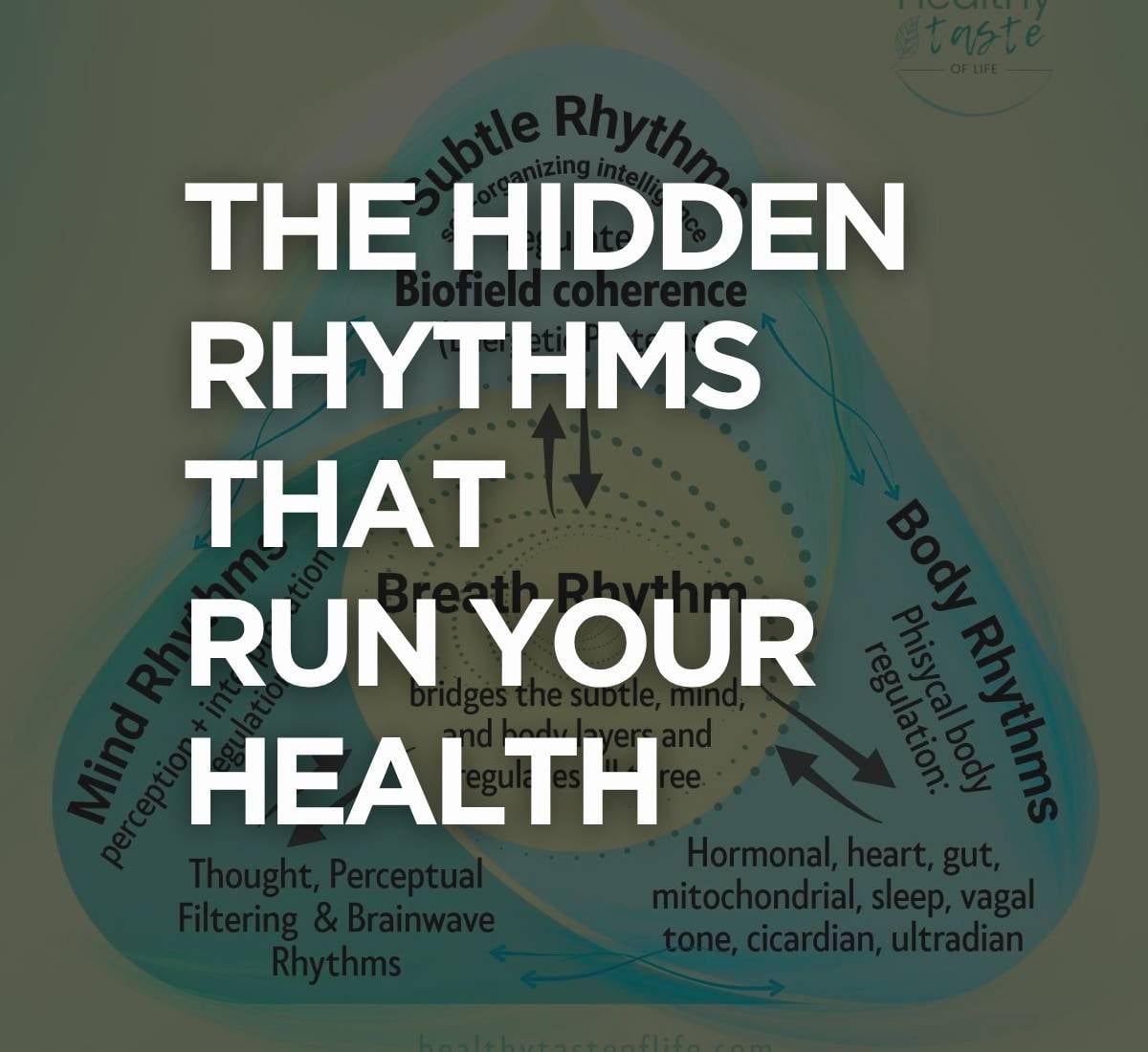
And that’s not because the symptoms are mostly nervous system based, but because the mind and body are far less separate than we tend to treat them. It’s all connected, I explain this here: The Hidden Rhythms That Run Your Health
A simple exercise to uncover your own forcing pattern
At the end of the day, write down one moment where food felt heavy, tense, or emotionally loaded.
Then answer these five questions:
- What was I trying to make myself do or be?
- What was I afraid would happen if I didn’t?
- What feeling was underneath the pressure?
- What belief was running the moment?
- What would support/care look like instead of force?
Support / care / encouragment and positive mental attitude might look like:
- a more filling, unrushed meal
- fewer rules, more relaxed around food
- more regular eating, plan in advance (not whatever, or whenever hunger hits)
- less all-or-nothing thinking (mistakes happen, they’re actually helping you see the difference)
- one practical meal template (don’t overcomplicate things)
- regulate your natural biological rhythm, which is responsible for the sleep-wake cycle, hormone release, digestion and metabolism.
- kinder self-talk, switch your internal narrative from “I failed and it’s pointless” to… “I’m learning and doing my best”.
Over time, doing this consistently tends to reveal patterns that are surprisingly consistent.
If You’re Tired of Conflicting Nutrition And Health Advice + Want a Simpler Approach To Healthy Eating and Living
Join My Newsletter 👇
I share insights on food quality, gut health + whole-food recipes that support long-term health, without strict rules or complicated meal plans. And much more including holistic health coaching tips beyond nutrition!
Plus, you’ll get access to exclusive resources I don’t always share on the website.
To wrap this up, you may not be resisting healthy eating itself, it could be that you’re resisting the fear, pressure, guilt, and false beliefs that have accumulated around it over years of trying. And if that’s the case, pushing harder and tightening the rules is unlikely to be the answer, because the real problem was never a lack of effort.
Healthy eating works better when it becomes a form of support instead of self-control. The body responds to that shift. Not immediately, and maybe not without difficulty along the way, but in a way that tends to last, because it’s finally working with your whole system (mentally, physically and emotionally) rather than pushing against it.