

Whipped Body Butter Recipe for Dry, Eczema-Prone Skin
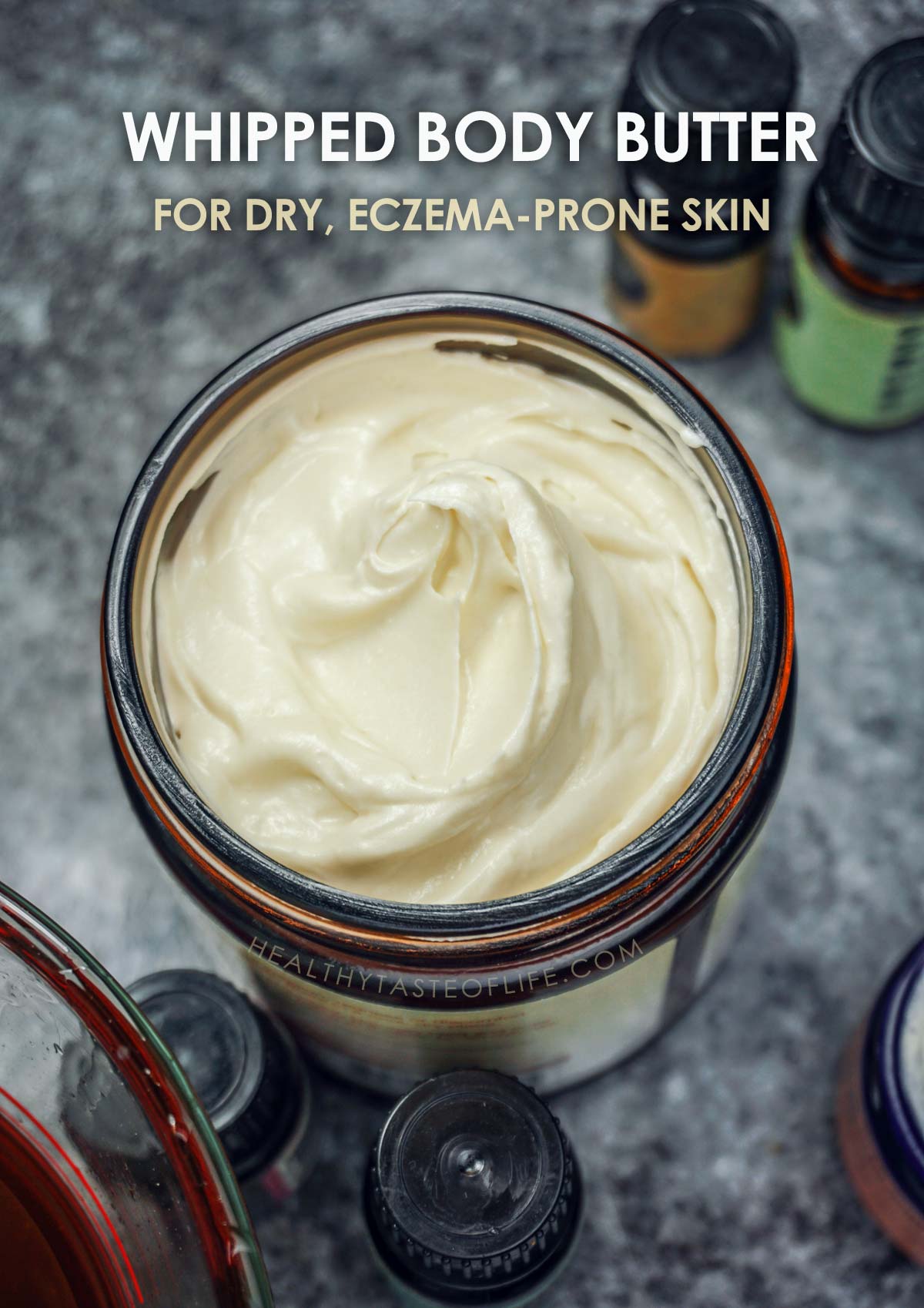
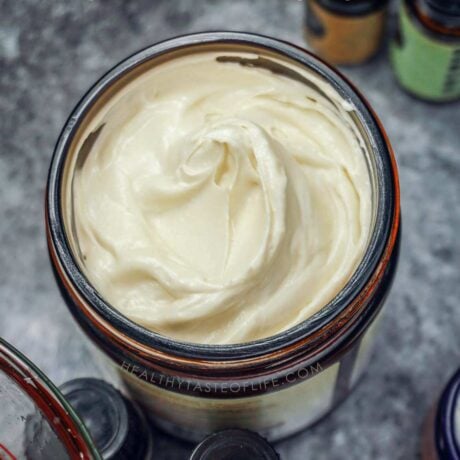
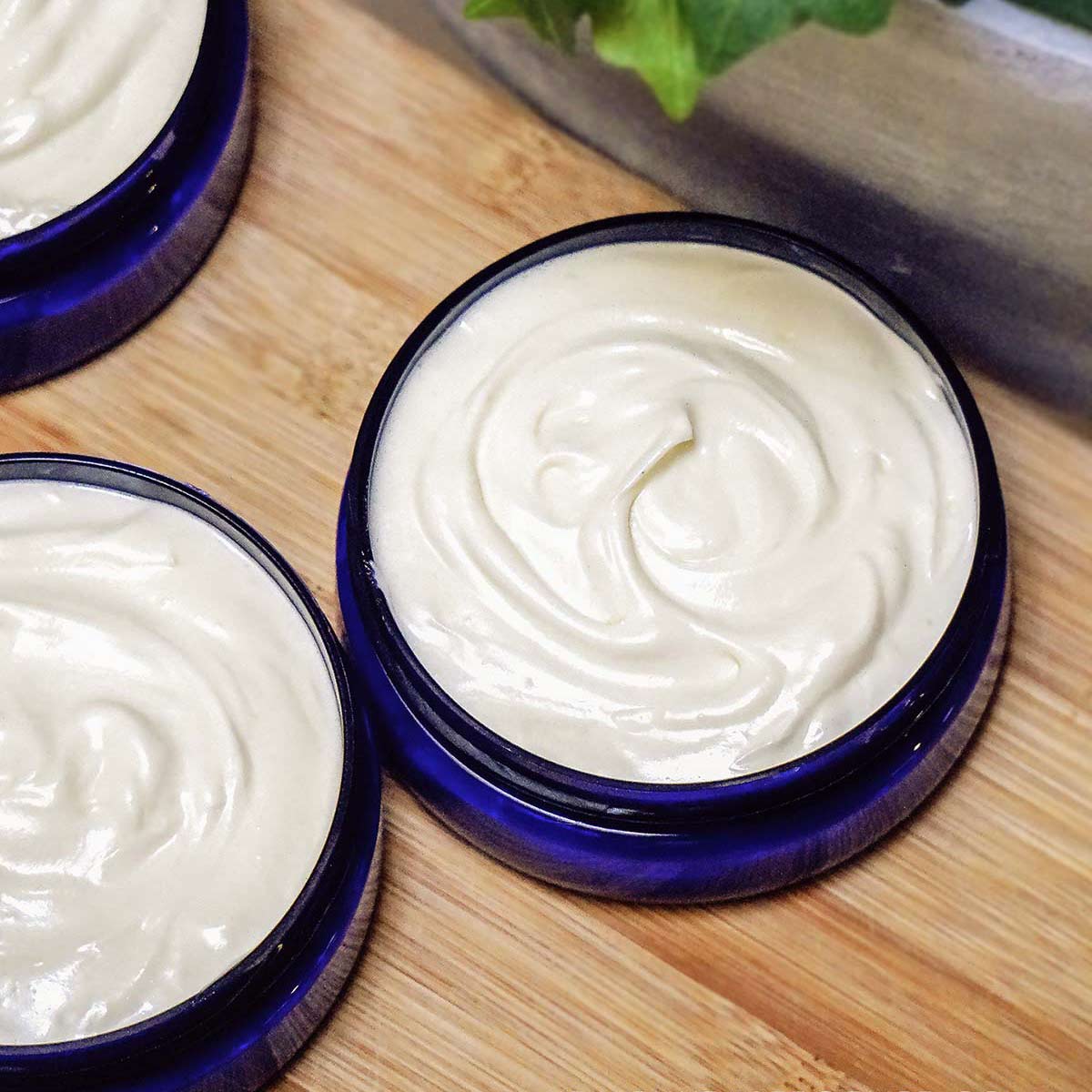
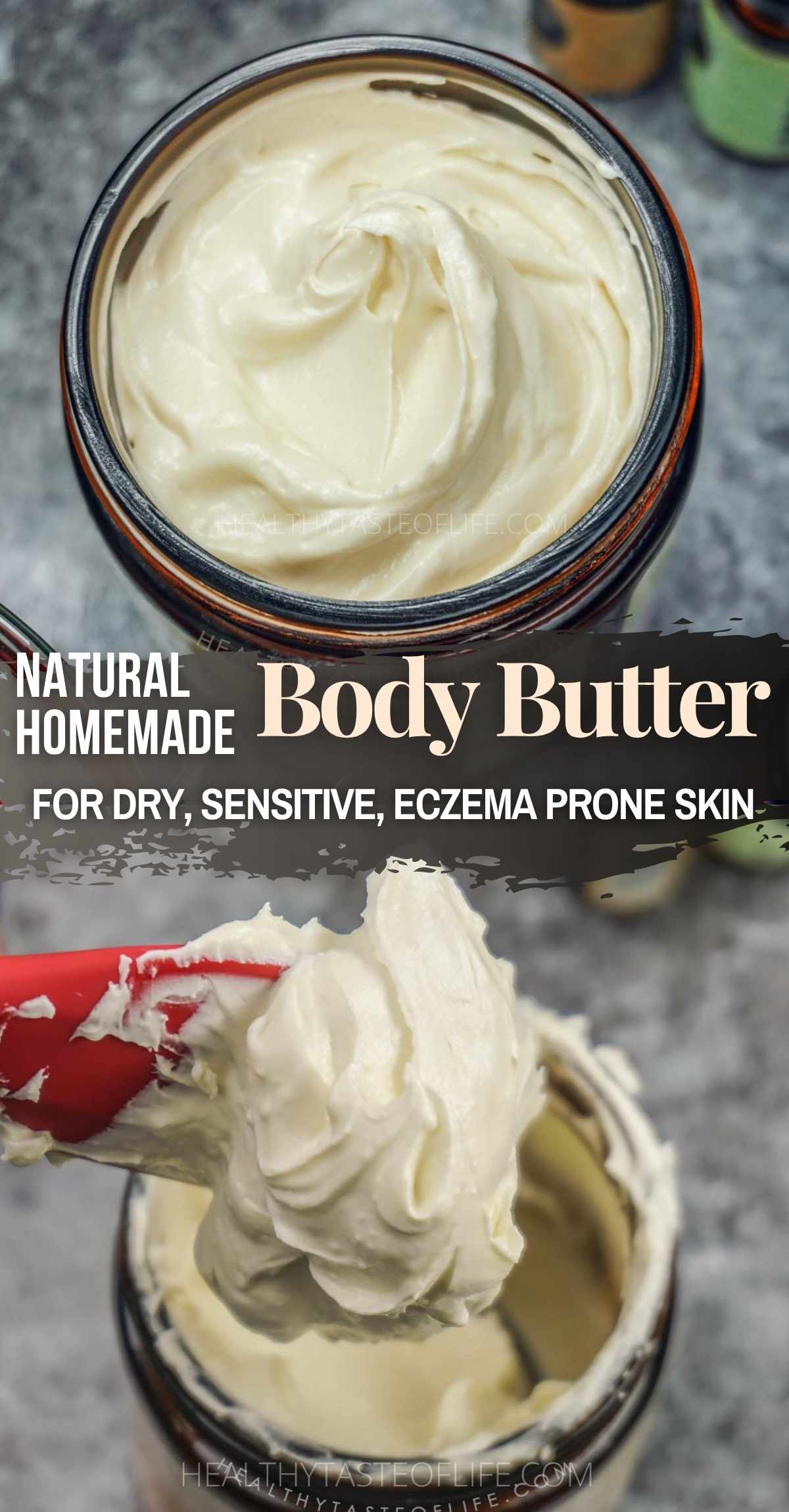
This whipped body butter recipe combines mango butter, CBD oil, oat kernel oil plus a few drops of chamomile and frankincense essential oils – into a rich, fluffy moisturizer for dry, sensitive, or eczema-prone skin.
The finished whipped mango body butter melts easily into the skin and is made without coconut oil, shea butter, water, synthetic fragrance, emulsifiers, or added preservatives.
Why I Make This Whipped Body Butter
I started making my own skincare years ago when I began developing different allergies. I share more about that experience in my allergies and sensitivities guide.
At first, most of my attention went toward cleaning up what I was eating, but eventually I started paying more attention to what I was putting on my skin as well.
That’s when I began experimenting with homemade creams and whipped body butters made from simple, natural ingredients.
One of the things I still like most about making my own body butter is being able to customize it to what my skin needs and choose the quality of every ingredient myself.
Over the years I’ve changed the formula several times. This version is much simpler and more focused on dry, sensitive, and irritated skin: mango butter for the rich moisturizing base, oat kernel oil for additional skin-barrier support, and a CBD oil made with hemp seed oil as the carrier.
When I can get a high-quality CBD oil, that’s the version I prefer. If CBD isn’t available, good-quality cold-pressed hemp seed oil is still a very useful option.
Note: For dry or eczema-prone skin, I recommend starting with the unscented version without essential oils.
Why I Chose These Ingredients
Mango Butter
Mango butter forms the base of this homemade body butter. Its naturally rich fatty-acid content makes it a good emollient, helping soften rough, flaky skin and reduce moisture loss.
It also has a mild scent and a smooth texture that becomes light and fluffy when whipped.
CBD Oil Or Hemp Seed Oil
The CBD oil I use is already diluted in hemp seed oil, so it provides both ingredients in one.
Hemp seed oil contains linoleic and alpha-linolenic fatty acids and gives the solid mango butter a softer, easier-to-spread texture.
CBD adds another component. Cannabidiol is being studied for its potential anti-inflammatory and anti-itch effects in the skin. Early research is promising, particularly for itching. For that reason, I prefer CBD oil when I have access to a high-quality product.
If you don’t use CBD, simply substitute the same amount of cold-pressed hemp seed oil.
The amount of actual CBD in the finished body butter will depend on the concentration of the CBD product you use, so this recipe does not provide a standardized CBD dose.
For a clearer breakdown of hemp oil vs CBD oil, including how they differ and when each one is used, see my full comparison here.
Oat Kernel Oil
Oat kernel oil is one of the main reasons I like this updated formula for dry and sensitive skin.
It contains skin-conditioning lipids and works as an emollient, helping soften skin and support its protective lipid barrier.
This is oat kernel oil, not powdered colloidal oatmeal, so it blends smoothly into the body butter without making it gritty.
Chamomile and Frankincense
I now keep the essential-oil blend very simple. A few drops of chamomile and frankincense essential oils add botanical compounds and a subtle scent. But they are completely optional, if your skin can’t tolerate any essential oils.
If you have active eczema, very sensitive skin, fragrance allergies, or easily irritated skin, make the body butter without essential oils.
Why these ingredients work well together: Mango butter creates the rich, protective base, while hemp-based CBD oil and oat kernel oil soften the texture and add skin-supportive fatty acids and soothing compounds. Together, they help reduce moisture loss, soften dry skin, and support the skin barrier. Chamomile and frankincense are optional additions for extra botanical benefits and a light natural scent.
How to Make This Whipped Body Butter
1. Melt the Mango Butter
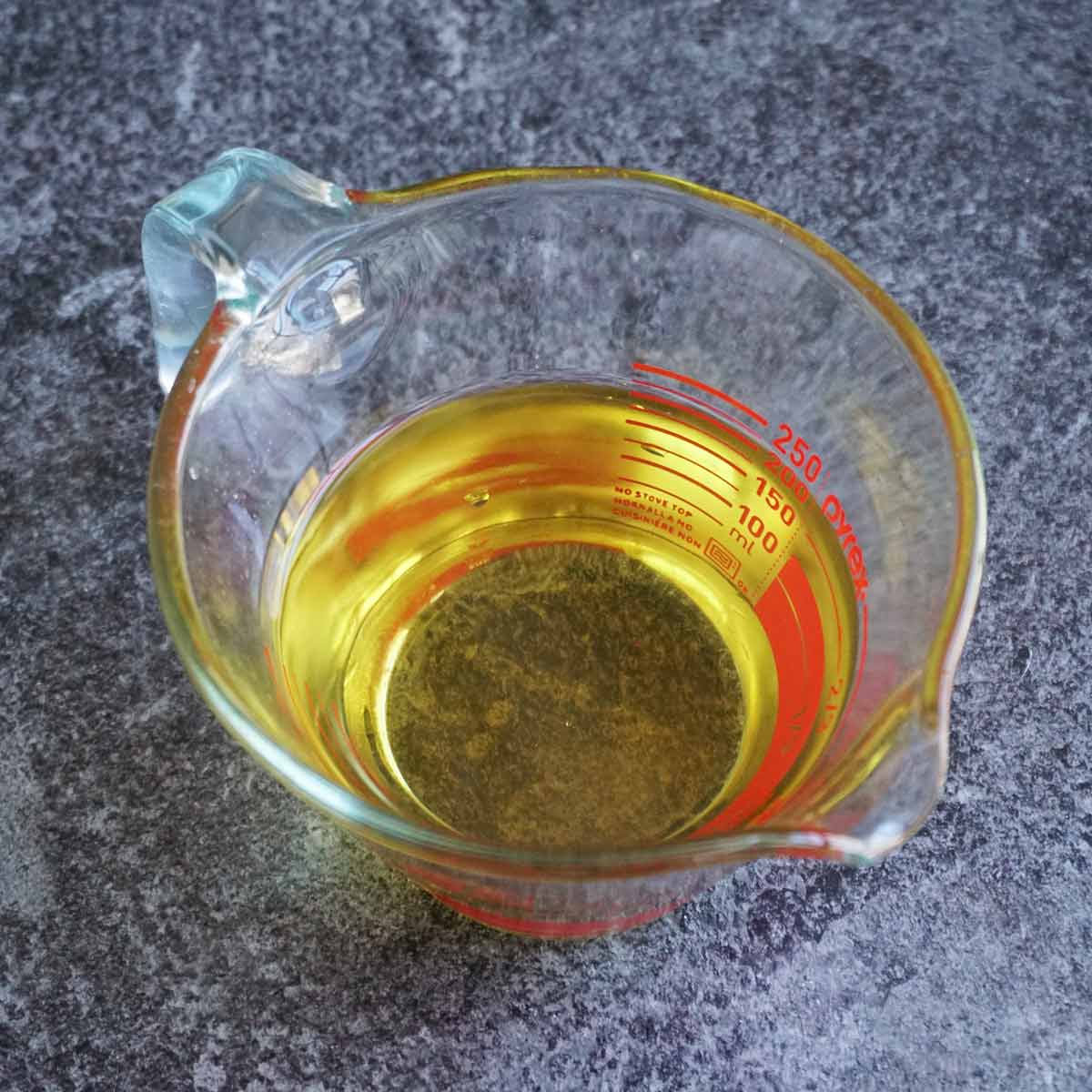
Place the mango butter in a double boiler and melt gently over low heat.
You can also place the container of mango butter into a bowl of hot water until it becomes liquid.
2. Cool
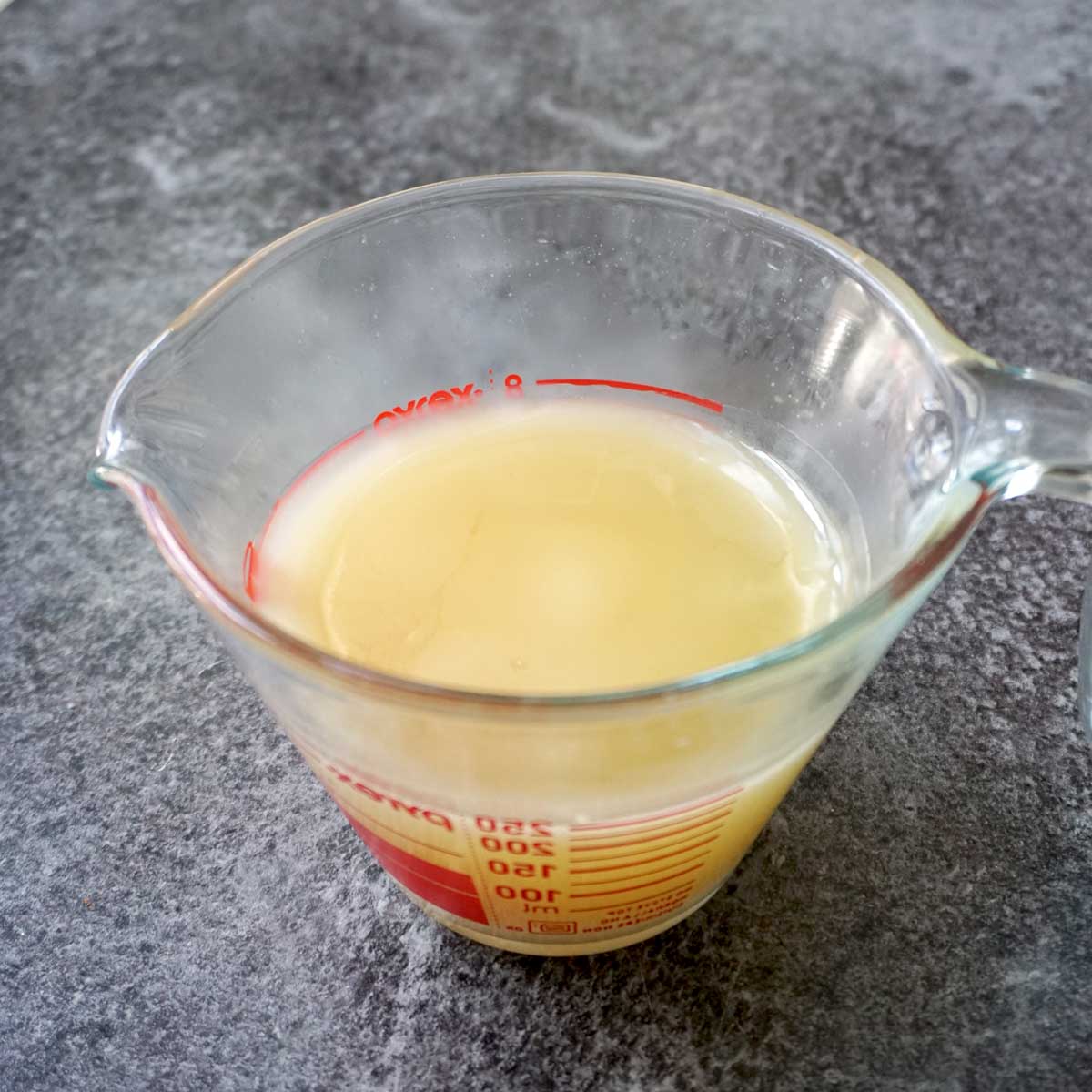
Remove from the heat and let it cool for about 20 minutes, or until the mango butter begins to solidify around the edges but is still soft in the center.
It should look similar to softened butter.
3. Whip
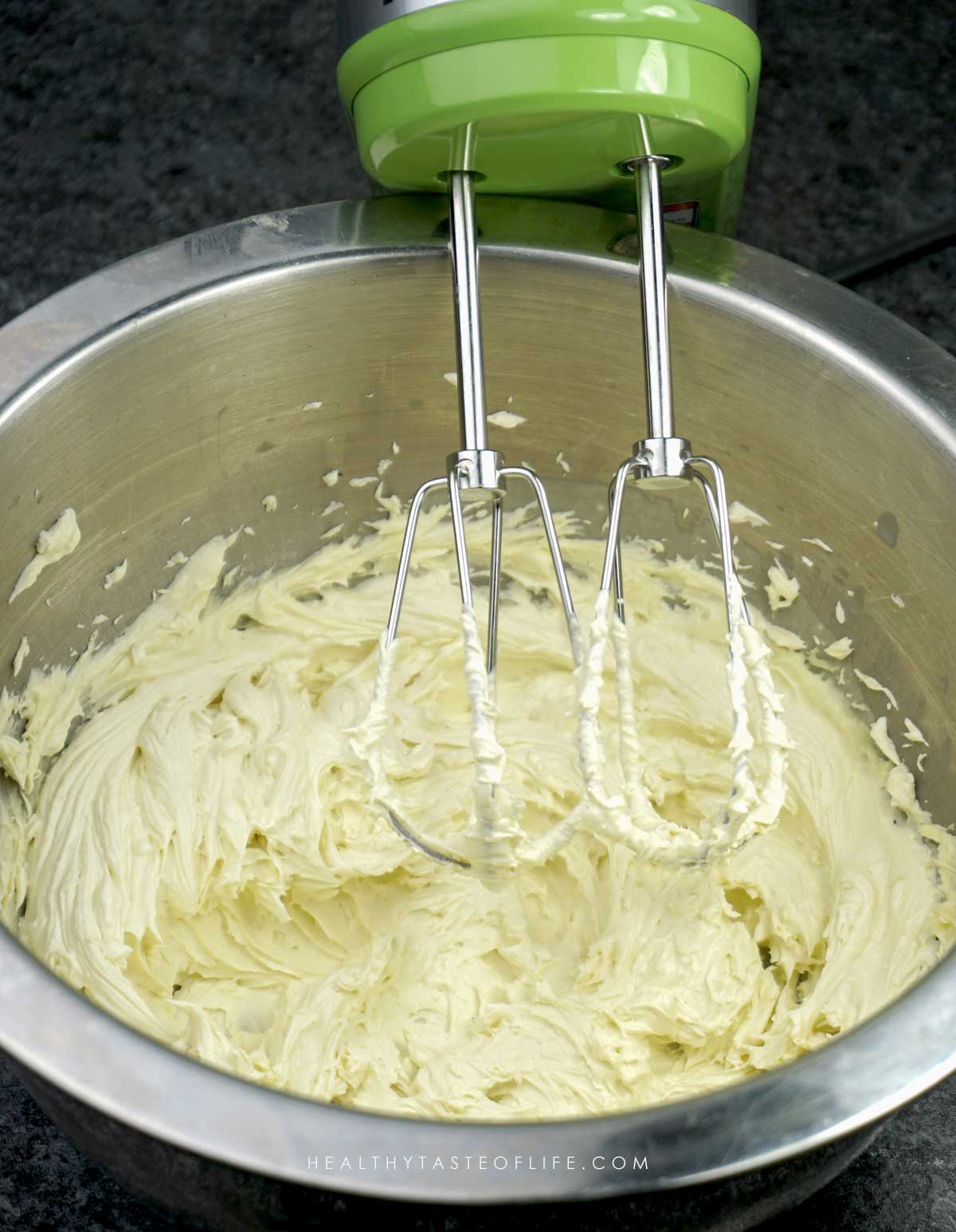
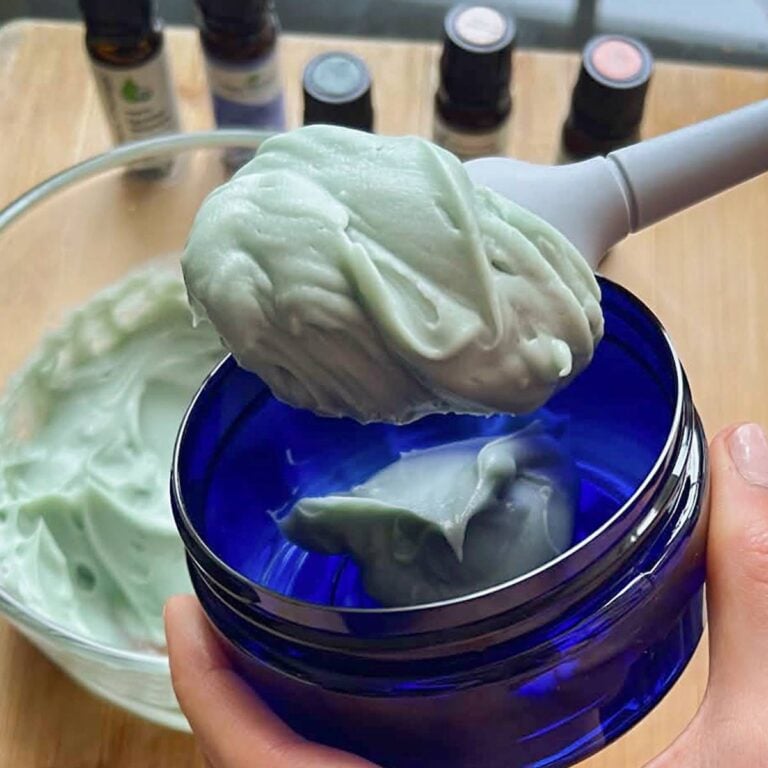
Use an electric hand mixer to whip the partially cooled mango butter for about 5–7 minutes, until it becomes lighter and fluffy.
4. Add the Oils
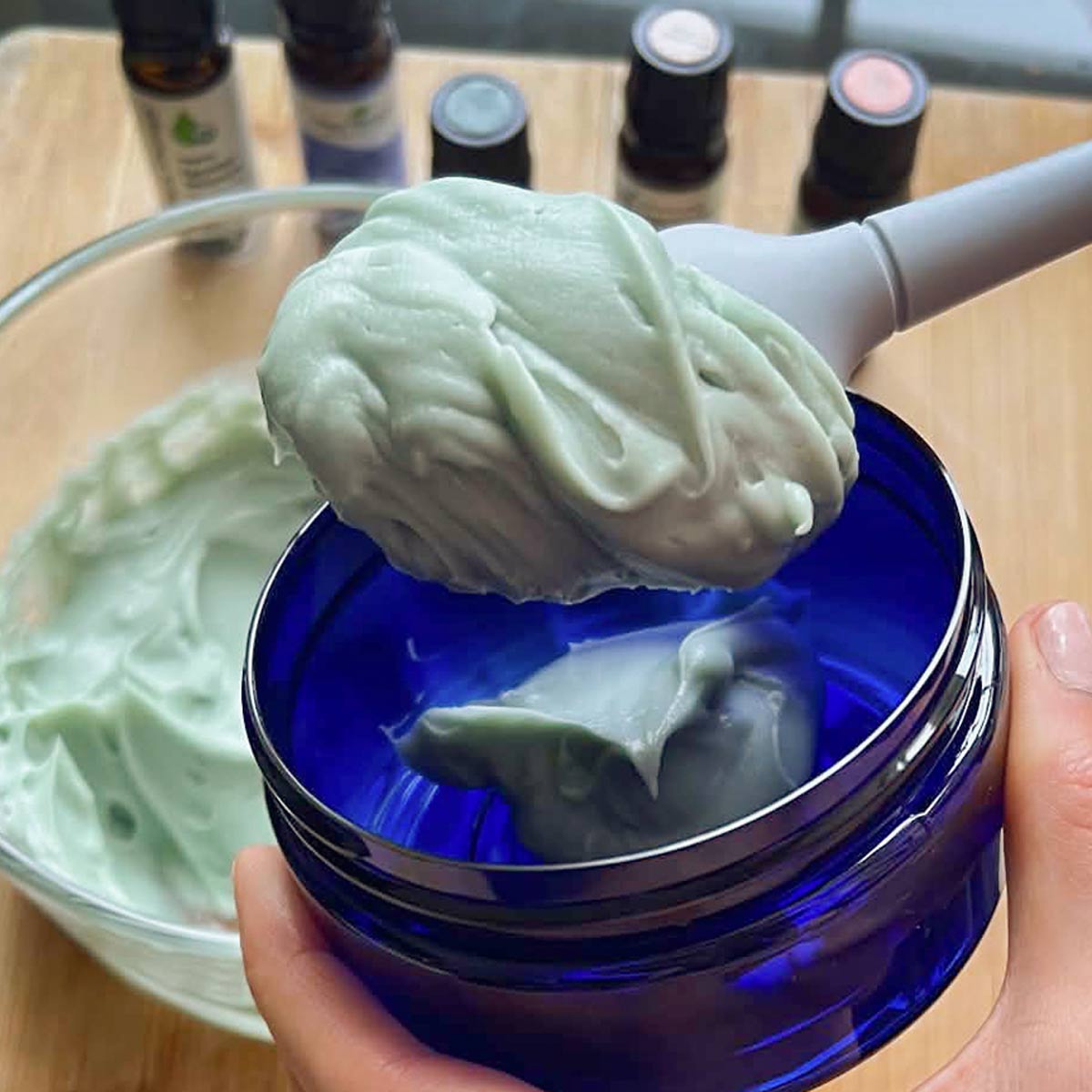
Stir in the CBD oil and oat kernel oil. If you are using plain hemp seed oil instead of CBD oil, and essential oils – add them at this point.
Another option is to add all oil first, and then whip everything. Just make sure you don’t add them when the melted mango butter is too hot. The other oils are heat sensitive.
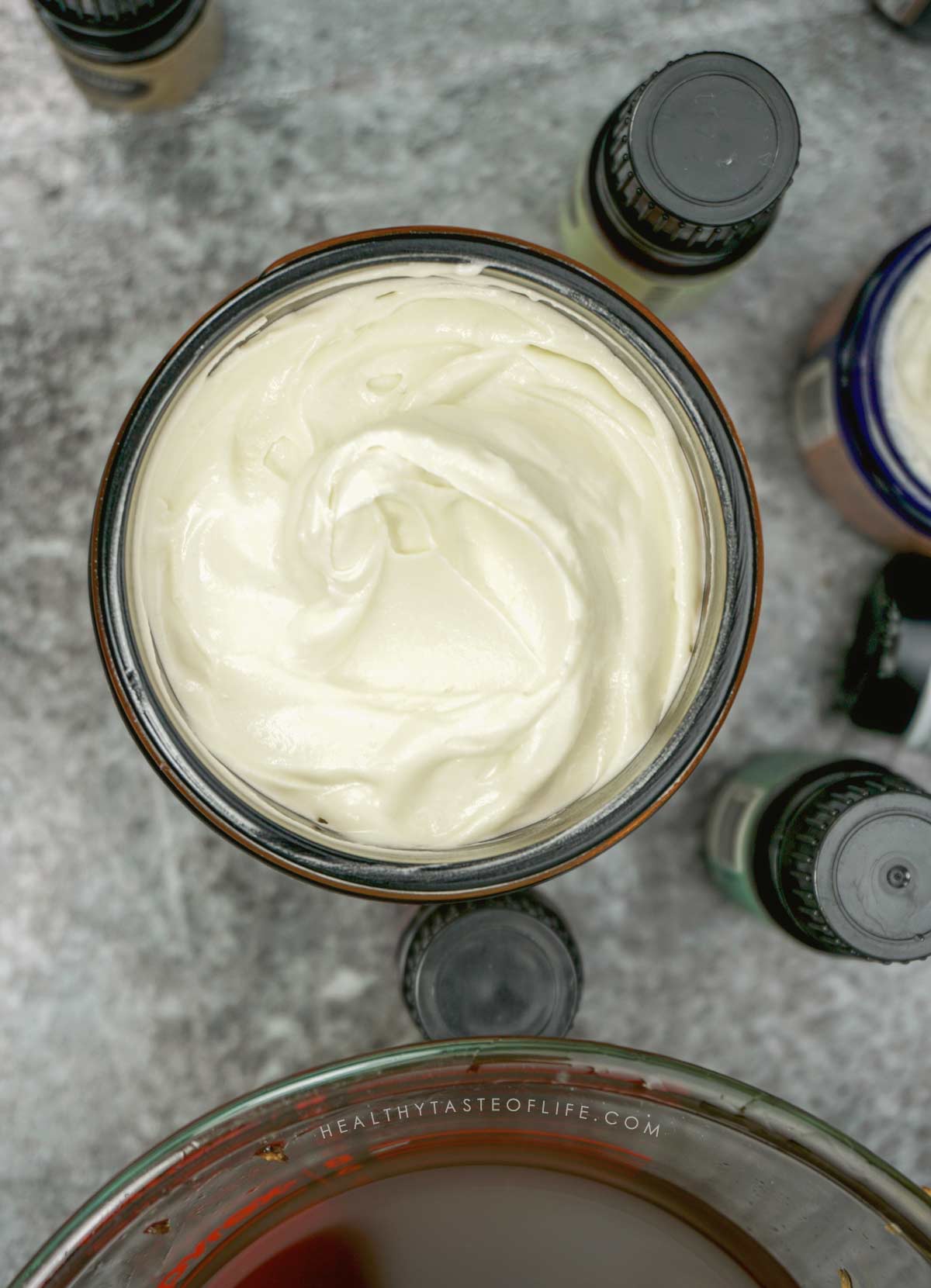
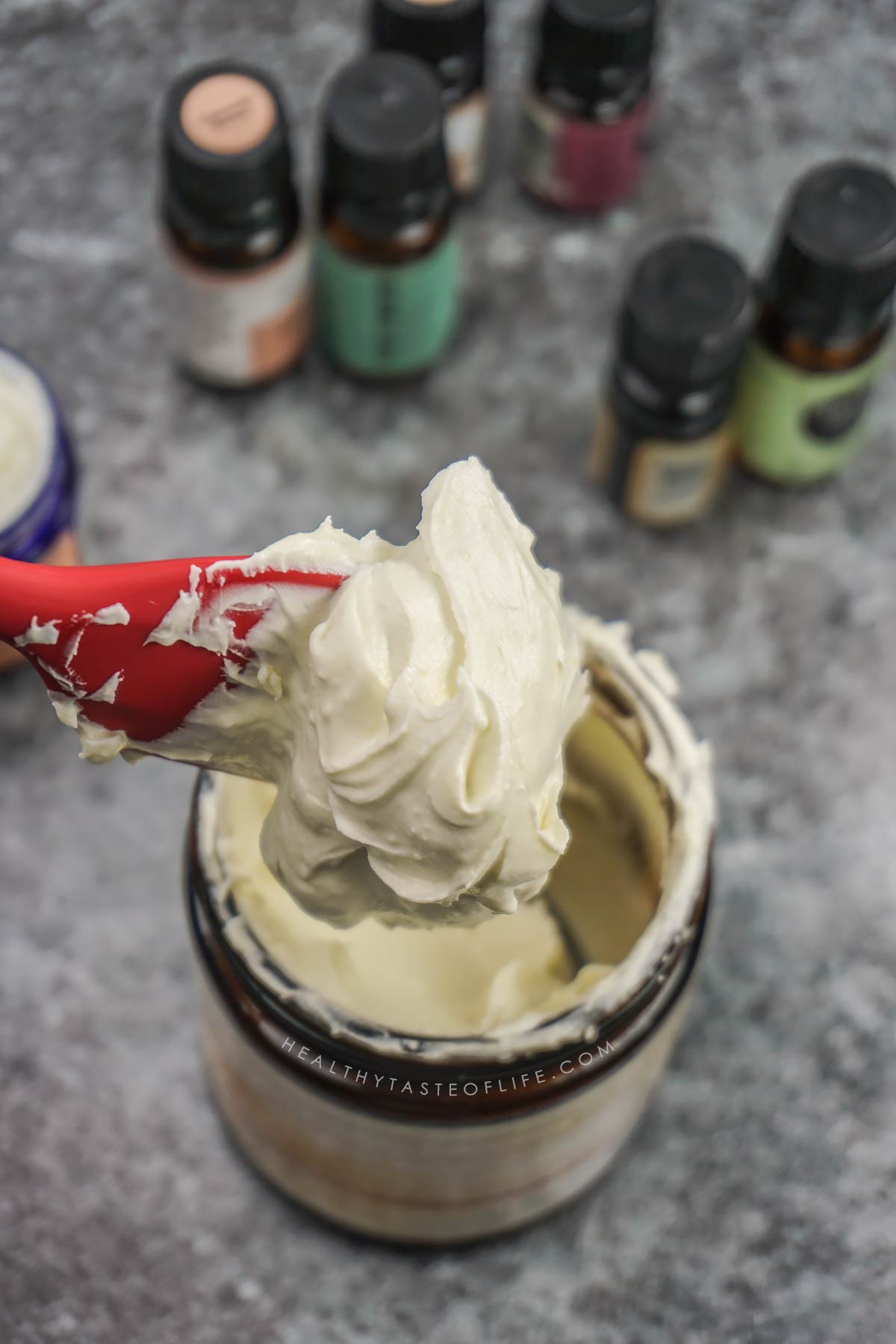
Whip again until everything is evenly incorporated and the body butter is light and creamy.
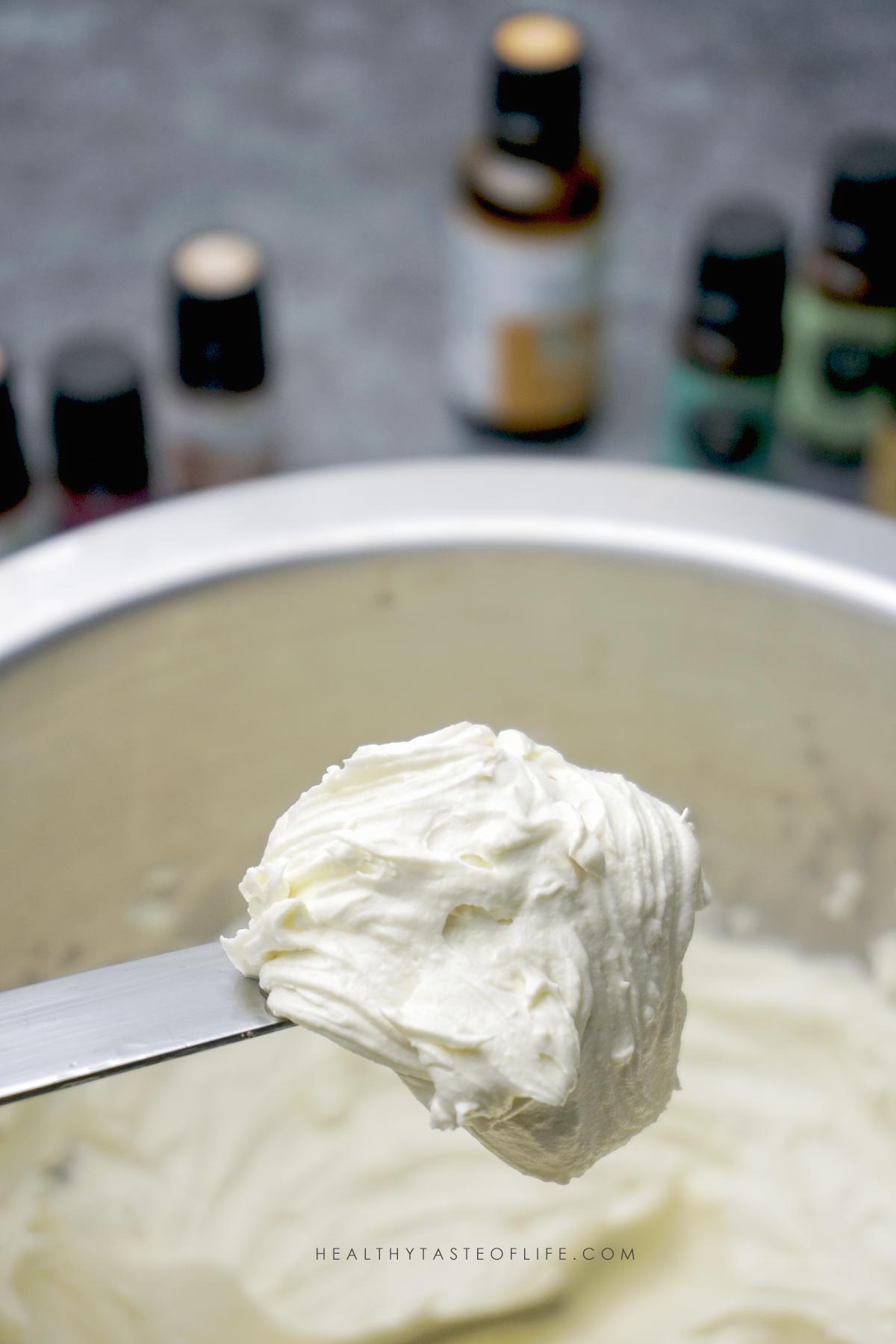
If the finished body butter turns grainy, gently remelt it, cool it more evenly while stirring, then whip again.
If you’re adding essential oils to homemade skincare, here’s what I look for when choosing high-quality essential oils.
5. Store
Transfer to a clean, completely dry glass or cosmetic jar with a tight-fitting lid.
How to Prevent Grainy Body Butter
Plant butters can sometimes become grainy when they cool unevenly. To prevent this, don’t leave the melted mixture sitting untouched while the edges become hard and the center stays liquid.
Instead, stir it every few minutes as it cools. Once it starts looking cloudy and slightly thickened, begin whipping. You can also continue whipping while the mixture cools. It may take a little longer, but this encourages more even solidification.
If the mixture starts becoming hard too quickly, let it soften at room temperature for a few minutes before whipping again. If your finished body butter develops a grainy texture later, gently remelt it, cool it evenly while stirring, and whip it again.
Other Oils You Can Use
You can customize the liquid oils while keeping the total amount approximately the same.
Castor Oil
Castor oil is very rich and noticeably thicker than hemp or oat oil. I would use it to replace only part of the liquid oil, rather than the entire amount, so the body butter doesn’t become too heavy or sticky. It works well when you want a richer formula for extremely dry areas.
Rosehip Oil
Rosehip oil is a lighter option rich in unsaturated fatty acids and naturally occurring carotenoids. It works particularly well if you want a softer body butter for dry or mature-looking skin. Because rosehip oil oxidizes relatively easily, store the finished body butter away from heat and light.
Sea Buckthorn Oil
Sea buckthorn oil contains a distinctive mixture of fatty acids and carotenoids and is commonly used in skincare for dry or compromised-looking skin. A little goes a long way.
Its deep orange-red color can strongly tint the body butter and may temporarily stain pale fabrics, so I recommend replacing only a small portion of the other liquid oils with sea buckthorn oil.
Tip: Whatever oils you substitute, keep the total liquid-oil amount close to the original recipe so the body butter maintains a similar whipped consistency.
How to Use This Whipped Body Butter
Start with a small amount and massage it into the skin until absorbed.
I especially like applying it after a shower while my skin is still slightly damp. Since this formula contains no water, applying it over damp skin helps seal that moisture in.
Use it anywhere body skin tends to become dry or rough, including legs, arms, hands, elbows, knees, heels, and cuticles.
Because it is concentrated, you usually need much less than you would with a regular body lotion.
It can also be useful during winter when cold air and indoor heating tend to leave body skin especially dry.
Using It on Eczema-Prone Skin
The main purpose of this recipe is moisturization. Keeping eczema-prone skin well moisturized helps reduce dryness and supports the skin barrier. Thick creams and ointments are generally preferred over light lotions for very dry eczema-prone skin.
If your skin is actively irritated, I recommend making the simplest version:
mango butter + CBD/hemp oil + oat kernel oil, without essential oils.
Patch test any new ingredient before applying it over a large area.
Eczema Beyond Topical Care
Do not use a homemade cosmetic as a substitute for prescribed eczema treatment, particularly if the skin is severely inflamed, infected, cracked, or weeping.
It is also worth looking beyond the surface. Eczema is a complex condition involving the skin barrier and immune system, with genetics, environmental exposures, allergens, irritants, stress, and other individual triggers potentially contributing to flares. Moisturizing helps support the damaged skin barrier, but identifying and addressing your personal triggers can be an important part of managing eczema long term.
I explain how stress, sleep, inflammation, and daily rhythms can affect symptoms in The Hidden Rhythms That Run Your Health.
How to Choose CBD Oil for This Recipe
I like to choose a CBD oil with as short an ingredient list and with a higher CBD concentration.
For this body butter, I would look for:
- CBD in a hemp seed oil carrier
- no added flavors or sweeteners
- no unnecessary fragrance
- a clearly stated CBD concentration
- third-party testing or a current Certificate of Analysis (COA)
Different products contain very different amounts of CBD, so always check the label.
How to Make Body Butter Less Greasy
Body butter is naturally richer than lotion because it contains no water.
To keep the texture comfortable:
- start with a very small amount
- apply it to slightly damp skin
- warm it between your hands before applying
- give it a few minutes to absorb
- If you want a softer body butter, slightly increase the amount of oils.
- If you prefer a firmer consistency, reduce the liquid oil.
Why Did My Body Butter Get Hard?
This is normal.
Mango butter naturally becomes firmer in cooler temperatures and softer when it is warm. Since this homemade body butter contains no emulsifiers or synthetic texture stabilizers, its consistency changes with room temperature.
Warm a small amount between your hands and it should melt quickly.
You can also add slightly more liquid oil the next time you make it if you prefer a consistently softer texture.
How to Keep Whipped Body Butter From Melting
This recipe does not contain beeswax or synthetic texture stabilizers, so its consistency naturally changes with temperature.
Store it in a cool place away from sunlight and heat. If your home stays above approximately 75°F / 24°C, you may prefer storing it somewhere cooler or in the refrigerator.
If the body butter melts completely, it may lose some of its fluffy whipped texture. You can refrigerate it until partially firm and whip it again.
This Body Butter vs. My Mango Butter Face Moisturizer
I keep this recipe primarily for body skin, but it can be used on the face as well.
If you’re looking for something specifically formulated for the face, I have two separate options:
- My DIY natural face moisturizer for dry, sensitive skin is a plant-based facial moisturizer made with mango butter and calendula, yarrow, and plantain-infused oil.
- For a different base, try my whipped tallow face cream with rosehip oil, made with tallow, rosehip oil, and beeswax.
Storage
Because this recipe contains no water, it does not require the same type of preservatives as a conventional water-based lotion.
The oils can still oxidize, however. Store the body butter:
- tightly covered
- away from sunlight
- away from heat
- in a clean, dry container
Avoid introducing water into the jar and make batches you can reasonably use within a few months.
Discard the product if you notice an unusual change in smell, color, or texture.
Whipped Body Butter Recipe for Dry, Eczema-Prone Skin
Ingredients
- 120 g unrefined mango butter - ½ cup raw
- 10 g (~2 tsp) CBD oil - with hemp seed oil as the carrier base
- 30 g (~6 tsps) oat kernel oil - cold-pressed
- 3-6 drops chamomile essential oil - optional
- 3-6 drops frankincense essential oil - optional
Instructions
- Gently melt the mango butter in a double boiler over low heat.
- Remove from the heat and let it cool for several minutes.
- Allow the mixture to cool until it becomes cloudy and begins thickening, stirring every few minutes to encourage even cooling.
- Stir in the CBD oil and oat kernel oil.
- Whip with an electric mixer until light and fluffy.
- Add the optional chamomile and frankincense essential oils and whip again.
- Transfer to a clean, completely dry jar with a tight-fitting lid.
Notes
For the highest quality look for organic, cold-pressed, unrefined, and certified organic ingredients.To prevent graininess: Stir frequently as the mixture cools and begin whipping once it starts becoming cloudy and slightly thickened. Oil substitutions: Castor oil, rosehip oil, or a small amount of sea buckthorn oil can replace part of the liquid oils. Keep the total amount of liquid oil approximately the same.
- For an even lighter feel, use 8 g castor oil + 32 g oat kernel oil.
- I’d cap castor oil at roughly 20–25% of the liquid-oil portion in this recipe. Above that, the texture may start feeling noticeably sticky.
The information shown is an estimate provided by an online nutrition calculator.
Frequently Asked Questions
Yes. An unscented version is also the better starting point for very sensitive or eczema-prone skin.
Yes. Replace the CBD oil with the same amount of cold-pressed hemp seed oil, or slightly increase it.
They serve slightly different purposes. Hemp seed oil mainly contributes fatty acids and acts as a moisturizing carrier oil. CBD introduces cannabidiol, which has additional anti-inflammatory and anti-itch potential being investigated in dermatology.
You can, although the texture and scent will be different.
This recipe was specifically developed as a mango body butter, which gives it a smooth texture and relatively mild natural scent.
They are different ingredients. Oat kernel oil is an oil that blends easily into this water-free body butter. Colloidal oatmeal is a very finely ground oat powder commonly used in eczema products and baths.
Adding powdered oatmeal changes the texture and formulation, so I prefer oat kernel oil for this particular recipe.
You technically can use many of these ingredients on facial skin if you tolerate them, but I prefer keeping this recipe as a body moisturizer. For facial skin, use my DIY natural face moisturizer for sensitive skin or whipped tallow face cream with rosehip oil, which are formulated specifically as facial products.
If You’re Tired of Conflicting Nutrition And Health Advice + Want a Simpler Approach To Healthy Eating
Join My Newsletter 👇
I share insights on food quality, gut health, health coaching tips beyond nutrition, and whole-food recipes that support long-term health, without strict rules or complicated meal plans.
Plus, you’ll get access to exclusive resources I don’t always share on the website.





Does it smell bad?
No 🙂
I came back to tell you that I made this a week ago for dry cracked heels and it’s like a miracle cream. Nothing I’ve ever bought OTC works like it and this is good for so many other things. I used Red Raspberry seed oil in the place of Neem because I already had it. Thank you for sharing! I’ll be sharing your link in an Essential Oil group on Facebook.
Thanks for sharing, I appreciate it!
Hi Olga! Can I use this cream for baby eczema?
Yes, but you need to use a less essential oils, see notes in the recipe card.