
Hormonal Imbalance or Rhythm Problem? How to Read Your Body’s Patterns
There is a version of this realization that many people arrive at after months, sometimes years, of feeling like something is off. When their energy, mood, cravings, sleep, digestion, skin, or cycle seem to change depending on the time of day or month. There’s that feeling that the body just won’t cooperate anymore. And the question that usually follows is: is something wrong with my hormones?
Note: This article is educational and is not meant to diagnose, treat, or replace medical care. Hormonal symptoms can have many causes and if symptoms are severe, persistent, or worsening, proper testing and professional evaluation are important.
I understand why that is the question. It feels like the right word for what is happening. But what I have come to believe is that the question itself sometimes sends us looking in the wrong direction. Not always, (there are also hormonal conditions) but many people are not always dealing with a defective endocrine system but rather with a disrupted one. And those two things call for very different responses.
Hormones Are Timing Signals, Not Fixed Numbers
Think of hormones as chemical messengers, but also as timing signals.
They help tell the body:
- when to wake up
- when to feel sleepy
- when to digest
- when to release energy
- when to store energy
- when to ovulate
- when to repair tissue
- when to respond to stress
- when to slow down and recover
The word “balance” creates a misleading picture, as though estrogen and progesterone should sit at a certain level and stay there. That is not how it works. Hormones are meant to rise and fall, to respond, to follow rhythms.
Cortisol should peak in the morning and drop toward evening. Melatonin should rise after dark. Insulin should respond to meals. Estrogen and progesterone change throughout the menstrual cycle.
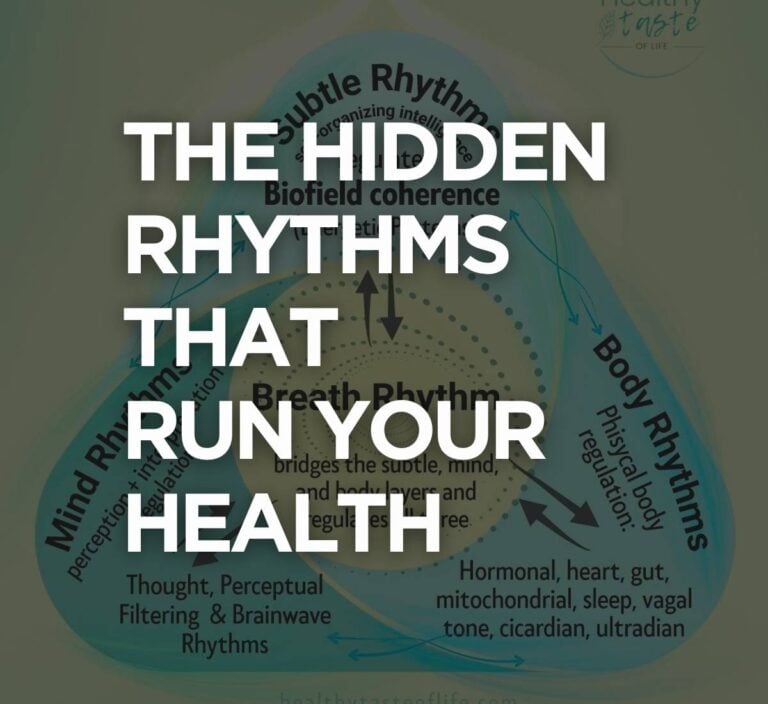
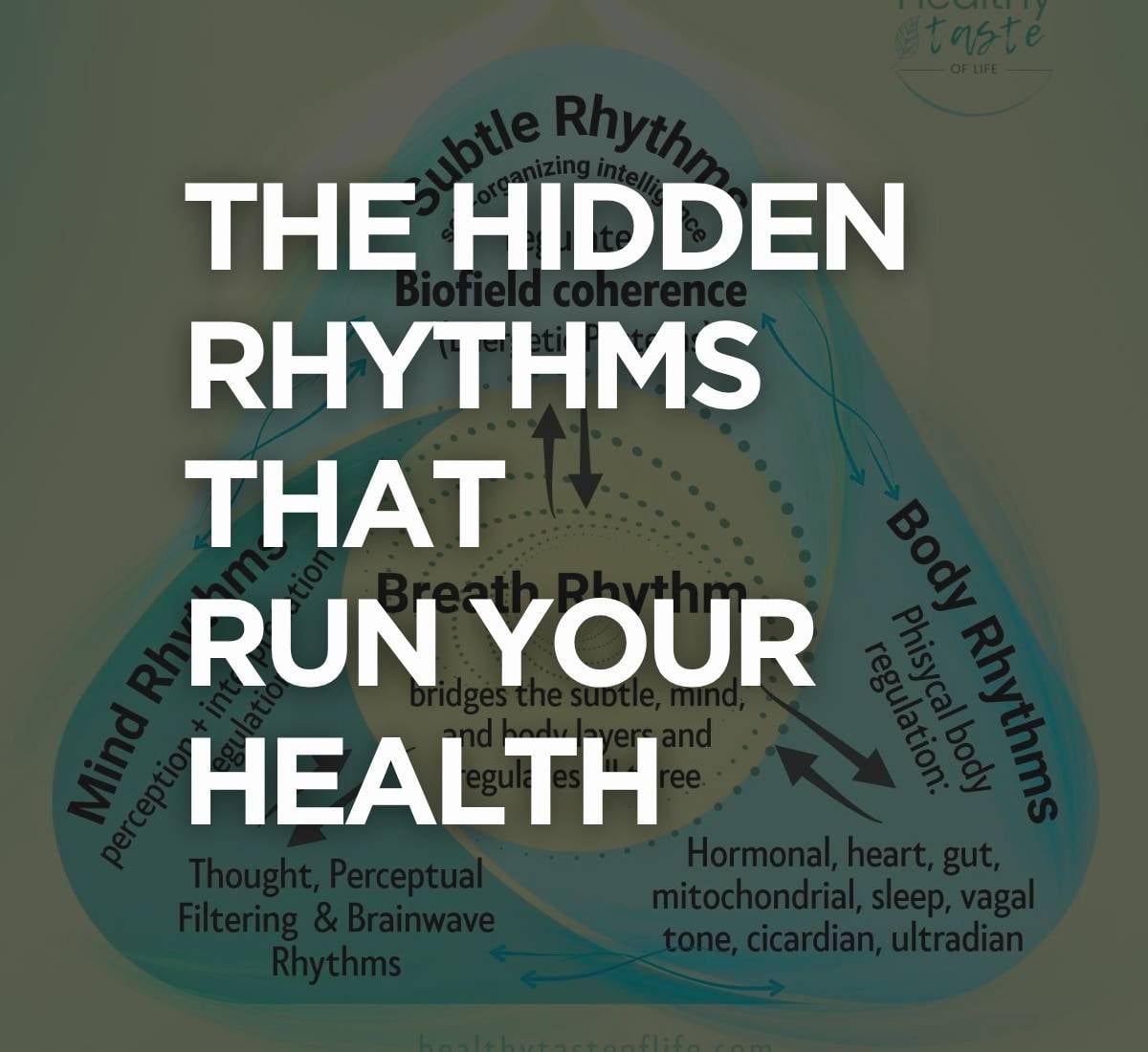
So when we talk about hormonal health, we are really talking about rhythmic health – and if you want to go deeper on how those rhythms operate across the whole body, this article on the hidden rhythms that run your health is a good place to start.
The question is not only: how much of this hormone do I have?
It is: does it rise and fall the way it should, at the time it should?
This is why I prefer to think about dysregulation rather than imbalance. Dysregulation means the signalling has become inconsistent, and that can happen without any single hormone being dramatically outside a reference range.
How Hormonal Dysregulation Builds in Layers
Hormonal dysregulation usually does not appear out of nowhere or overnight. In many cases, it builds in layers.
✤ The first layer is the hereditary terrain
Some bodies are working with a narrower margin than others. Someone may already be more sensitive because of genetics, family history, life stage, gut health or nervous system strain.
- Genetic tendencies affect how the body produces, converts, or clears hormones. If thyroid problems, autoimmune conditions, blood sugar issues, or difficult menopause run through your family, your body may be more sensitive in certain areas. Meaning it has less room for disruption before symptoms begin to show.
- Life stage matters too. Puberty, the postpartum period, perimenopause, these are times when the hormonal system is already in flux, already working harder to recalibrate.
- Gut health is another piece that matters more than most people realise. The gut is involved in producing and metabolising several key hormones, including serotonin, estrogen, and thyroid hormones, and many people with underlying gut disruption have been living with it so long they have stopped registering it as a symptom.
- A nervous system that gets stuck in “overdrive/survival mode” or “shutdown”. It shows up as a combination of physical, emotional, and behavioral signs: chronic muscle tension, worry, hypervigilance, brain fog, emotional numbness, inability to relax, and severe irritability over minor things.
None of this means something is permanently wrong or that illness is guaranteed. It just means every body arrives with its own package: genetics, inherited tendencies, nervous system patterns, and areas that need a little more care. The point is not to see this as a limitation, but as useful information.
✤ Layer Two: When the Rhythms Get Disrupted
Given everything in the first layer, you can see how certain patterns of living would create problems (not overnight) through a slow accumulation of misalignment between what the body expects and what it actually receives.
- Sleep is the most foundational rhythm, and the one that tends to unfold everything else. The body does an enormous amount of hormonal work while you sleep. When sleep is chronically short, fragmented, or poorly timed, cortisol does not drop the way it should in the evening, melatonin is suppressed by late-night light, and hunger hormones shift, making you crave more food while feeling less satisfied by it.
- Irregular eating makes blood sugar more unstable. The body compensates by calling on cortisol when glucose drops, which over time can drive cravings, affect insulin sensitivity, and disrupt the hormonal signals that regulates hunger and fullness. Which is why how you build your meals matters as much as supporting the body through an anti-inflammatory approach to eating.
- Improper light exposure confuses your master biological clock, throwing off the production of key hormones like melatonin, cortisol, and sex hormones.
- Overexercising without adequate recovery can suppress ovarian function and disrupt thyroid conversion.
- Emotional pressure (overthinking, worrying, fear) or any acute everyday tension has measurable physiological consequences: chronic stress changes cortisol, which affects progesterone, which affects mood, sleep, and thyroid function. These are not separate systems.
What happens at this stage is that the body keeps trying to compensate so you can keep functioning.
And that is when you start noticing things: the wired-but-tired evenings, the 2 am wake-ups, the afternoon crash, the cravings, the heightened irritability, the inability to focus or rest, impatience before your period. These are signs that your body is adapting – managing too much data for too long.
✤ The third layer is often a major trigger (a long stressful event)
There are events and periods in life that create a stress load the body simply cannot metabolise fast enough. It could be an illness. Chemical exposures. The postpartum period. Burnout. Loss. Chronic conflict that does not resolve. Financial pressure. Years of carrying too much without enough support. Trauma that was pushed through rather than processed.
These demand more from the body’s regulatory systems than those systems were built to sustain indefinitely. The stress response was designed for acute threats, the kind that resolve. When they do not, the body adapts so you can keep functioning, and those adaptations have consequences.
Cortisol patterns change and stay altered. The nervous system gets stuck on “high alert” or shuts down entirely. The hormonal systems most sensitive to stress (thyroid, reproductive, blood sugar) begin to show the strain.
What started as rhythm disruption and miscommunication may eventually become an endocrine imbalance. And in some people, especially with genetic or epigenetic susceptibility or environmental triggers, this same process may also contribute to immune dysregulation or autoimmune issues.
So the progression may look something like this:
Sensitive terrain ➢ disrupted rhythms ➢ major or repeated triggers ➢ system miscommunication ➢ compensation ➢ loss of flexibility ➢ endocrine imbalance and/or immune dysregulation.
This is why symptoms are worth observing before they become extreme. They may be early signs that the body is adapting to too much, for too long.
The point is not to panic over every symptom, but to ask yourself:
What pattern has my body been adapting to, and where is it asking for support before it has to compensate even harder?
What the Patterns Look Like
When these layers compound, symptoms often stop feeling by chance and start forming patterns.
You may notice that your energy drops at the same time each day, that cravings appear after poor sleep, that anxiety increases before your period, or that your body becomes more reactive during stressful times.
These patterns are useful because they show you where the body may be compensating.
✤ Energy and sleep patterns may look like waking unrefreshed, needing caffeine to function (but sharpens anxiety), crashing in the afternoon, getting a second wind at night, or waking around 2-4 a.m. with alertness or worry. The wired-but-tired combination is one of the clearest signs that the cortisol rhythm has inverted or flattened.
✤ Blood sugar and appetite patterns may look like shakiness between meals, irritability that improves after eating, persistent carbohydrate cravings, especially in the afternoon, post-meal fatigue, or feeling like hunger and mood change quickly.
✤ Cycle patterns: cycle length that has changed; PMS that has intensified or arrived earlier; spotting before the period; periods heavier or lighter than before; a sharp drop in mood or mental clarity in the week before bleeding.
✤Thyroid and metabolic patterns may look like cold hands and feet, sluggish digestion, dry skin, hair shedding, brain fog, low motivation, or feeling depleted after stress, persistent brain fog, sluggish digestion; feeling cold when others are comfortable.
None of these patterns are enough to diagnose a hormone problem by themselves. But they are worth paying attention to because they show how your body is responding over time.
The Main Hormonal Rhythms That Shape How You Feel
You do not need to memorize every hormone to understand your body better. Start with the main rhythms most people can actually feel.
1. Cortisol Rhythm: Your Wake-Up and Stress Rhythm
Cortisol is often called the “stress hormone,” but that makes it sound like something bad. Cortisol is essential. It helps regulate your stress response, blood sugar, inflammation, blood pressure, metabolism, and sleep-wake cycle.
In a healthy daily rhythm, cortisol is usually higher in the morning and lower later in the day. When this rhythm is disrupted, you may feel tired in the morning, stressed before the day begins, crashed in the afternoon, or wired at night.
When this rhythm feels disrupted, you may notice the following:
|
Pattern |
What it may feel like |
|---|---|
|
Low morning drive |
Hard to wake, heavy body, no motivation |
|
Sharp morning stress |
Waking anxious, racing thoughts, urgency |
|
Afternoon crash |
Sleepy, foggy, craving caffeine or sugar |
|
Evening second wind |
Tired all day, wired at night |
|
Night waking |
Waking around 2-4 a.m., often with alertness or worry |
This does not automatically mean you have “adrenal fatigue” (phrase used very often online). But it may mean your stress rhythm, sleep rhythm, blood sugar rhythm, or nervous system rhythm needs attention.
2. Melatonin Rhythm: Your Darkness and Sleep Signal
Melatonin helps your body understand that night has arrived. It rises in response to darkness and is strongly influenced by light exposure.
This rhythm may be disrupted by bright light at night, screens before bed, inconsistent sleep timing, late meals, working late, stress at night, lack of morning light, or shift work.
When melatonin rhythm is off, you may feel tired but unable to fall asleep, sleepy too late, groggy in the morning, or mentally alert at night when your body should be slowing down.
3. Blood Sugar, Insulin, and Appetite Rhythm
Insulin helps move glucose from the blood into cells. After meals, insulin should rise so your body can use or store energy. Between meals, it should settle.
When blood sugar rhythm is unstable, you may notice:
- shakiness and anxiety that improves after eating
- irritability when hungry
- cravings for sugary or starchy foods
- fatigue after meals
- waking at night hungry or alert
- needing caffeine to push through the afternoon
Your appetite hormones are connected to this rhythm too. Sleep, stress, meal timing, menstrual cycle phase, and emotional state can all affect hunger and fullness. This is why cravings are not always about willpower. Sometimes the body is asking for fast energy because the rhythm underneath is unstable.
4. Thyroid and Metabolic Rhythm: Your Inner Pace
The thyroid helps regulate metabolism, body temperature, energy production, digestion speed, mood, and many other functions. It is not usually felt as a simple “hour-by-hour” rhythm like cortisol, but thyroid function interacts with sleep, stress, inflammation, nutrient status, and reproductive hormones.
Possible patterns to notice include:
- cold hands and feet
- sluggish digestion
- low motivation
- hair shedding
- dry skin
- slow morning energy
- heavy periods
- feeling depleted after stress
These symptoms are not enough to diagnose a thyroid issue, but they are worth tracking and discussing with a practitioner if they persist.
6. Estrogen and Progesterone Rhythm: Your Monthly Pattern
For cycling women, hormones do not stay the same all month. The menstrual cycle includes several phases, and each one can affect energy, mood, sleep, appetite, skin, digestion, and stress tolerance.
The timing below is based on an average 28-day cycle, but your own pattern may be shorter, longer, or vary from month to month.
|
Cycle phase |
Approx. timing |
What is happening |
What you may notice |
|---|---|---|---|
|
Menstrual phase |
Days 1–5 |
Hormones are lower as bleeding begins and the uterine lining sheds. |
Lower energy, inward mood, need for rest, cramps, looser stools, more sensitivity. |
|
Follicular phase |
Days 6–13 |
Estrogen gradually rises and the body prepares for ovulation. |
More energy, clearer mood, better motivation, improved stress tolerance, lighter feeling in the body. |
|
Ovulation |
Around day 14 |
Estrogen peaks and luteinizing hormone rises to trigger ovulation. |
More social energy, libido, confidence, cervical fluid, sometimes mild ovulation pain or skin changes. |
|
Early to mid-luteal phase |
Days 15–23 |
Progesterone rises after ovulation and body temperature slightly increases. |
More calm or stable energy, stronger appetite, need for grounding, warmth, and regular meals. |
|
Late luteal / premenstrual phase |
Days 24–28 |
Estrogen and progesterone drop if pregnancy does not happen. |
PMS may show up: mood shifts, cravings, breast tenderness, bloating, headaches, sleep changes, lower stress tolerance. |
If your cycle is longer or shorter than 28 days, ovulation may not happen exactly on day 14. The luteal phase is often more consistent, while the follicular phase is the part that tends to vary more from person to person or from month to month.
The idea is stop expecting the same output from a body that is naturally changing. Just follow the rhythm.
PMS is A Rhythm Signal
Intense PMS is information. This is not a sign that you are “too emotional” or that your body is working against you. It is just telling you that the late luteal phase needs more support.
As estrogen and progesterone change before your period, your body may become more sensitive to stress, poor sleep, blood sugar swings, inflammation, caffeine, alcohol, overcommitting, or emotional suppression. This is why symptoms like cravings, mood changes, breast tenderness, bloating, headaches, irritability, anxiety, or sleep changes may show up more strongly before bleeding starts.
Also, PMS can become more noticeable in the late 30s and 40s as hormones fluctuate more unpredictably during the transition toward perimenopause.
What Disrupts Hormonal Rhythms?
Hormonal rhythms are not disrupted by one thing alone. The body is always reading signals from multiple layers at once: physical, mental, emotional, and energetic.
This does not mean every hormone symptom is “emotional” or “all in your head.” The body is a whole complex system. Your hormones respond to food, sleep, light, inflammation, stress, thoughts, emotions, safety, and the deeper rhythm of how you live. When those signals become inconsistent, overwhelming, or ignored for too long, the hormonal system may start adapting to survival instead of restoration.
1. Physical Disruptors: The Body’s Timing Signals Get Confused
The physical layer includes the most obvious rhythm disruptors: sleep, light, food, movement, blood sugar, inflammation, and illness.
Your body depends on repeated timing indicators. Morning light tells the brain the day has started. Darkness tells the body to prepare for sleep. Meals tell the digestive and metabolic system when energy is available. Movement tells the body when to activate, circulate, and use fuel. Rest tells the body when to repair.
When these signals are irregular, the hormone system can become confused.
Common physical disruptors include:
- inconsistent sleep and wake times
- too much artificial light at night
- not enough morning light
- irregular meals or under-eating
- blood sugar swings
- too much caffeine, especially before food
- late-night eating
- overexercising without enough recovery
- chronic inflammation or gut irritation
- illness, pain, or poor nutrient absorption
- alcohol or medications that affect sleep, liver function, or hormones
This may show up as poor sleep, afternoon crashes, cravings, PMS, irregular cycles, anxiety, sluggish digestion, or waking up tired even after enough hours in bed.
2. Mental Disruptors: The Mind Keeps the Body in “Problem-Solving Mode”
The mental layer includes your thoughts, beliefs, inner dialogue, daily pressure, and the amount of mental load you carry.
The body listens to the stories the mind repeats. If the mind keeps rehearsing danger, failure, symptoms, or endless “what ifs,” the body may begin responding as if those threats are already happening.
When your thoughts are constantly scanning for problems, planning ahead, worrying, comparing, controlling food, fearing symptoms, or trying to “fix” the body, the nervous system can stay in a quiet state of alertness. It may not feel like panic, but underneath, the body is still receiving the message: stay ready, stay guarded, the outcome is still uncertain.
Common mental disruptors include:
- overthinking health symptoms (yours or kid’s)
- fear-based food rules
- perfectionism around diet or routines
- constant self-monitoring
- pressure to be productive all day
- mental overload and decision fatigue
- believing rest must be earned
- worrying about every body sensation
- feeling like your body is getting worse no matter what you do
This kind of mental pressure can keep the body in a low-grade stress response, even when nothing dramatic / dangerous is happening on the outside.
Another way to explain it:
The body may not know the difference between an actual emergency and a mind that keeps sending emergency signals all day. This is why mental pressure is not “just in your head”. The body may interpret constant worry, pressure, and self-monitoring as a reason to stay braced and vigilant instead of focusing on digestion, repair, and hormonal regulation. The message received is: “It’s not safe yet.”
3. Emotional Disruptors: Unprocessed Stress Becomes a Body Issue
The emotional layer includes what you feel, suppress, carry, or avoid.
Emotions are not just “feelings.” They create body chemistry. Fear, grief, resentment, shame, pressure, anger, and chronic disappointment can all create internal stress signals when they are not processed or released.
This does not mean emotions directly “cause” every hormonal issue. But unresolved emotional stress can keep the nervous system in the “fight or flight” mode, which can influence the hormonal system over time.
Common emotional disruptors include:
- chronic worry or fear
- feeling unsafe or unsupported
- resentment from over-giving
- grief that has not had space
- anger that is suppressed
- shame around food, weight, body, symptoms (etc)
- emotional eating followed by guilt
- feeling responsible for everyone
- not expressing needs
- living in constant urgency
This may show up as tightness in the chest, shallow breathing, jaw tension, digestive tightness, insomnia, cravings, PMS flares, fatigue, or feeling emotionally reactive before your period.
The body often whispers first and the body will eventually speak louder through symptoms, if emotions are constantly pushed down. By suppressing these feelings, we attempt to stay in control as a protective coping mechanism to survive overwhelming trauma, avoid social disapproval, or maintain productivity. This is usually learned over time, typically originating in childhood from interactions with primary caregivers and societal conditioning.
4. Energetic Disruptors: Living Out of Sync With Your Authentic Self
The energetic layer is the most subtle, but many people feel it clearly.
When your daily actions, habits, and obligations conflict with your core values, natural rhythms, and true desires, there’s a lingering sense of living on autopilot, as if you’re not living your life and not using your true potential.
You can eat clean, take supplements, and sleep enough, but still feel drained if your life rhythm constantly goes against your inner signals.
Common energetic disruptors include:
- pushing when the body is asking to pause and rest
- making decisions that don’t resonate with your true self (saying yes when you mean no)
- adopting career paths, lifestyles, or relationship styles based on what’s “successful” rather than what fulfills
- living in constant productive mode
- being around environments or people that drain you
- constant second guessing (disconnected from your own preferences)
- people pleasing (negleting emotional needs to accommodate the expectations of others)
- mentally reliving trauma, fears and ruminating
- forcing a routine that does not fit your period of life
- losing connection with natural cycles, daylight, rest, and creativity
- feeling disconnected from purpose, joy, or meaning
- treating the body like a machine instead of a living system
This layer often shows up as feeling “off” without a clear reason.
You may sleep, eat, and move “right,” but still feel unsatisfied, uninspired, heavy, or disconnected. In this state, the body may not only need nutrients. It may need space, truth, boundaries, sunlight, quiet, creativity, emotional honesty, and a slower pace.
How These Layers Work Together
These layers overlap, they are not separate. For example:
|
Pattern |
Possible layers involved |
|---|---|
|
Waking at 3 a.m. |
Blood sugar, cortisol, mental worry, emotional stress, lack of safety (physical or emotional) |
|
PMS flares |
Hormone shifts, inflammation, poor sleep, suppressed emotions, overgiving |
|
Afternoon crash |
Blood sugar, poor sleep, mental overload, too much output |
|
Cravings |
Under-eating (nutritionally deficient) poor sleep, stress, looking for emotional comfort, nervous system seeking safety |
|
Irregular cycle |
Stress load, under-fueling, overtraining, fear, burnout, life pace mismatch |
|
Wired at night |
Late light, cortisol, mental stimulation, unresolved emotions, no evening transition |
|
Low libido |
Stress, fatigue, relationship tension, resentment, low safety, depleted energy |
This is why supporting hormonal rhythms is not only about taking the right supplement or eating the right foods.
- The body needs a clearer physical rhythm.
- The mind and emotions needs fewer fear-based thoughts, boundaries and a slower inner pace.
- And your energy needs connection with purpose, joy, meaning and authenticity. And to make decisions that resonate with your true self.
Hormonal rhythm is shaped by the whole environment you live in – both outside of you and inside of you.
A Simple Way to Read the Layers
When a symptom keeps repeating, instead of immediately asking, “What supplement do I need?” pause and ask yourself:
✤ Physical:
Am I sleeping, eating, moving, hydrating, and getting light in a way that supports my rhythm?
✤ Mental:
What thoughts or beliefs are keeping my body in pressure, fear, or control? Where am I second-guessing myself constantly?
✤ Emotional:
What feeling am I carrying, suppressing, or trying to push through? And am I taking care of my emotional needs?
✤ Energetic:
Where am I not honoring and nurturing my gifts, talents or passion? Where I’m not being authentic or where my internal truth no longer matches my daily actions, environment, or values?
When It Is Time to Test
It is worth pursuing proper evaluation when symptoms are significantly affecting your daily function, and lifestyle changes have not moved things sufficiently over two to three months. Or when there is a personal or family history of thyroid disease, PCOS, endometriosis, diabetes, or autoimmune conditions.
Or when symptoms are adding-up rather than stabilizing: very heavy or absent periods, unexplained weight changes, heart palpitations, significant hair loss, or persistent insomnia.
The most informative testing usually includes a full thyroid panel (not just TSH, but free T3, free T4, and thyroid antibodies), fasting glucose and insulin together, sex hormones timed correctly to your cycle phase, and key nutritional markers: iron (saturation and binding capacity), ferritin, vitamin D, B12. Because deficiencies in any of these can look identical to hormonal dysregulation and are sometimes the primary driver.
A result within the reference range is not always the same as optimal for you. Reference ranges are population averages. A result at the low end of normal for progesterone, thyroid hormone, or iron can still be contributing meaningfully to how you feel, which is why context and symptoms always matter alongside the numbers.
My Own Thyroid Rhythm Example
In one of my own thyroid panels, my TSH was low at 0.24 mIU/L, while Free T3 and Free T4 were still within range.
About eight months later, after focusing on rhythm support (nutrients, movement, morning light, sleep, nervous system and emotional load regulation) my TSH moved back into range at 2.05 mIU/L from 0.24 mIU/L.
Free T4 changed from 1.2 to 1.3 ng/dL. Free T3 shifted from 3.2 to 3.6 pg/mL, both still within range.
And the inflammation marker hs-CRP decreased from 1.9 mg/L to 0.4 mg/L (see images below).
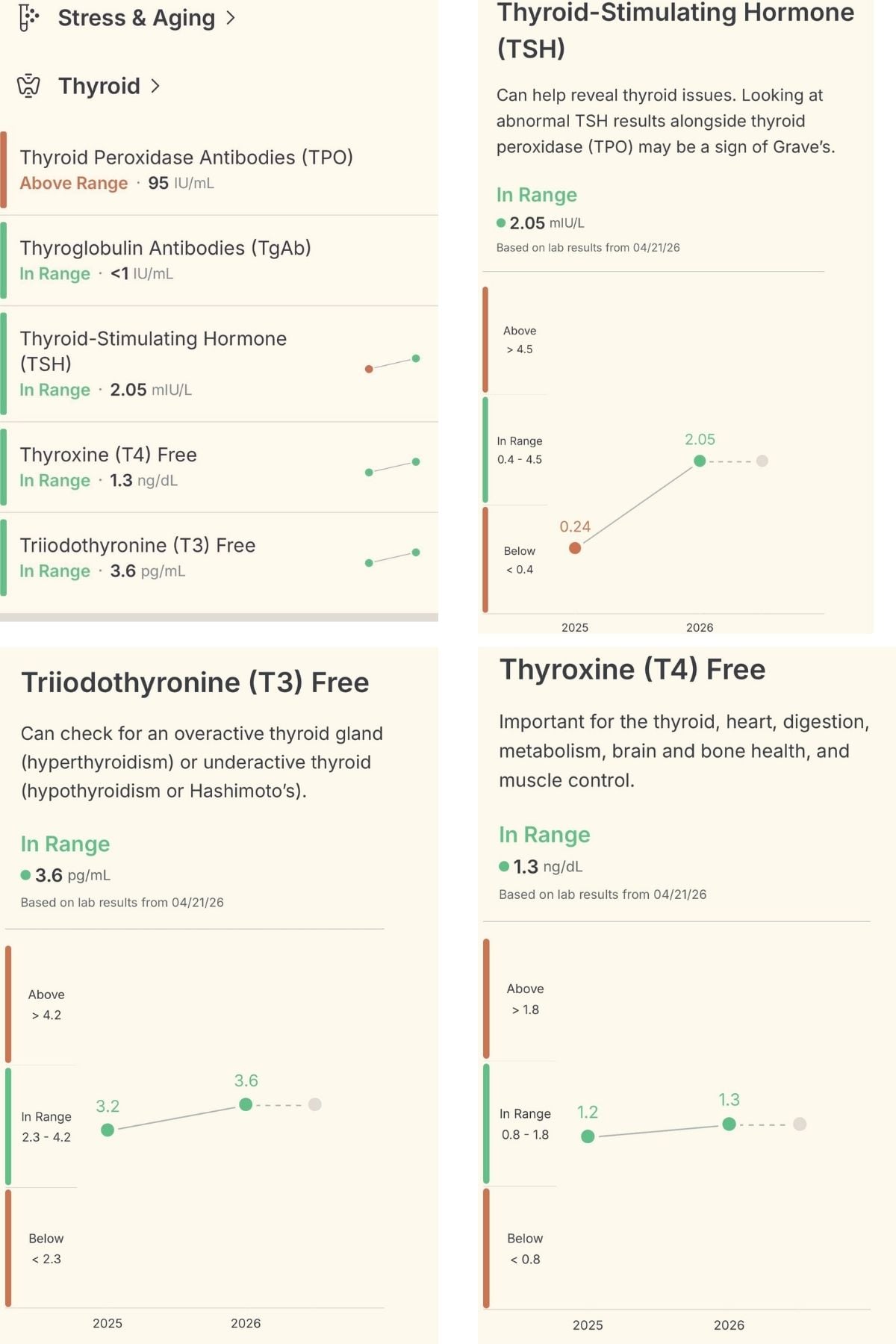
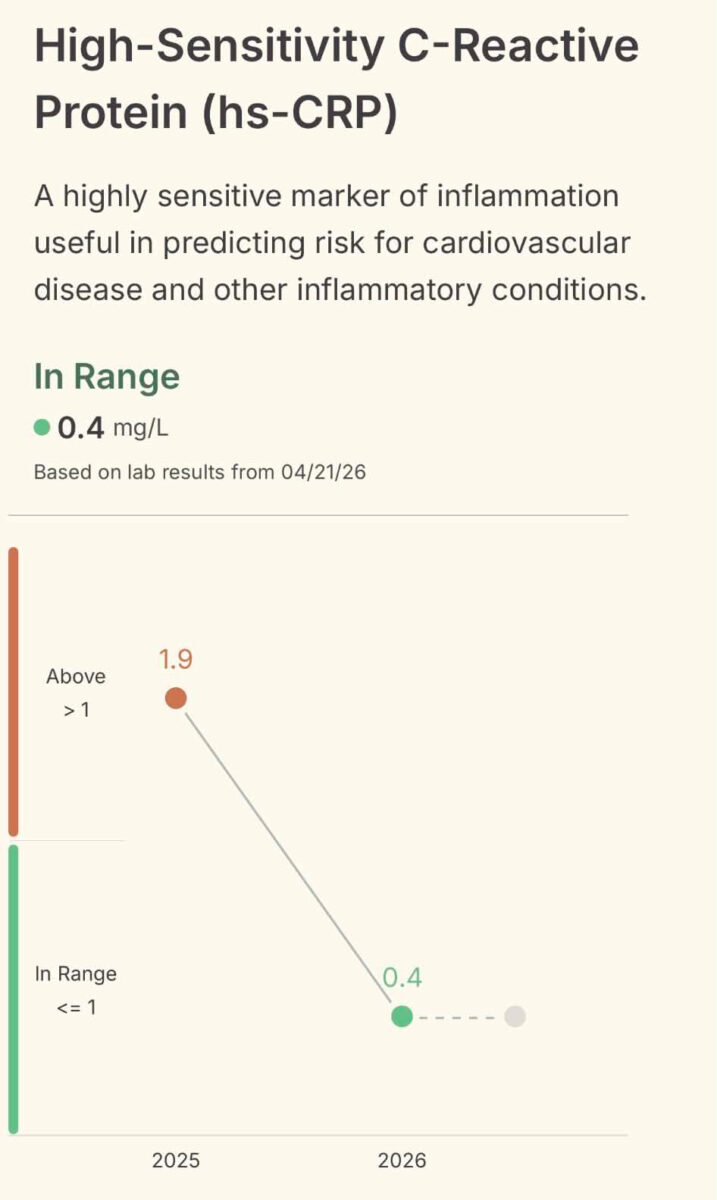
I cannot say this proves cause and effect, and I cannot speak to antibody changes because TPO antibodies were not retested. But it was a useful example of why testing before and after lifestyle and rhythm changes can be powerful. You are no longer guessing. You can see what is happening, make precise adjustments across the physical, mental, emotional, and energetic layers.
It helps you see not only how you feel, but also whether your body’s markers are moving toward more stability or more strain over time.
I personally used Function Health for my tests (a link with $25 discount), but you can choose any provider you prefer.
How to Read Your Body’s Patterns Across All Layers
Hormonal rhythm issues often show up as patterns across several layers at once: physical symptoms, mental loops, emotional reactions, and energetic depletion. When you look at these together, you get a clearer picture of what your body may be trying to communicate.
Physical Patterns
| Pattern you notice | Possible rhythm to explore |
|---|---|
| Hard to wake up | Cortisol rhythm, sleep timing, low morning light, thyroid, under-fueling |
| Afternoon crash | Blood sugar, sleep debt, cortisol dip, irregular meals |
| Wired at night | Late light, stress hormones, delayed sleep rhythm |
| Waking 2-4 a.m. | Blood sugar dip, cortisol shift, alcohol, perimenopause, stress |
| Bloating worse at night | Meal timing, gut motility, food tolerance, stress |
| Cold hands and feet | Thyroid, low intake, circulation, iron status, stress physiology |
| PMS flares | Luteal phase sensitivity, inflammation, poor sleep, blood sugar |
Mental Patterns
| Pattern you notice | What it may be signaling |
|---|---|
| Constantly researching symptoms | The mind is looking for safety through control |
| Fear around food choices | Food has become linked with threat instead of nourishment |
| long-time pressure to “fix” your body | The body may be receiving more stress than support |
| All-or-nothing thinking | The nervous system may be swinging between control and collapse |
| Overthinking before bed | The mind has not had space to unload during the day |
Emotional Patterns
| Pattern you notice | What it may be signaling |
|---|---|
| Irritability before your period | Luteal-phase sensitivity plus unmet needs or stress load |
| Cravings after emotional stress | The body may be seeking comfort, grounding, or quick energy |
| Feeling resentful or overextended | Boundaries may be weak or energy is being overgiven |
| Crying easily when tired | The nervous system may be depleted |
| Anxiety after pushing too hard | The body may be asking for safety and recovery |
Energetic Patterns
| Pattern you notice | What it may be signaling |
|---|---|
| Feeling drained around certain people, roles, or environments | Your energy may be leaking through weak boundaries, people-pleasing, or staying in places that no longer feel aligned. |
| Feeling disconnected from yourself despite doing all the “right” things | There may be a mismatch between your body’s needs, your natural rhythm, and the life you are trying to keep up with. |
| A subtle sense of feeling “off” even when nothing obvious is wrong | Your outer life may not fully match your inner truth, values, needs, or deeper direction. |
| Losing motivation even with good routines | The routine may be too rigid, too forced, or disconnected from meaning, joy, creativity, or your current season of life. |
| Feeling numb, uninspired, or emotionally muted | Your system may need more than rest; it may need reconnection, expression, beauty, purpose, or honest emotional movement. |
| Forcing yourself to keep going when your body is struggling | You may be overriding your natural rhythm and training the body to stay in output mode instead of restoration. |
| Saying yes while your body tightens or contracts | Your body may be signaling a boundary, truth, or need that the mind is trying to ignore. |
| Feeling restless in a life that looks “fine” from the outside | A deeper part of you may be asking for change, expansion, creativity, honesty, or a more authentic way of living. |
| Feeling heavy before certain tasks or commitments | Your energy may be responding to obligation, resentment, lack of choice, or something that no longer feels aligned. |
| Feeling more alive after certain conversations, places, or activities | This may be a clue toward what nourishes your true self and supports your natural rhythm. |
Energetic patterns are often subtle at first. They may show up as heaviness, contraction, restlessness, dullness, or a quiet/numbing sense that something is not fully true for you.
When ignored for too long, the body may begin expressing that misalignment through fatigue, tension, cravings, sleep changes, or hormonal rhythm disruption.
How to Track Hormonal Rhythms Without Obsessing
Tracking your body’s patterns can be helpful, but it should not become another thing to control.
The point is not to monitor every symptom or analyze every feeling, but is to notice what repeats so you can understand your body with more clarity and less fear.
Start simple. Choose a few markers and observe them for 2–3 weeks or 2–3 menstrual cycles, if applicable.
You might track:
- wake time and bedtime
- sleep quality
- morning energy
- afternoon energy
- cravings
- appetite and hunger stability
- digestion and bowel movements
- mood shifts
- stress level
- exercise type and intensity
- cycle day, if applicable
- PMS symptoms
- body temperature or cervical mucus, if tracking ovulation
- moments when you feel grounded, drained, tense, or disconnected
Then look for patterns across the layers.
|
Layer |
Questions to ask |
|---|---|
|
Physical |
Do symptoms appear after poor sleep, irregular meals, late nights, intense workouts, certain foods, or blood sugar dips? |
|
Mental |
Do symptoms increase when I am overthinking, worrying, researching, controlling, or pressuring myself? |
|
Emotional |
Do symptoms flare when I suppress anger, grief, fear, resentment, or unmet needs? |
|
Energetic |
Do symptoms show up when I override my true self, force myself to do things that don’t feel right, or live out of sync with what feels true? |
This kind of tracking is about seeing the relationship between your life rhythm and your body rhythm.
For example, you may notice that your cravings are worse after poor sleep and emotional stress. Or your PMS flares when you overcommit during the luteal phase. Or your sleep gets lighter when you push through exhaustion instead of allowing an evening rest.
A helpful way to approach tracking is to ask:
- When do I feel most stable?
- What usually happens the days before symptoms appear?
- What phase of my cycle feels most sensitive?
- What patterns repeat no matter how “healthy” I try to be?
If tracking starts making you anxious, take a break.
How to Support Hormonal Rhythm Without Trying to Control Everything
Supporting hormonal rhythm does not mean creating a perfect routine or managing every detail of your life. The goal is not total control, but to give your body clearer signals.
Your hormones respond to repeated signals: light, food, movement, rest, safety, emotions, and the pace of your day. When these cues become more stable and predictable, the body has an easier time knowing when to wake, digest, repair, sleep, and recover.
Start With Simple Rhythm Routines
You do not need to change everything at once. Start with a few daily practices:
- get morning light soon after waking
- keep a more consistent wake time
- eat for nourishment (a balanced healthy plate), especially earlier in the day
- avoid using caffeine as a meal replacement
- dim lights and reduce stimulation in the evening
- move your body in a way that matches your current energy
- create small pauses between tasks (every 90 min-ultradian rhythm)
- support your luteal phase by slowing down and practicing self-care, not more pressure
These basics may sound simple, but they are powerful because they tell the body: we are safe, fueled, and not in constant emergency mode (fight or flight).
Support the Nervous System Too
Hormones and the nervous system are always communicating. If your body is stuck in urgency, fear, overthinking, or pressure (sympathetic activation), your hormone rhythms may reflect that.
This is why hormone support is not only about food or supplements. It can also mean slowing your breathing, (or even doing breathwork), walking outside, releasing tension, expressing what you feel, setting clear boundaries, or resting before you crash.
The body just needs fewer signals of threat and alert.
Work With Your Body’s Natural Patterns
If you have a menstrual cycle, your needs may change throughout the month. You may feel more energized around ovulation and more inward, hungry, sensitive, or tired before your period.
Supporting hormonal rhythm means learning when to push, when to nourish, when to simplify, and when to recover.
You do not need a complicated hormone protocol to start supporting your rhythm. Often, the basics send the strongest signals.
The Bigger Picture
Your body is rhythmic. Energy, appetite, mood, sleep, digestion, stress tolerance, and menstrual patterns can all adapt depending on the time of day, the phase of your cycle, your stress load, your sleep, your nourishment, and the way you are living.
Many hormone-related patterns are shaped by the signals the body receives every day: light, food rhythm, sleep, movement, inflammation, emotional safety, stress load, and nervous system regulation. But not every hormonal problem begins there. Some endocrine conditions start from a specific medical cause, such as a genetic enzyme issue, gland tumor, autoimmune gland activity, gland damage, medication effects, or a structural problem. These need proper testing and medical care.
Even when the root cause is medical, the body still lives inside a rhythm. Sleep, nourishment, inflammation, emotional safety, stress load, and nervous system regulation may not be the original cause, but they can influence how well the body copes, recovers, and responds to treatment.
This is why it helps to read symptoms through the physical, mental, emotional, and energetic layers. You get a fuller picture of what the body may be adapting to, and where it may be asking for support.
If this article helped you understand why your hormones may feel off, the next step is learning how to apply it to your own body.
That’s why I created the 👇Hormonal Rhythm Guide: a practical body-mind-energy workbook designed to help you track your patterns, identify your biggest disruptors, and support your rhythm through food timing, light, sleep, movement, nervous system regulation, emotional awareness, cycle support, and self-reflection.
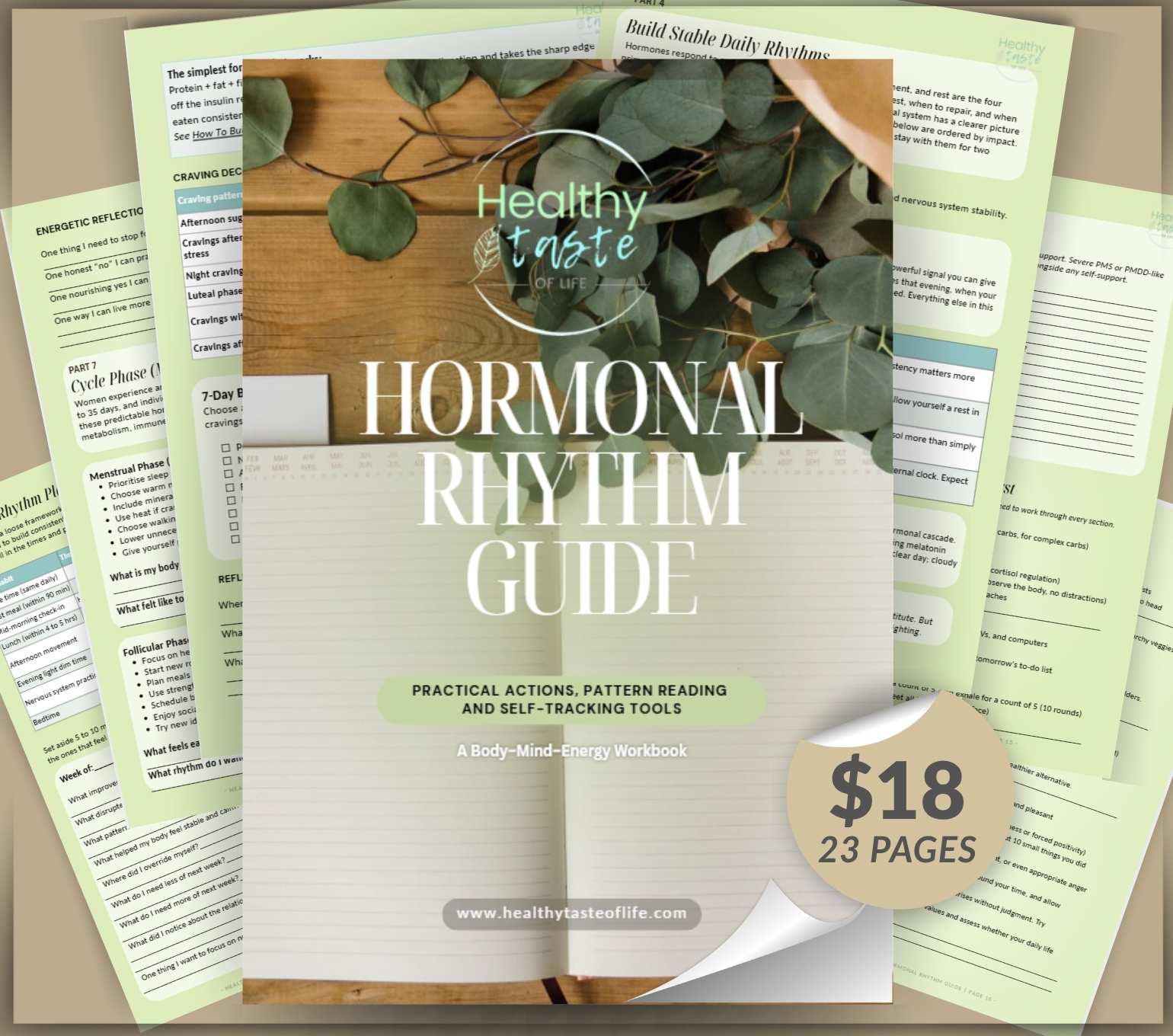
It includes practical actions, pattern-reading tools, self-tracking pages, and a 28-day rhythm regulation plan so you can move from “I think something is off” to “I can see what my body is responding to.”
This is similar to the kind of rhythm-focused work I personally used while watching my own thyroid markers and inflammation move back into a healthier range over time. Not as a quick fix, but as a more organized way to support the body across the physical, mental, emotional, and energetic layers.
If You’re Tired of Conflicting Nutrition And Health Advice + Want a Simpler Approach To Healthy Eating and Living
Join My Newsletter 👇
I share insights on food quality, gut health + whole-food recipes that support long-term health, without strict rules or complicated meal plans. And much more including holistic health coaching tips beyond nutrition!
Plus, you’ll get access to exclusive resources I don’t always share on the website.
FAQs About Hormonal Rhythms
A hormonal rhythm is the natural rise and fall of hormones over time. Some hormones follow a daily pattern, like cortisol and melatonin. Others shift with meals, stress, sleep, or the menstrual cycle.
Not exactly. Hormone balance usually refers to whether hormone levels are too high or too low. Hormonal rhythm looks at timing, patterns, and whether hormones are rising and falling in a way that supports the body.
Yes. Stress can affect sleep, cortisol, blood sugar, appetite, digestion, menstrual cycles, and how safe or regulated the body feels. This is why hormone support often needs to include nervous system and emotional support too.
If you have a menstrual cycle, estrogen and progesterone naturally shift throughout the month. These changes can affect energy, mood, appetite, sleep, skin, digestion, and PMS symptoms.
Lifestyle changes can help support clearer rhythm signals, especially through sleep, light exposure, meal timing, movement, stress regulation, and emotional boundaries. But persistent or severe symptoms should still be evaluated properly.
Testing may be helpful when symptoms are strong, painful, recurring, confusing, or not improving with basic lifestyle changes. It can also be useful before and after making changes so you can compare both lab markers and real-life symptoms.
If you want more stuff like this, join my newsletter to receive upcoming health articles, practical rhythm-based tools, and simple steps you can apply in daily life.
Explore More





©HealthyTasteOfLife. Content and photographs are copyright protected and need prior permission to use. Copying and/or pasting full recipes to other websites and any social media is strictly prohibited. Sharing and using the link of this recipe or article is both encouraged and appreciated!