

Buckwheat Flour Bread With Yeast (Soft, Gluten-Free)
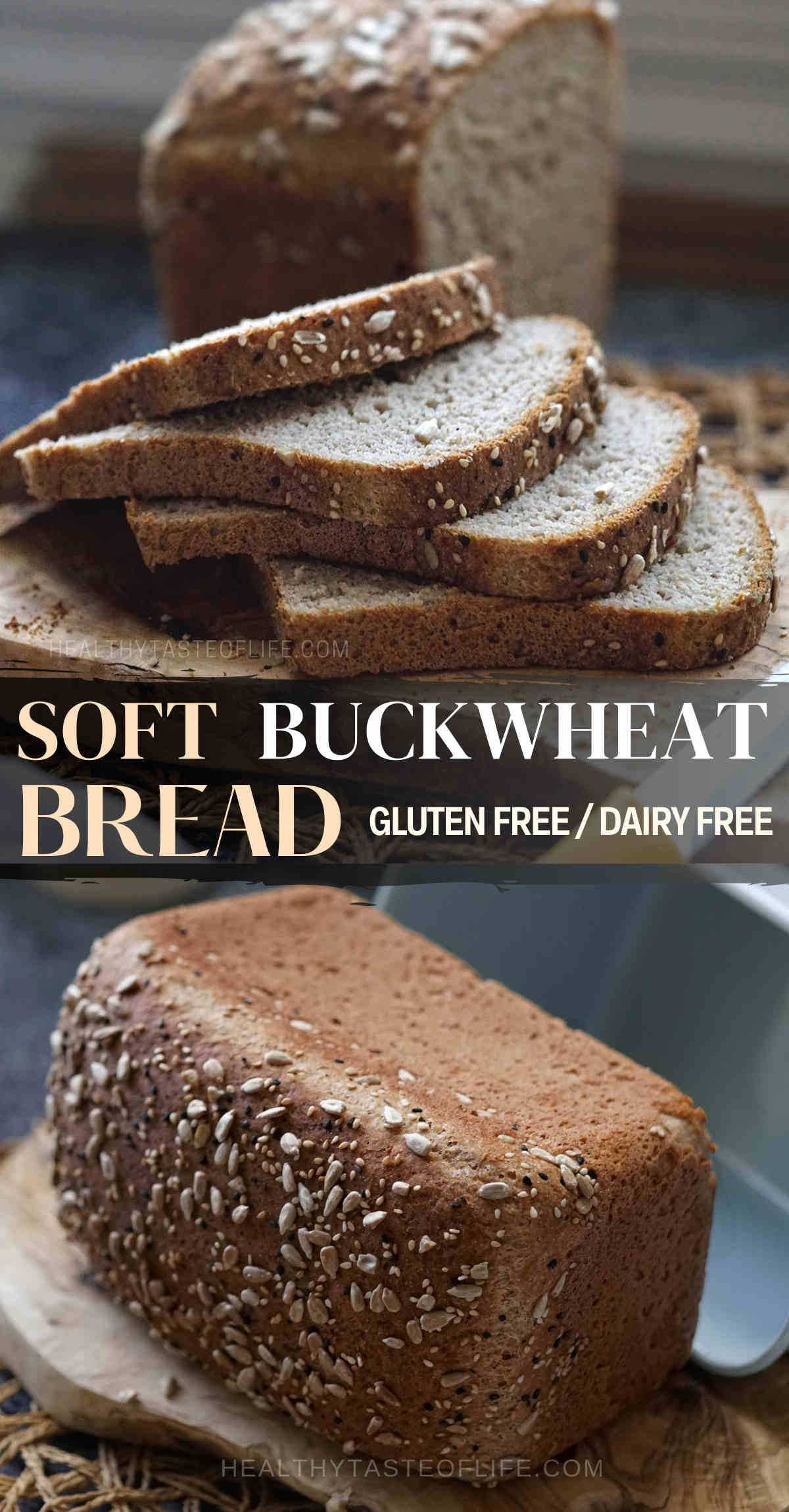
This soft buckwheat bread is made for anyone who wants the flavor and nourishment of buckwheat flour without ending up with a short, dry or crumbly loaf. It uses active dry yeast for a dependable rise, while psyllium, ground flax and egg provide the structure that gluten would normally create.
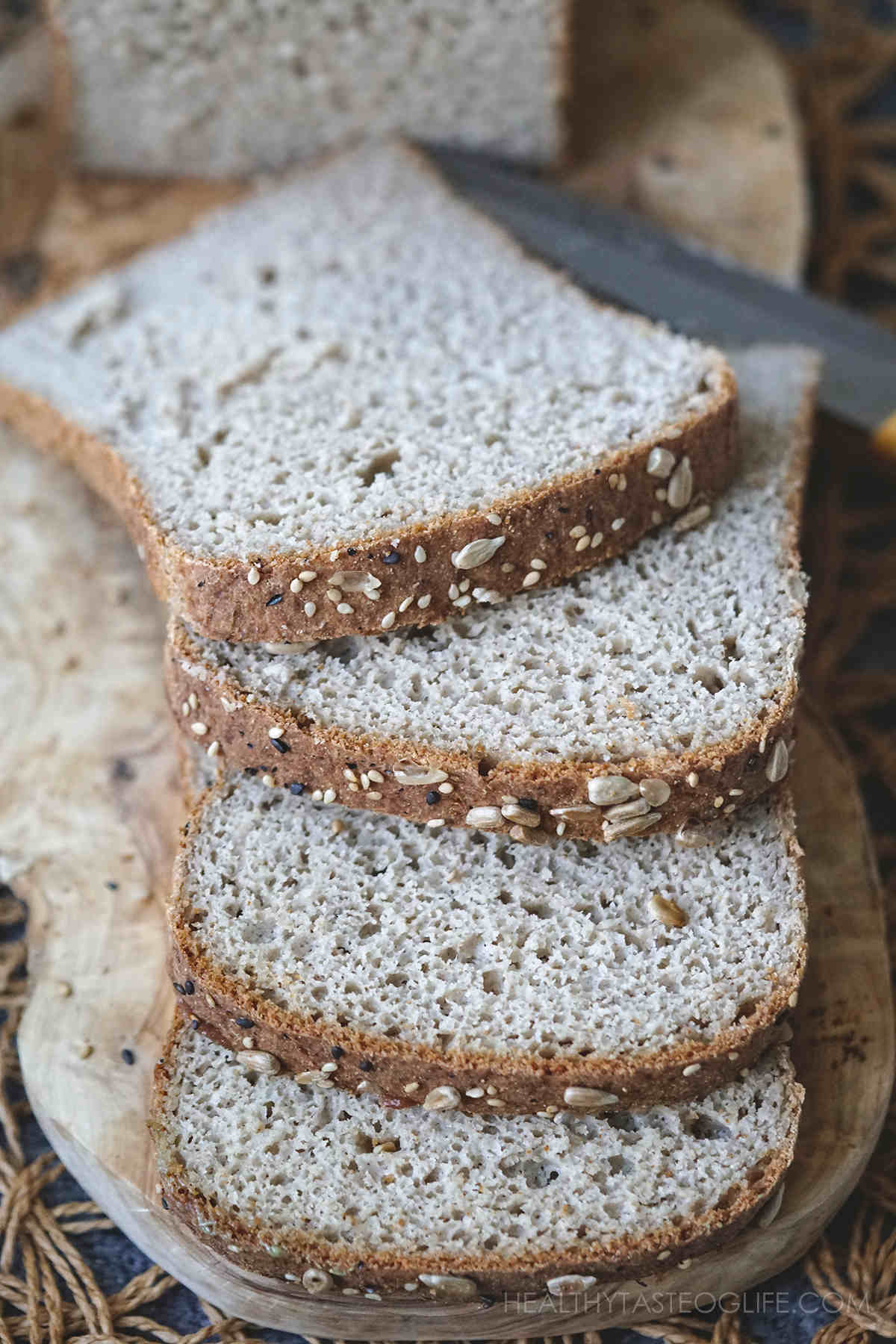
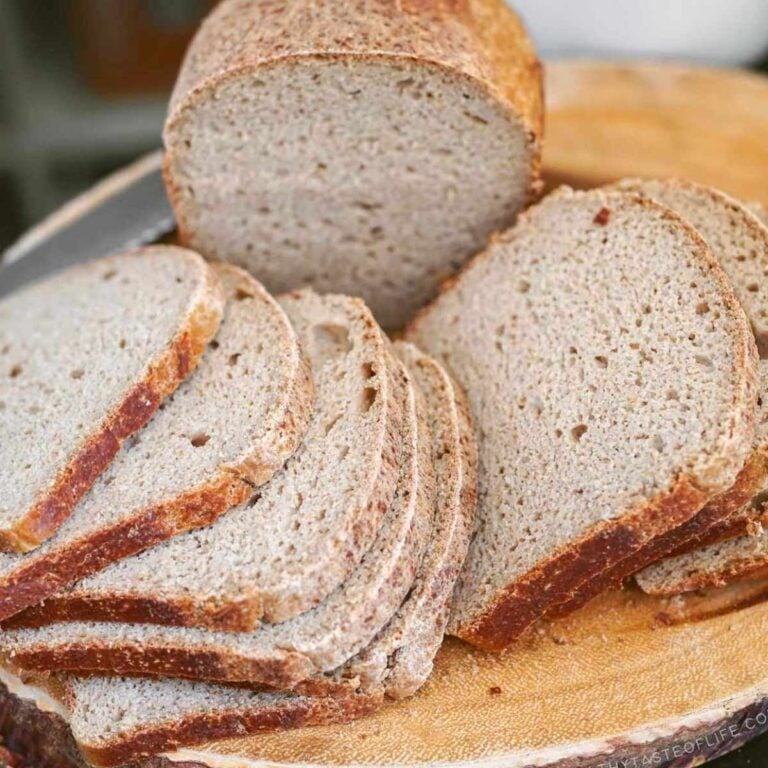
The dough comes together in one bowl and requires no kneading. Once baked and fully cooled, the loaf has a moderately soft, flexible crumb that holds together well for sandwiches, toast and freezer slices. Its flavor is mild and slightly earthy, closer to a whole-grain sandwich bread than a strong buckwheat loaf.
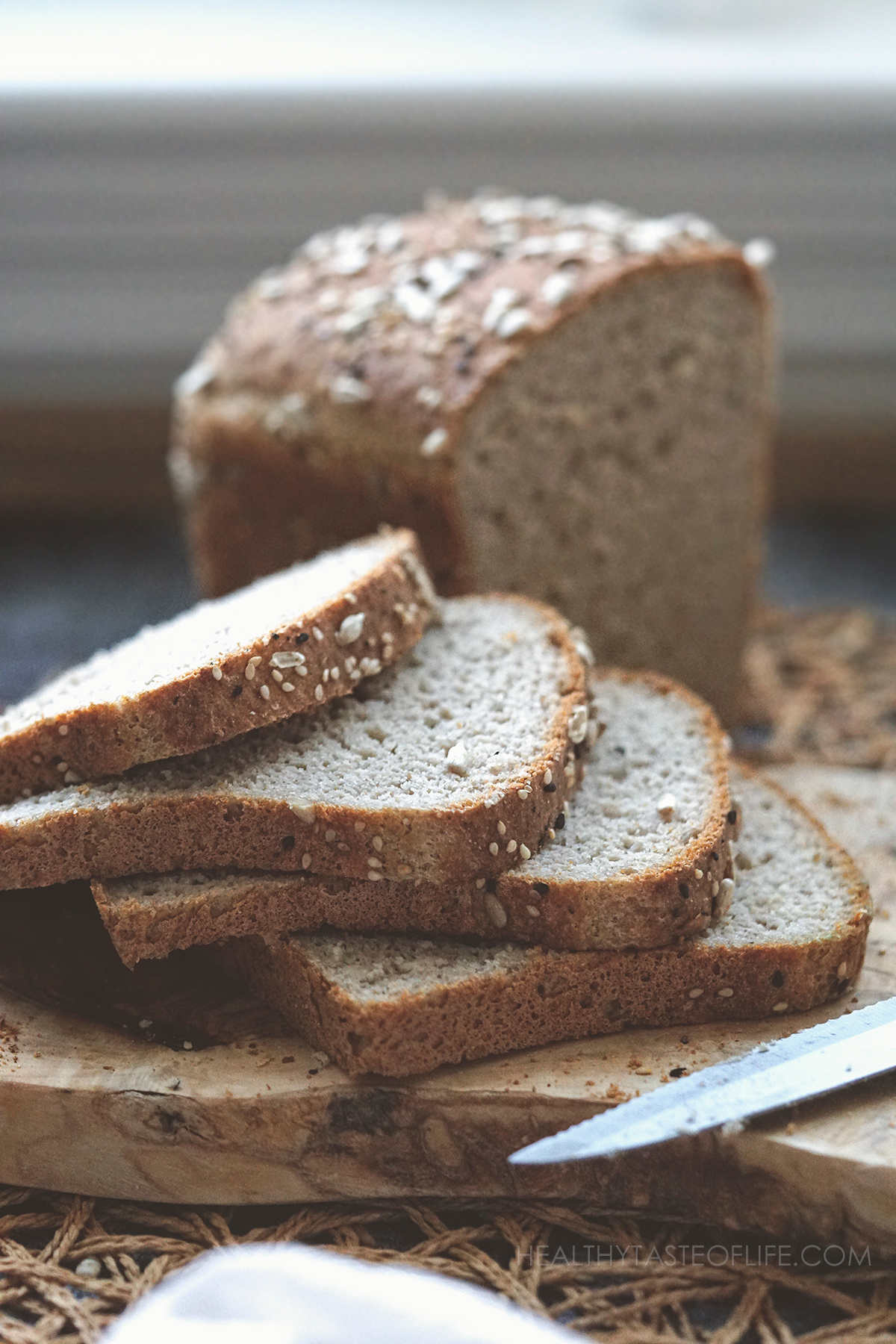
This recipe is different from my gluten-free sourdough breads because it uses commercial yeast rather than sourdough starter, requires only about an hour of rising, and is intended to produce a softer, taller buckwheat sandwich loaf.
For a naturally fermented loaf without commercial yeast, try my gluten-free sourdough bread for thin slices and toast instead.
What To Expect From This Buckwheat Bread
This is a yeast-risen bread, not a dense buckwheat quick bread or a fermented sourdough loaf.
The main version has:
- a soft, flexible crumb that holds together when sliced
- a mild, lightly earthy buckwheat flavor
- a tall pan-loaf shape
- a golden crust that becomes crisp when toasted
- a sticky, slack dough that is mixed with a spatula rather than kneaded
It works especially well for sandwiches, toast and freezing in individual slices.
I also include a buckwheat-dominant variation for readers who want more buckwheat flour and less of a gluten-free flour blend. That version is heartier and slightly denser than the main loaf.
Why This Recipe Uses Yeast
This page is specifically for readers searching for a buckwheat bread recipe with yeast.
I tested versions using baking powder and baking soda, but they did not produce the same rise or bread-like crumb. The loaves stayed shorter and were more likely to feel dense or gummy in the center.
Commercial yeast gives this buckwheat dough a faster and more predictable rise than sourdough. The loaf can usually be mixed, proofed and baked in about two hours.
I also updated the binder/flour balance (less psyllium, more buckwheat flour) because different brands absorb differently, and this improves consistency in real kitchens. And included a recipe version where I use the buckwheat flour as the dominant flour.
Buckwheat Bread Ingredients
For making this recipe you need the following:
- Buckwheat flour – buckwheat flour can be particularly tricky, it’s structure in baking breads can vary according to it’s quality. The brand and grind of buckwheat flour matter. A finer and lighter flour will yield a fluffier buckwheat bread. Darker or coarser flour may absorb liquid differently and produce a more pronounced earthy taste.
- Flour (wheat or gluten free) – replacing all of the flour in a recipe with (gluten-free) buckwheat flour is not going to work, the bread will not rise and will be hard and dry. That’s why I’m going to use a good proportion of other gluten free flours besides buckwheat. I use my gluten free flour mix, because I know how it behaves in this recipe. A different blend may require a small adjustment in water or buckwheat flour. (see notes below for that).
- Psyllium husk – is the crucial ingredient in gluten free bread baking. It acts as a binder, and it gives this buckwheat bread elasticity and pliability. Use whole psyllium husk rather than powder unless you have tested the conversion. Powder absorbs liquid more aggressively and can make the dough too firm or the crumb rubbery.
- Flax seeds – ground into flour like consistency. It trengthens the crumb and distribute moisture more evenly. It also helps reduce the wet or overly gummy texture that can occur in some gluten-free breads.
- Fat – oil or melted butter will work, it has the role of softening the bread texture.
- Egg – the egg will help with the texture and structure. Beating the egg also helps with getting a softer fluffier texture.
- Acid – lemon juice or apple cider vinegar will work. This will help with the taste, and add a subtle tang.
- Yeast – dry yeast is necessary for this type of gluten free buckwheat bread if you want a fluffy sponge like texture. I also tried the same recipe without yeast, only using baking powder or in combination with baking soda, it was a total fail. The bread didn’t rise much and had a very gummy texture. The taste was also not impressive.
- Sweetener – maple sugar or honey are great, but it’s totally up to you. I’m using this for activating the yeast.
- Water (warm, ideally at 105F degrees).
- Salt – to enhance the flavor.
See all measurements in the recipe card:
How To Make This Buckwheat Flour Bread
First we’re going prepare the flour. In case you need to make the gluten free flour mix yourself, make sure you have it ready before starting. Also finely grind the flax seeds with a coffee grinder.
Step 1. Activate the yeast:
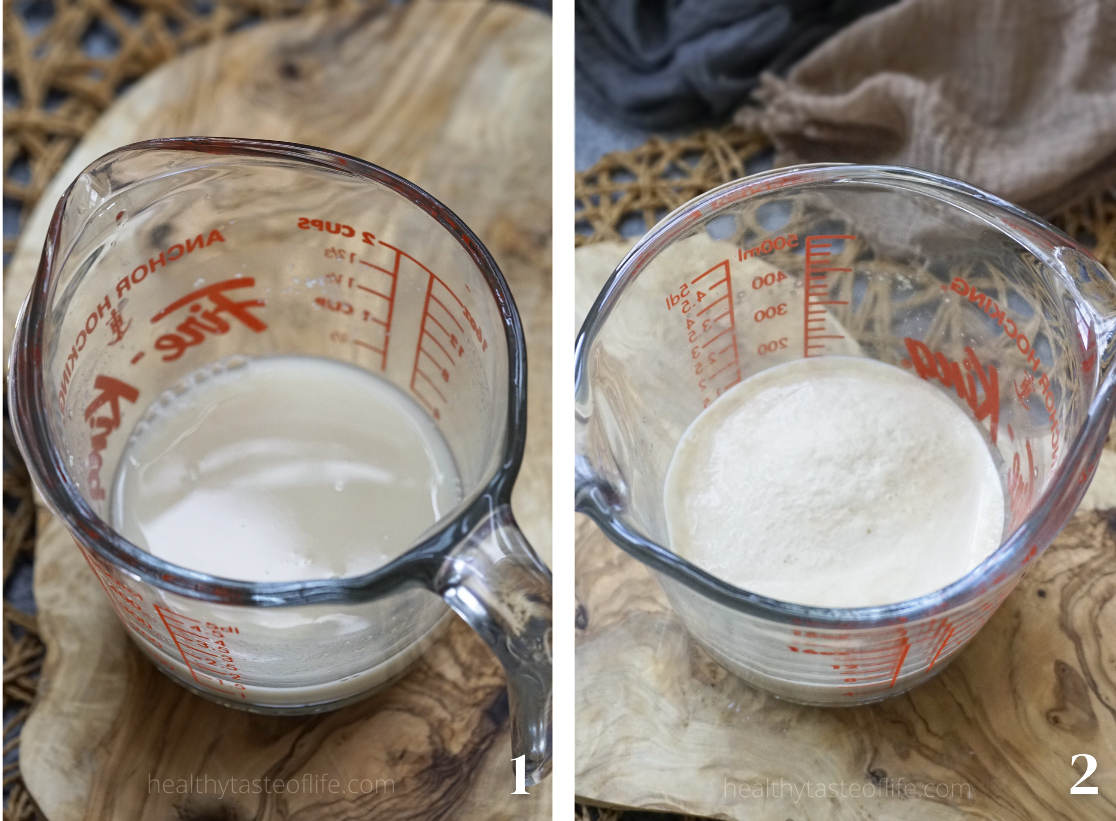
- In a 1/4 cup of warm water dissolve a 1/4 oz (7g) yeast packet (I used red star) and 1/2 teaspoon of sugar. I used maple sugar.
- Leave it for several minutes until the mixture becomes foamy, while you prepare the rest.
Step 2. Prepare the psyllium and flax gel
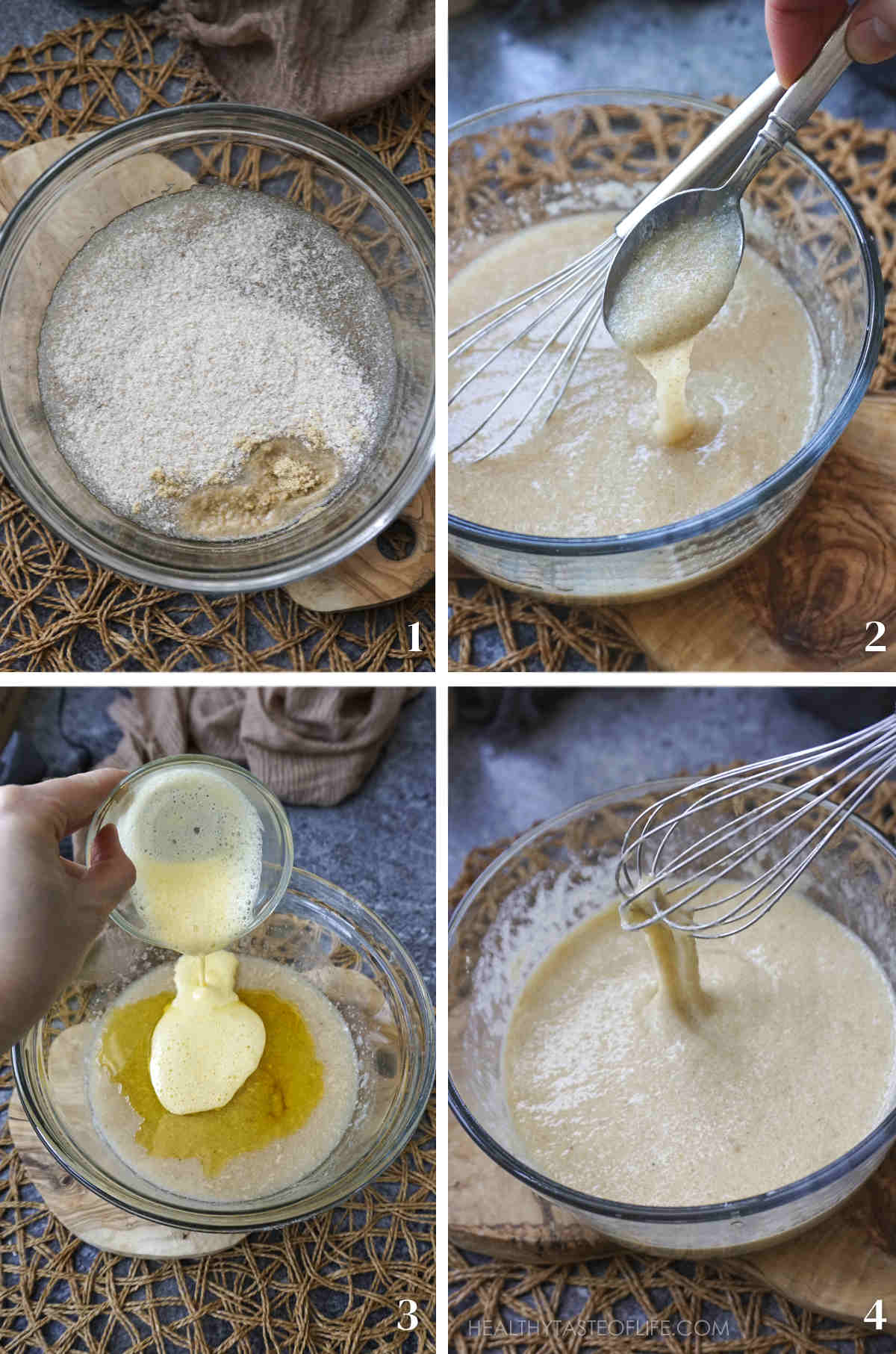
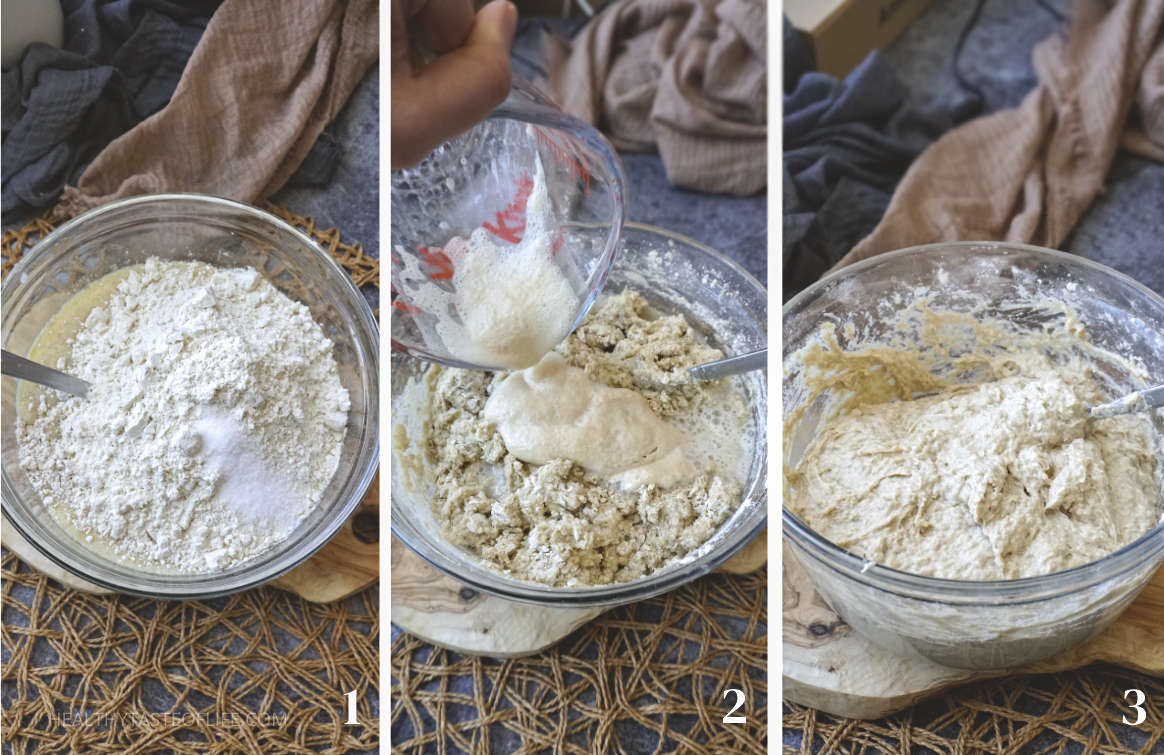
- Whisk the warm water, psyllium husk and finely ground flaxseed in a large bowl. The mixture will begin forming a loose gel.
- Add the beaten egg (unbeaten works too), oil or melted fat, apple cider vinegar, honey and activated yeast. Mix until evenly combined.
- To that add the rest of liquid ingredients (2 tbsp oil or melted butter, 1 tbsp apple cider vinegar, 1 tbsp honey, the egg and the yeast liquid), mix to combine.
Step 3. Mix in the flours:
- Then add the flours (2⅓ buckwheat flour + 1½ cup gluten free flour mix) and salt, mix with a silicone spatula for two to three minutes, scraping the bottom and sides of the bowl. The dough should look like a slack dough: loose, sticky and soft. That spreads out more than it holds its shape.
Step 4. Proof and Bake the buckwheat bread:
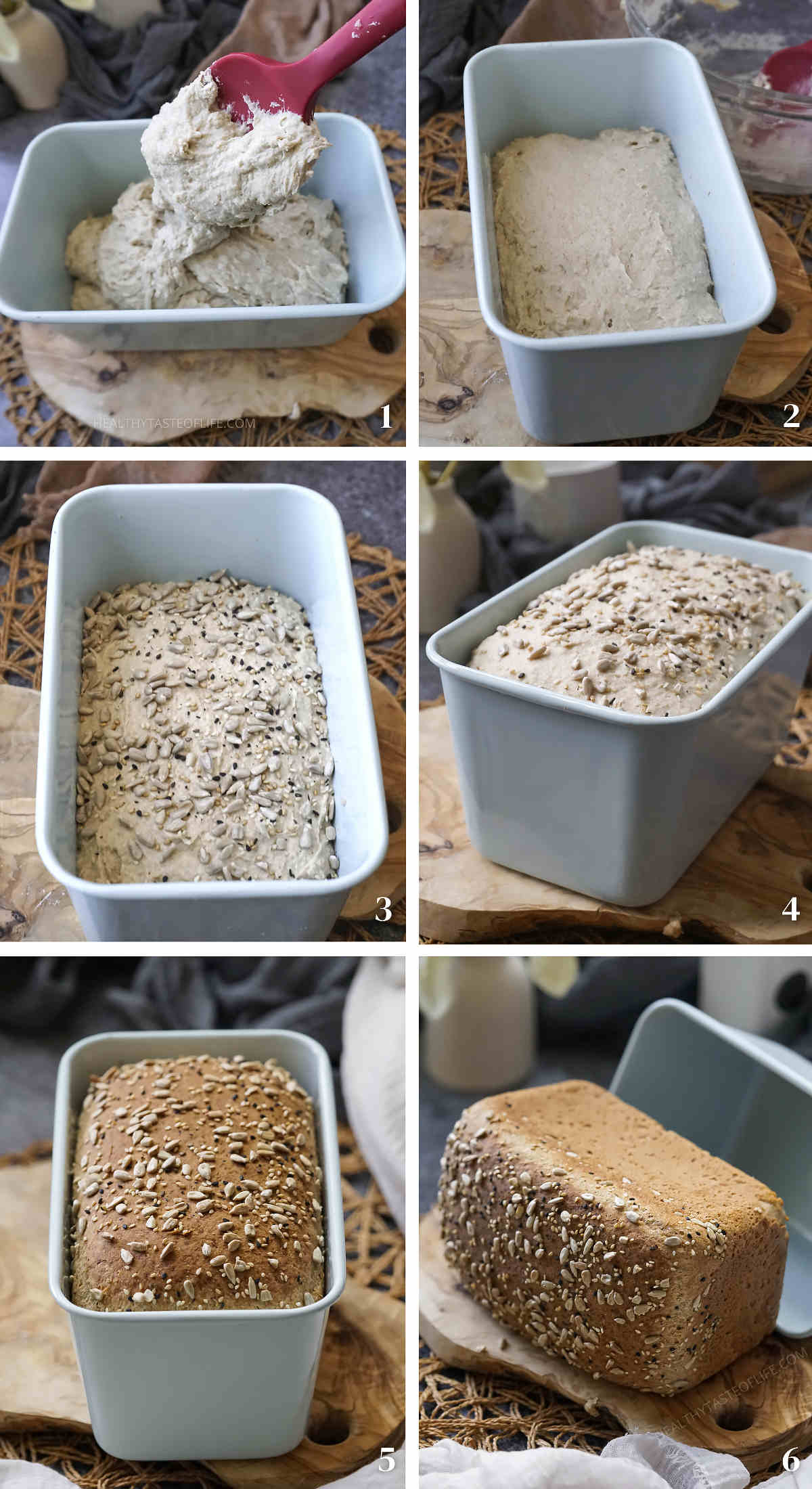
- Transfer the dough into a loaf pan. I used a non-stick 8 x 5 inch bread loaf tin with 4 Inch high walls and a 6.5 cup capacity from Jamie Oliver. If yours is not non-stick then line it with parchment paper.
- Smooth the top with your spatula and gently press to round the corners and sides.
- Sprinkle the surface of the loaf with seeds or crushed nuts if you like.
- Cover with plastic wrap or a towel and let it rise for 50 minutes or up to an hour.
- Bake the buckwheat bread at 350F for 50-55 minutes.
- Let the loaf cool for at least 10 minutes in the pan, before removing and cooling fully on a wire rack.
- Gluten-free bread continues setting as it cools, and cutting it too early can make a properly baked loaf appear gummy. Best when sliced after a couple of hours or the next day.
Texture And Flavor
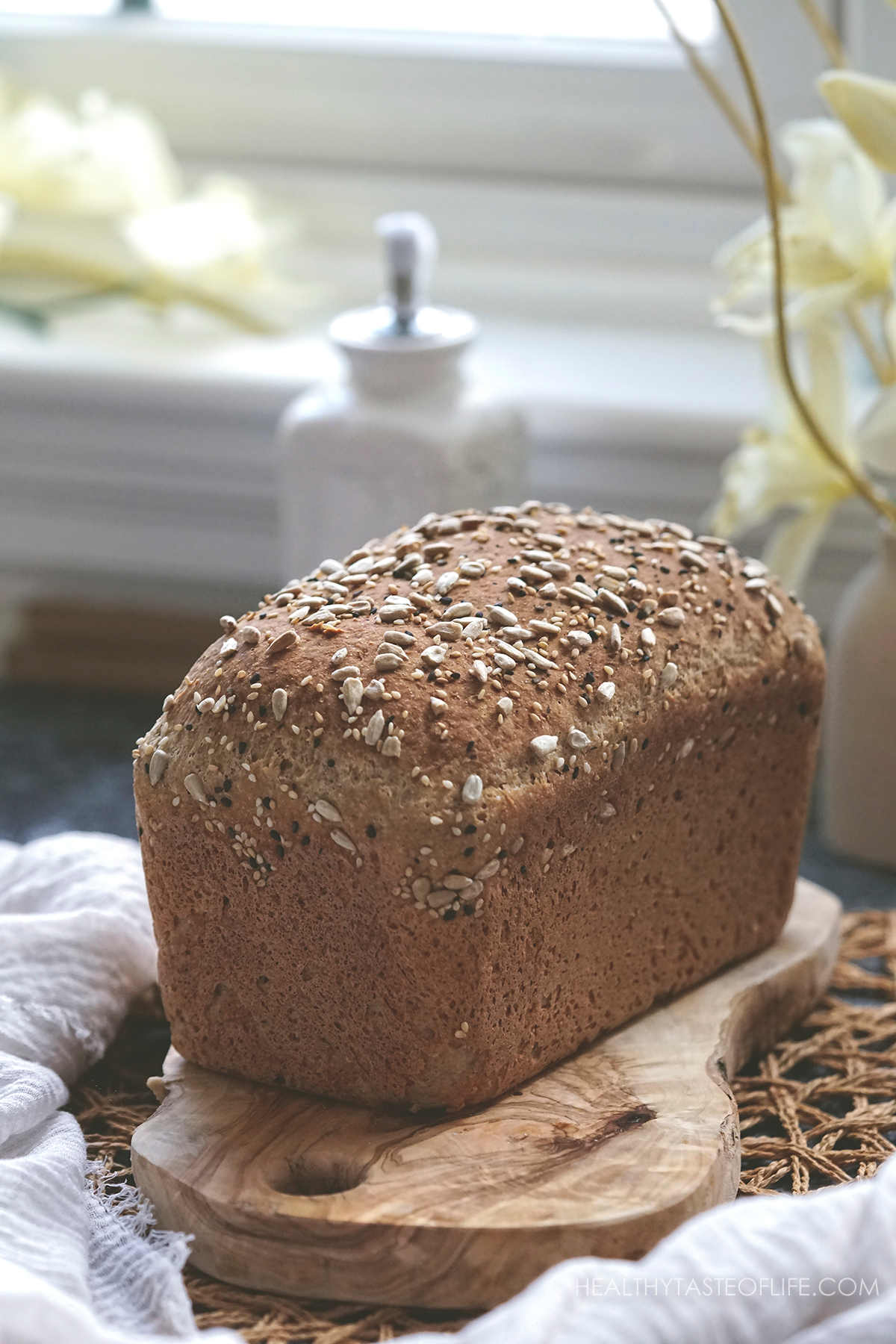
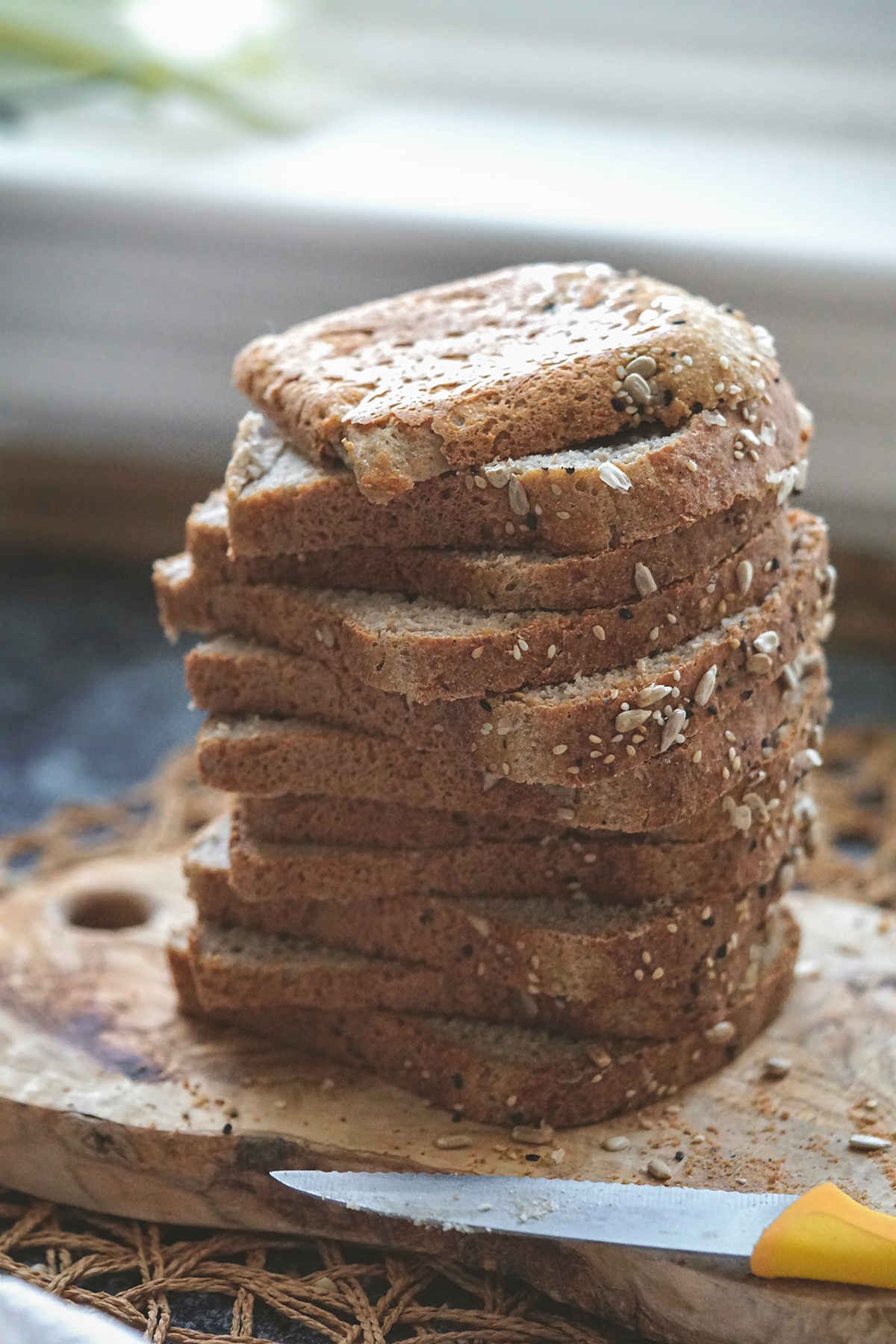
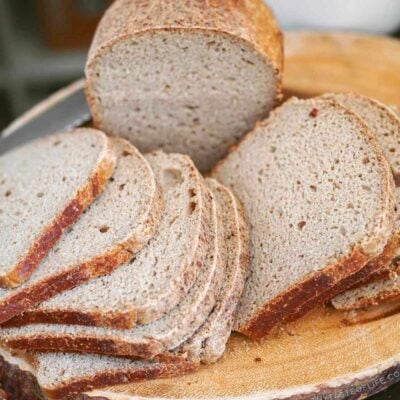
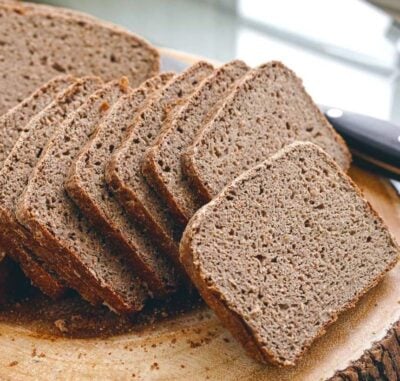
The main loaf is moderately soft, flexible and easy to slice without falling apart. It is more substantial than white sandwich bread but noticeably lighter than a 100% buckwheat loaf.
Buckwheat gives it a mild earthy flavor similar to a whole-grain bread. It should not taste bitter when made with fresh, light buckwheat flour.
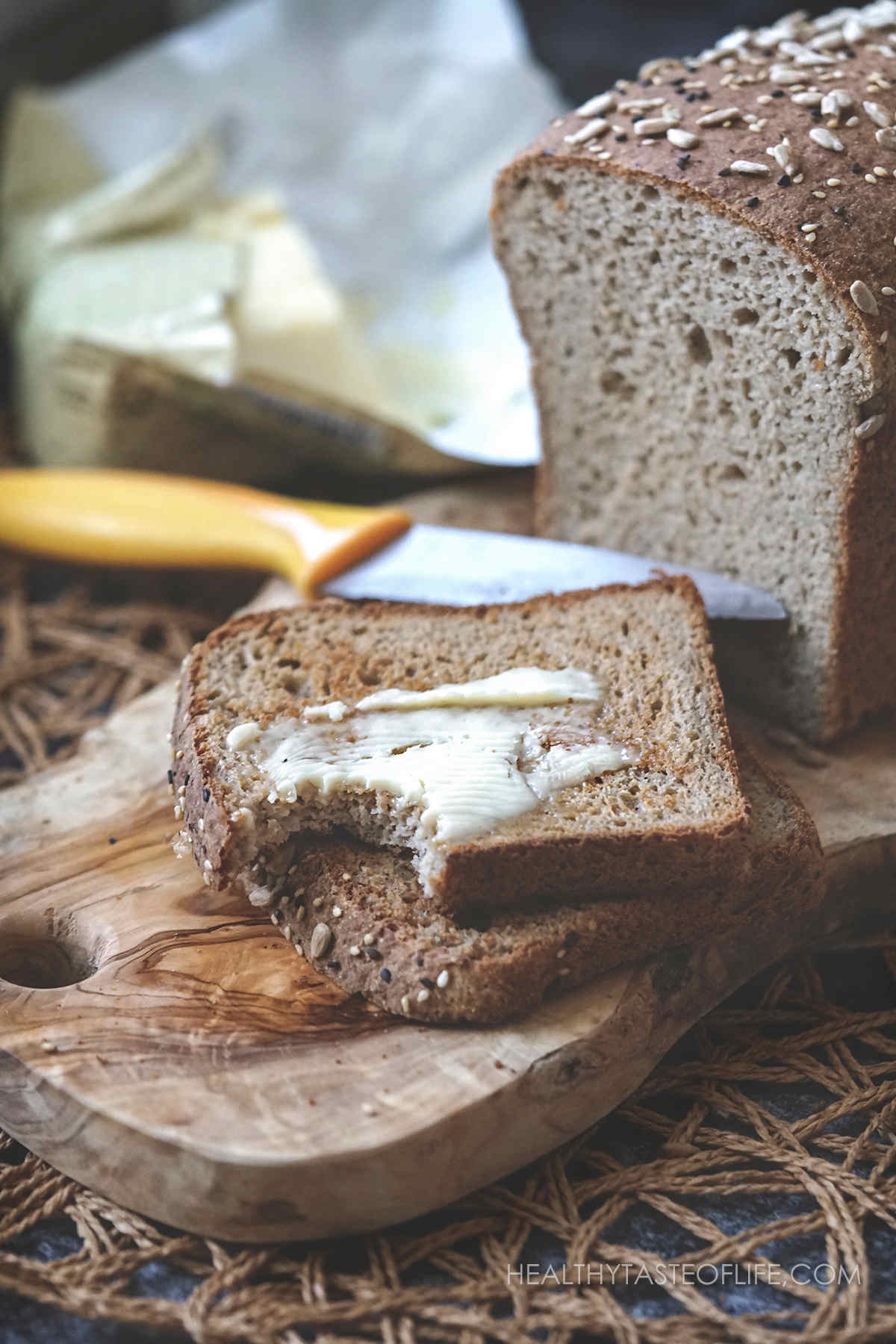
Toasting gives the edges a crisp texture while the middle remains tender. That makes it useful for breakfast toast, open-faced sandwiches and regular sandwich fillings.
For a darker naturally fermented bread with a stronger flavor, try my teff and buckwheat sourdough bread.
How To Tell When Buckwheat Bread Is Done
A browned crust alone does not mean the center is fully baked.
Look for these signs:
- the top and sides feel firm rather than soft or sunken
- the center does not jiggle when the pan is moved
- the edges begin pulling slightly away from the pan
- the loaf holds its shape when removed from the pan
- after cooling, the crumb looks set rather than wet or glossy
Troubleshooting
Loaf is gummy inside
The most common causes are underbaking, slicing while warm or using a flour blend that absorbs less water than mine.
Bake until the center feels set, then allow the loaf to cool completely. If the dough looked unusually loose before proofing, use slightly less water next time or add one to two tablespoons of buckwheat flour.
Loaf didn’t rise much
Common reasons:
- yeast wasn’t foamy/active before mixing
- the room was cool (proof takes longer)
Make sure yeast blooms (foamy), and proof in a warmer spot.
Loaf is dry or crumbly
This may happen when the flour is coarse or highly absorbent, too much flour was added, or the binders were measured incorrectly.
The dough should remain soft, sticky and easy to spread into the pan.
The bread tastes bitter
Buckwheat flour naturally has a more noticeable flavor than rice or sorghum flour, but it should not taste stale or strongly bitter. Use fresh flour and store it sealed in a cool place because whole-grain flours can lose quality faster than refined starches.
How To Serve It
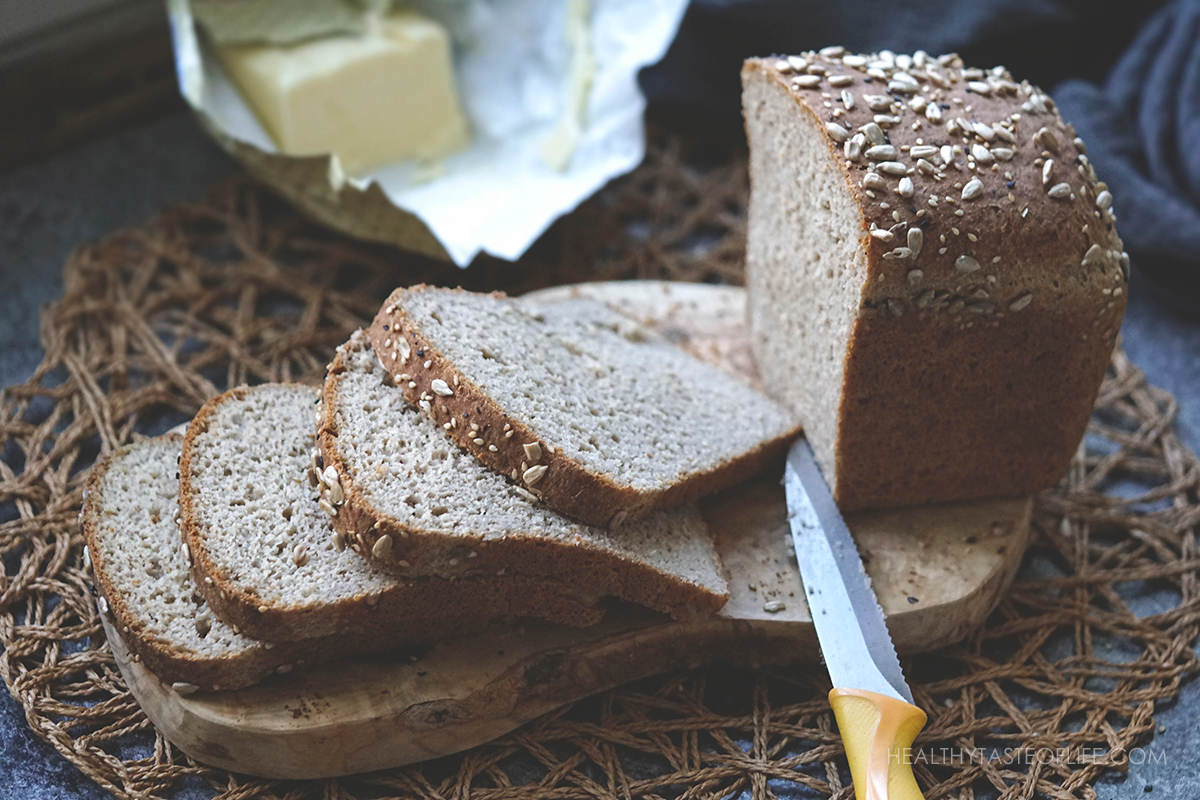
Use this buckwheat bread for:
- sandwiches
- buttered toast
- avocado toast
- open-faced sandwiches
- nut or seed butter
- eggs and savory breakfast toppings
- soups and stews
Bread becomes more satisfying when paired with protein, healthy fats and produce. For practical combinations, see my guide to building a healthy plate for steady energy and satiety.
Recipe Variations & Substitutions
- Make vegan buckwheat bread: if you omit the egg you need to replace that moisture with something similar in texture. Thick applesauce or plain dairy-free yogurt may work, but the result will not be identical and would need further testing.For a tested egg-free bread, use my vegan gluten-free sourdough loaf with no commercial yeast.
- Other gluten free flours that might work along with buckwheat: a combination of sorghum flour and oat flour or a combination of arrowroot flour and teff flour (the color is darker than buckwheat). But you might need to adjust the water amount, some flour tend to absorb more moisture.
- Not Gluten Free? Use all purpose white flour: use it along with buckwheat flour as a substitute for the gluten free flour mix. As a result you can omit the psyllium husk and use less water.
- Add seeds or nuts in the dough: sunflower seeds, pumpkin seed, some buckwheat groats or ground almonds will also work.
- No yeast? Unfortunately, you need it. This type of bread doesn’t produce good results with baking powder and baking soda alone. I tried it!
- Add dried fruit in the dough: raisins, chopped prunes or cranberries.
- Ways to enjoy: dunked into vegetables soups or as healthy toast snacks.
Mostly Buckwheat Flour Option (Buckwheat-Dominant Version)
This variation is for readers who want the bread to contain mostly buckwheat flour rather than a larger amount of gluten-free flour blend.
Flour swap (the rest keep the same)
- Buckwheat flour: 3 cups (instead of 2⅓ cups)
- Replace the 1½ cup flour mix with ONE of these:
- 3⁄4 cup cassava flour (simplest)
or - ½ cup cassava flour + ¼ cup arrowroot starch (slightly lighter texture)
- 3⁄4 cup cassava flour (simplest)
Water guidance for this version
Start with the same gel water as the main recipe, then adjust based on dough feel:
- If the dough is too stiff to mix/spread, add 1 Tbsp warm water at a time, up to +3 Tbsp.
- If the dough looks loose or runny, add 1–2 Tbsp buckwheat flour, then wait 5 minutes (buckwheat + psyllium absorb as they sit).
Target texture: thick, sticky, spreadable dough, more like a slack dough than kneadable bread dough.
result:
The finished loaf will have a more pronounced buckwheat flavor and a heartier, slightly denser crumb. It still slices well after cooling and is particularly good toasted.
This is not a 100% buckwheat loaf. The small amount of cassava or arrowroot is included to improve rise, flexibility and sliceability.
Storing Tips
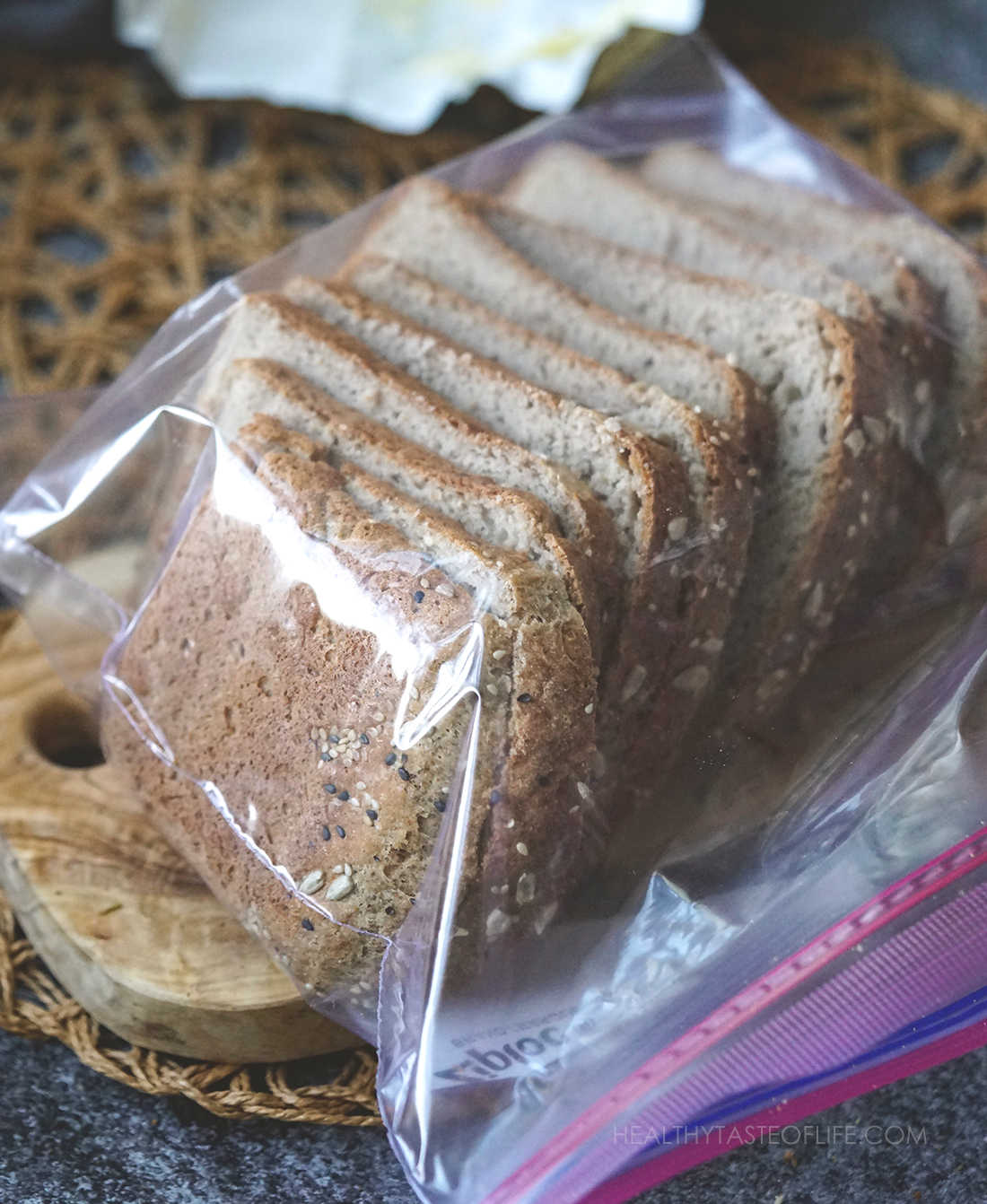
- Storing leftovers: Store the buckwheat bread at room temperature for up to 5-6 days, in an airtight bag or container. I like to pre-slice after baking.
- Freezing: let the buckwheat loaf cool completely and then slice. Place the slices in a sealed plastic bag and freeze for up to 3 months.
- Thawing: Place the frozen slices in a toaster and enjoy warm soft fresh buckwheat bread just like the fresh one.
FAQs
The main version has buckwheat flour but also uses a gluten-free flour blend for a softer texture and better rise. The buckwheat-dominant variation uses three cups of buckwheat flour with a smaller amount of cassava or arrowroot.
You can, but 100% buckwheat loaves are usually denser and more prone to dryness or gumminess. That’s why I include a mostly-buckwheat option: it keeps the flavor buckwheat-dominant while adding just a small touch of starch to improve sliceability and texture.
Since buckwheat flour doesn’t have gluten and has a heavier texture it need help and more time to rise (or bake). The solution is to combine with other flours and add a raising agent.
Buckwheat flour can be found in two forms: dark (made from unhulled buckwheat groats) or light (made from hulled buckwheat). The darker buckwheat flour has more fiber and flavor, while the lighter one has a finer texture and a lighter color.
Yes, buckwheat flour is naturally gluten free, unless it was processed in the same facility with other flours.
For this style of gluten-free yeast bread, psyllium is the main structure builder. Without it, the loaf is much more likely to crumble or turn gummy. If you try to replace it, results will vary a lot by flour brand.
Yes, but bake time changes: Smaller pan: taller loaf, may need more time. Larger pan: shorter loaf, may bake faster. Use the “done” cues (firm top, set center) rather than time alone.
Buckwheat flour supplies more whole-food substance than a loaf made mostly from refined starches, but the nutritional value of a meal depends on the recipe, serving size and what accompanies the bread. This loaf is best viewed as one useful part of a varied, balanced diet.
If You’re Tired of Conflicting Nutrition Advice + Want a Simpler Approach To Healthy Eating
Join My Newsletter 👇
I share insights on food quality, gut health, health coaching tips beyond nutrition, and whole-food recipes that support long-term health, without strict rules or complicated meal plans.
Plus, you’ll get access to exclusive resources I don’t always share on the website.
Made it? Tap ⭐⭐⭐⭐⭐ and leave a quick comment below, especially which version of buckwheat bread you used.
Other Recipes With Buckwheat or Buckwheat Flour
Buckwheat Flour Bread With Yeast (Soft, Gluten-Free)
Ingredients
For Yeast Activation
- ¼ cup water - warm
- ¼ oz yeast - 1 packet
- ½ tsp sugar - I used maple sugar
Wet Ingredients and Binders
- 1½ cup water - warm
- 2 tbsp psyllium husk - not powder
- 3 tbsp flax seeds - ground (21–24 g)
- 1 large egg - beaten (omit if vegan)
- 2 tbsp fat - neutral oil, melted ghee or butter
- 1 tbsp apple cider vinegar - or lemon juice
- 1 tbsp honey - or maple syrup
Dry Ingredients
- 2⅓ cup buckwheat flour - hulled (lighter color)
- 1½ cup gluten free flour mix - I use my own, see notes
- 1 to 1½ tsp sea salt
Instructions
Step 1. Activate the yeast:
- In a 1/4 cup of warm water dissolve a 1/4 oz yeast packet (I used red star) and ½ teaspoon of sugar. I used maple sugar.Let it activate (puff up) while you prepare the rest.
Step 2. Make the gel (this is the structure):
- Ground 3 tablespoons of golden flax seeds. In a large bowl, whisk 1½ cups warm water with the flax seeds (ground into flour) and psyllium husk.
- Stir until fully mixed. It will thicken into a loose gel.
- To that add the egg (beaten or not, both work), 2 Tbsp oil or butter, 1 tbsp vinegar, and 1 tbsp honey. Mix well to incorporate.
- At last add the yeast liquid. Mix.
Step 3. Add dry ingredients and mix:
- Add the flours (2⅓ cup buckwheat flour + 1½ cup flour mix) and salt, mix with a spatula until incorporated.
Step 4. Proof + Bake
- Transfer the dough into a loaf pan. I used a non-stick 8 x 5 inch bread loaf tin with 4 Inch high walls and a 6.5 cup capacity. If yours is not non-stick then line it with parchment paper.
- Smooth the top with a wet spatula and gently press to round the corners and sides.
- Cover with plastic wrap or a towel and let it rise for up to an hour or until visibly puffier.
- Bake the buckwheat bread at 350F for 50-55 minutes.If the crust browns too fast but the loaf isn’t done yet, tent loosely with foil for the last 10–15 minutes.
- Let the loaf cool for at least 10 minutes in the pan, before removing and cooling fully on a wire rack.
- Let it cool completely before slicing with a serrated bread knife.
Notes
- If dough feels too stiff / dry or hard to mix – add 1 Tbsp warm water at a time.
- If dough looks runny – add 1–2 Tbsp buckwheat flour and let it sit 5 minutes.
Mostly Buckwheat Flour Option
If you want this loaf to be mostly buckwheat flour, use this swap: Replace the dry ingredients with:- 3 cups buckwheat flour
-
3⁄4 cup cassava flour
OR ½ cup cassava flour + ¼ cup arrowroot starch (lighter texture)
Variations and Substitutions
- I’m using my own gluten free flour mix, and this brand of buckwheat flour. if you use something different it may yield a different result.
- Add seeds or nuts in the dough: sunflower seeds, pumpkin seed, some buckwheat groats or ground almonds will also work.
- No yeast? Unfortunately, you need it. This type of bread doesn’t produce good results with baking powder and baking soda alone. I tried it!
- Add dried fruit in the dough: raisins, chopped prunes or cranberries.
Nutrition
The information shown is an estimate provided by an online nutrition calculator.
More Gluten Free Bread Recipes


©HealthyTasteOfLife. Content and photographs are copyright protected and need prior permission to use. Copying and/or pasting full recipes to other websites and any social media is strictly prohibited. Sharing and using the link of this recipe is both encouraged and appreciated!



I used chia seed in place of psyllium husk (only had powder) and it was great. Just made up my second batch and tripled the dose because everyone loved it, even the non gluten sensitive!
Thank you for sharing that!
How long does it keep on the counter?
That first day the texture was amazing. I was afraid it would spoil and put it in the fridge, but it became hard and crumbly, not great for sandwiches.
If I freeze the slices, will the texture change?
Up to 5-6 days I think it should be fine on the counter, just keep it covered so id doesn’t dry up. If you freeze it, make sure you pre-slice it, then take one slice at a time and pop it in a toaster to warm it up (or to form a crust) before eating.
Have you tried this recipe as a sourdough recipe in place of the yeast?
Nope, I didn’t.
Thanks for this fantastic recipe! I used 1 and 3/4 cup buckwheat flour, and 1/4 cup gluten. Perfect texture.
The bread turned out very good. I did add a little water to moisten the mixture and I forgot to grind the flax seeds but it didn’t matter because they softened up when baking.