
How To Choose A Non-Dairy Milk: Ingredients That Matter
If you’ve ever stood in front of the dairy-free milk section and wondered why one almond milk contains three ingredients while another contains fifteen, you’re not alone.
Over the last decade, plant-based milks have exploded in popularity. Today you can choose from almond, oat, soy, coconut, hemp, pea, cashew, and various blended options. While they may look similar on the shelf, the ingredient lists can vary a lot.
If you’re new to dairy-free eating, my Gluten-Free Dairy-Free 101 explains how to make the transition without feeling overwhelmed.
My purpose here is to help you understand what matters, what doesn’t matter as much, and how to choose a non-dairy milk without getting overwhelmed.
Over the years, I’ve made many homemade plant milks and tested countless store-bought versions for smoothies, baking, coffee, and everyday use. What I’ve learned is that there isn’t one perfect non-dairy milk (although there are a couple I prefer) for everything. Ultimately the best choice depends on your priorities and understanding the label.
The reality is that most store-bought non-dairy milks are designed to balance several goals at once: shelf life, texture, taste, consistency, cost, and nutrition. The healthiest choice for you depends on what matters most -whether that’s simplicity, convenience, protein content, digestion health, budget, or culinary use.
In this guide, I’ll walk through the ingredients you’ll commonly find in plant milks, why they’re used, what deserves a closer look, and how I personally choose between store-bought and homemade options.
Why Ingredient Lists Matter More Than Front Labels
Before I look at protein, calories, or marketing claims, I look at the ingredients.
The front of the package is designed to catch your attention, but the ingredient list tells you what’s actually inside.
For example, these two products may both be labeled “almond milk”:
Option A
- Water
- Almonds
- Sea salt
Option B
- Water
- Almonds
- Sunflower oil
- Natural flavors
- Gellan gum
- Locust bean gum
- Calcium carbonate
- Vitamin D2
- Vitamin B12
Both are almond milks. But they are very different products.
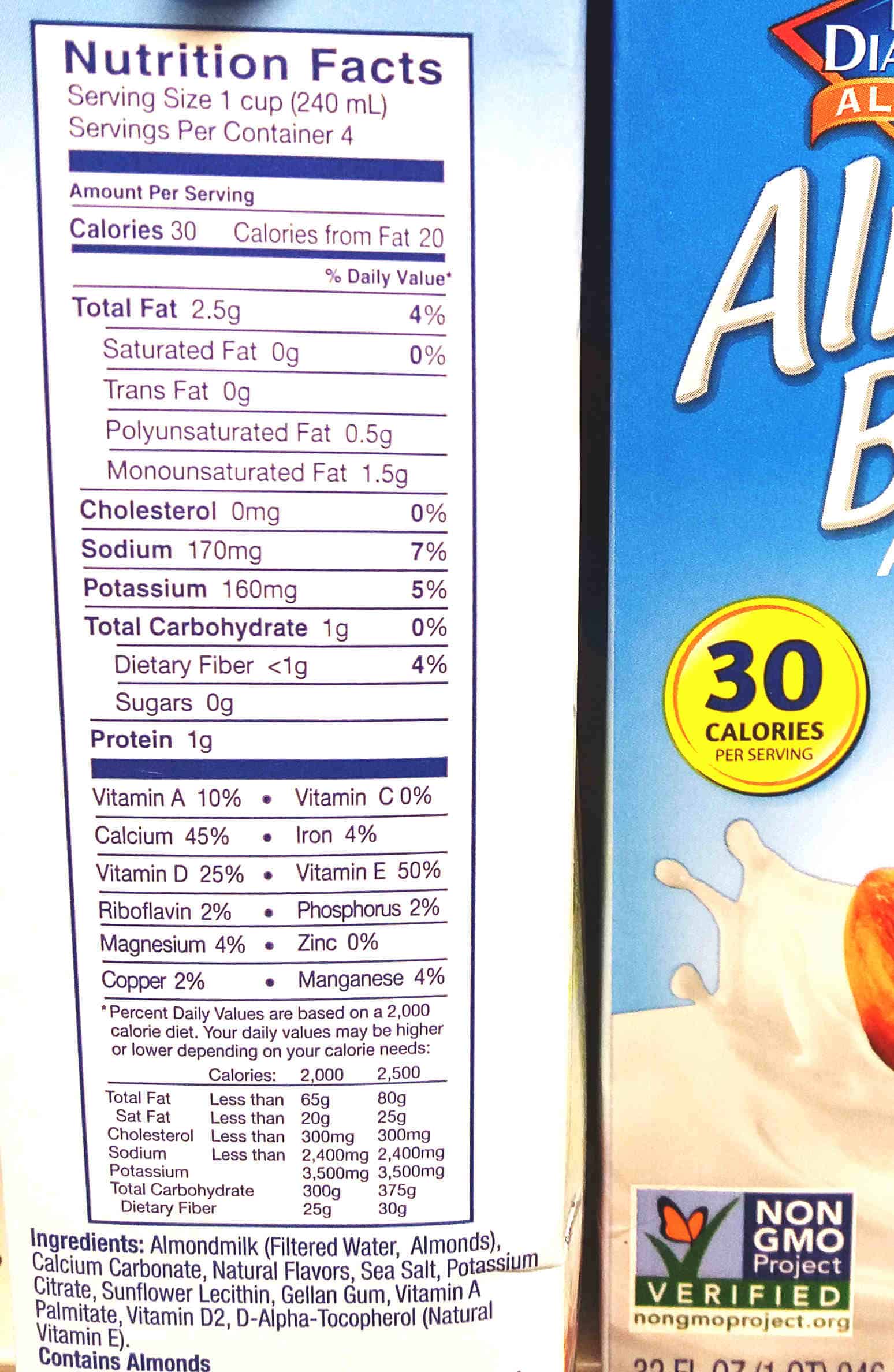
In general, a shorter ingredient list often reflects a less processed product and may be a better fit for people who prefer foods closer to their original form. A longer ingredient list usually means more processing and more food additives added in order to improve consistency, stability, sweetness, appearance, or shelf life. And frequent consumption has already been linked to adverse health effects.
The more often a food becomes part of your daily routine, the more worthwhile it is to understand what’s in it.
Why Manufacturers Add Extra Ingredients
Many people wonder why plant milks need additional ingredients at all. The answer is fairly simple.
Unlike dairy milk, most plant milks are essentially suspensions or emulsions made by blending nuts, seeds, grains, or legumes with water. Without stabilizers, the ingredients naturally separate. Oils rise to the top, solids sink, and the texture changes quickly.
Manufacturers often add ingredients to:
- prevent separation
- improve creaminess
- create a smoother texture
- lower production costs while maintaining consistency
- extend shelf life
- improve taste
- help the product foam in coffee
Ingredients Worth Paying Attention To
Added Sugars
Added sugars are one of the first things I look at. Many flavored or “original” plant milks contain added sugar to improve taste and make the product more appealing.
Some plant milks contain little or no added sugar and others contain 5-8 grams (2.1 teaspoons) or more per serving. A single serving may not seem significant, but if plant milk becomes part of your daily use, the amount adds up over time.
Many people don’t realize how much sugar can accumulate through everyday foods and drinks. If you’re trying to create more balanced meals, my Build A Balanced Plate Guide can help you evaluate where those sugars fit into the bigger picture.
As a rule of thumb, if you’re using non-dairy milk regularly (in coffee, smoothies, cereal, baking, or cooking) an unsweetened version usually gives you more flexibility and control over your overall sugar intake.
Research has linked high intakes of refined sugars and some artificial sweeteners with unfavorable changes in gut microbiota composition and metabolic health.
This is one reason I generally recommend choosing unsweetened versions whenever possible and adding sweetness yourself if needed.
Added Oils
Common examples include: sunflower oil, canola oil and safflower oil. These oils are often used to create a richer mouthfeel and make a diluted product feel creamier.
Opinions differ on seed oils (considered more unhealthy due to its industrial refining process), and many health-conscious consumers prefer products that rely more on the original ingredient and less on added oils for texture. Personally, I like to know when I’m drinking almonds, coconut, or hemp and when I’m mostly drinking water and added oil.
Gums, Stabilizers And Thickeners
Common examples: gellan gum, guar gum, xanthan gum, locust bean gum. Their primary role is to prevent separation and improve texture.
Many people tolerate these ingredients without any obvious issues. However, emerging research has raised questions about how certain emulsifiers and additives may influence the gut microbiome, intestinal permeability, and inflammatory pathways, particularly in susceptible individuals or those with existing digestive concerns.
If you have digestive symptoms, IBS, food sensitivities, or simply feel better eating fewer processed foods, it may be worth focusing towards milks that contain fewer additives.
Emulsifiers
Examples include: sunflower lecithin, soy lecithin, dipotassium phosphate. These ingredients help keep water and fats evenly mixed and improve texture.
They’re particularly common in barista-style plant milks because they help create foam and improve performance in coffee.
Although a delicious latte sounds good, it is worth considering that current scientific research indicates that some of these emulsifiers can disrupt the gut microbiome, thin the protective intestinal mucus layer, and promote low-grade systemic inflammation. Again if you’re concerned about gut health, read the label carefully.
Natural Flavors
Natural flavors are common in flavored plant milks and some plain varieties in order to mask the natural “beany” or grassy off-flavors of nuts, seeds, oils and legumes.
And let’s be honest these flavorings significantly boost the sensory rating and overall market acceptance of plant-based milks. The challenge is that “natural flavor” doesn’t tell you much about the source or processing behind the ingredient.
And again there are concerns raised about how complex flavoring mixtures might affect long-term health.
What About Fortified Vitamins And Minerals?
Most store-bought plant milks are fortified with nutrients such as: calcium, vitamin D, vitamin B12, vitamin A.
Fortification can help fill nutritional gaps, especially for people who consume little or no dairy, but a proper absorption is still questionable.
I don’t view fortified foods as a replacement for nutrient-dense whole foods. These contain vitamins, minerals, proteins, fats, and thousands of naturally occurring compounds that work together in ways we still don’t fully understand.
Fortified foods can be useful tools. But there’s also a risk of nutrient toxicity from overconsumption, masking underlying deficiencies, and promoting unhealthy dietary habits through the “health halo” effect.
Not All Non-Dairy Milks Are Nutritionally Equal
One of the biggest misconceptions is that all plant milks provide similar nutrition or that they’re nutritionally equivalent to the foods they’re made from. They’re not.
An almond milk carton may feature almonds prominently on the front, but depending on the brand, the actual almond content can be surprisingly low. The same applies to oat, rice, cashew, coconut, and even hemp milks.
When whole foods are transformed into commercial beverages, several things often happen:
- The original ingredient is diluted with water.
- Fiber is reduced or removed through filtering.
- Protein content may be much lower than people expect.
- Naturally occurring vitamins, minerals, fats, and plant compounds are less concentrated.
- Additional ingredients are often added to improve texture, taste, and shelf life.
For example, a handful of almonds naturally provides protein, fiber, vitamin E, magnesium, healthy fats, and thousands of naturally occurring plant compounds. A typical almond milk may contain only a fraction of those nutrients. The same principle applies to most plant-based beverages.
If maximizing nutrition is your goal, look beyond calories and protein alone and consider:
- How much of the original ingredient is actually present
- Whether the product contains added sugars or oils
- The degree of processing involved
- Whether nutrients occur naturally or have been added back through fortification
- How the product fits into your overall diet
The less processed a food is, the more likely it is to retain the natural combination of nutrients, fiber, fats, proteins, and plant compounds that occur together in nature.
This is another reason I often use the whole ingredient itself in smoothies rather than relying exclusively on commercial plant milks.
Comparing Different Types of Non-Dairy Milk
|
Category |
Typical Ingredient Quality |
Processing Level |
Fiber & Naturally Occurring Plant Compounds |
Additives |
Best For |
|---|---|---|---|---|---|
|
Homemade Plant Milk |
Highest control over ingredients |
Low |
Generally retains more of the original food characteristics |
None unless added intentionally |
People prioritizing ingredient simplicity and freshness |
|
Refrigerated “Clean Label” Plant Milk |
Often made with fewer ingredients and higher amounts of the main ingredient |
Low to Moderate |
Usually closer to the original food than shelf-stable products |
Minimal |
Everyday drinking, smoothies, cooking |
|
Shelf-Stable Plant Milk |
Varies significantly by brand |
Moderate to High |
Often more diluted and processed |
Frequently contains gums, oils, emulsifiers, flavors, and fortification |
Convenience and long shelf life |
|
Barista Blends |
Formulated for coffee performance |
Moderate to High |
Not usually chosen for nutritional reasons |
Often contains added oils, emulsifiers, and stabilizers |
Frothing and coffee drinks |
|
Sweetened & Flavored Plant Milks |
Varies |
Moderate to High |
Depends on formulation |
Often contains added sugars, flavors, and texture enhancers |
Occasional use and flavored beverages |
In my experience, the biggest nutritional difference is often not whether the milk is made from almonds, oats, hemp, or cashews. It’s how much of the original food is actually present and how many additional ingredients were added during processing. Two almond milks can differ more from each other than an almond milk differs from a hemp milk.
There’s a pattern I’ve noticed repeatedly. Many refrigerated plant milks sold in natural food stores or the refrigerated section of grocery stores tend to have:
- fewer ingredients
- less reliance on gums
- fewer emulsifiers
- less added oil
- shorter shelf life
Shelf-stable products have a different challenge: they must remain stable for months without refrigeration. That often requires additional processing and ingredients to maintain texture and prevent separation.
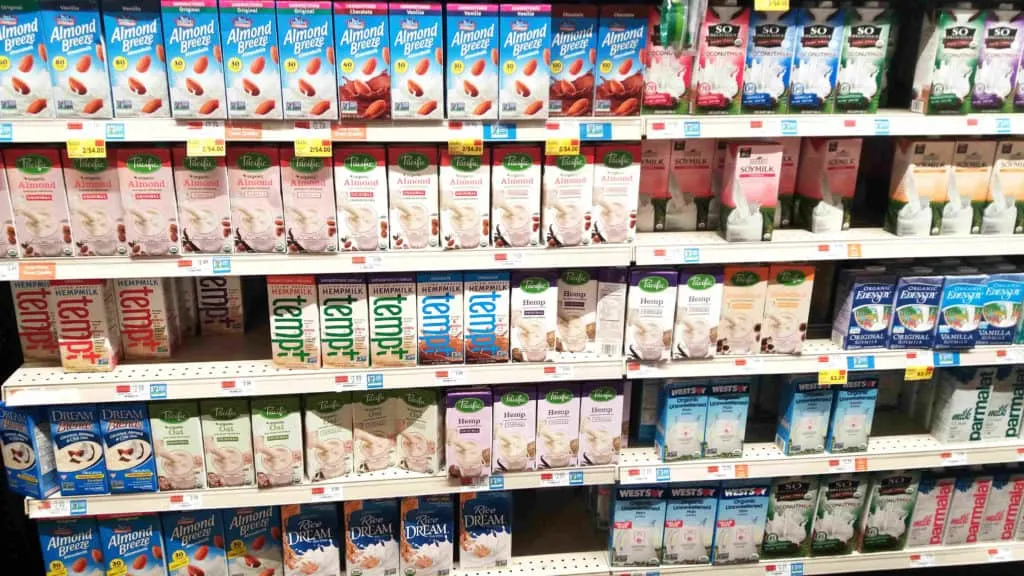
Because of this, I often encourage people to compare both sections of the store rather than automatically reaching for the shelf-stable carton.
Stores like Whole Foods Market often carry several brands that focus on shorter ingredient lists and higher percentages of the actual nut, seed, or grain.
My Personal Rule
When comparing plant milks, I usually look for:
✓ Unsweetened when possible
✓ A recognizable ingredient list
✓ No unnecessary flavors
✓ No added oils unless they serve a specific purpose
✓ The actual nut, seed, or grain near the top of the ingredient list
If I find a product made from water, almonds, and salt, that’s generally closer to what I would make in my own kitchen.
And when I have the time, I still prefer homemade versions because they give me complete control over the ingredients.
Homemade Vs Store-Bought: When Each Makes Sense
I use both.
Homemade May Be A Better Fit If:
- you want complete control over ingredients
- you prefer fewer additives
- you’re sensitive to gums or emulsifiers
- you enjoy making food from scratch
Homemade versions are often surprisingly simple. Here are a few ideas for Dairy Free Milk Alternatives.
Store-Bought May Be A Better Fit If:
- convenience is important and
- you need consistent results for coffee or baking
Sometimes practicality matters too.
Not everyone wants to make plant milk every week, and that’s okay.
How To Choose The Best Non-Dairy Milk For Your Needs
For Smoothies
If you’re buying plant milk regularly, the refrigerated section often contains some of the least processed options available. Brands such as MALK and Forager Project use relatively simple ingredient lists without the gums, emulsifiers, oils, flavors, and stabilizers commonly found in many shelf-stable products. While they’re usually more expensive and have a shorter shelf life, they’re often closer to what you would make at home.
Personally, I often skip store-bought milk altogether for smoothies. Instead, I just add a handful of nuts or seeds (such as hemp seeds, almonds, or cashews) directly to the blender with water and pulse a few times to create a quick, rough homemade milk. Then I add the remaining smoothie ingredients and blend until smooth. It’s an easy way to get more of the naturally occurring fiber, healthy fats, protein, and plant compounds that are often reduced or removed in commercial plant milks.
For Coffee
For coffee, the situation gets trickier because the qualities that make a milk foam well are often the same reasons manufacturers add oils, emulsifiers, and stabilizers.
If café-style foam is the goal, a barista blend like Oatly Barista Edition or Ripple Original may perform better, but typically comes with a longer ingredient list (rapeseed/canola oil, emulsifiers, acidity regulators, stabilizers). So there’s a trade-off.
And yes you can opt for cleaner brands mentioned above but they won’t create café-style foam as you expect.
For Baking
The best plant milk combination for baking is cashew milk mixed with soy milk or coconut milk. Cashew milk provides a neutral, creamy texture that mimics whole dairy, while coconut milk adds richness and a mild, pleasant flavor. Together, they deliver the ideal fat content and moisture needed for tender baked goods
For the “cleanest” options, look for brands that are organic, completely free of gums, emulsifiers, and oils like Elmhurst as example as one of the cleaner shelf-stable brands.
When I need yogurt, I often use Cocojune Yogurt, then use it in recipes like my Gluten-Free Dairy-Free Yogurt Muffins or served as breakfast with homemade granola.
My Practical Approach
When I buy non-dairy milk, I usually ask four questions:
- Is it unsweetened?
- Does the ingredient list make sense to me?
- Does it fit the purpose I’m buying it for?
- How do I feel after consuming it regularly?
Over time, I’ve become less interested in marketing claims and more interested in understanding what is actually inside the package.
A product can’t be perfect, but when something becomes part of your daily routine, ingredient quality needs to matter more.
Store-bought non-dairy milks can absolutely have a place in a healthy diet, especially when convenience is important. At the same time, understanding the ingredients helps you make choices that better align with your goals, values, and health priorities.
Rather than focusing on the claims on the front of the carton, I encourage you to turn it around and look at what’s actually inside. The closer a product is to the original food, the easier it is to understand what you’re getting.
For me, that often means choosing unsweetened, minimally processed options, using whole nuts and seeds in smoothies, and making homemade versions when practical. Small choices like these may not seem significant in isolation, but over time they can make a meaningful difference in the overall quality of your diet.
If you enjoyed this guide, you’ll probably enjoy my newsletter too, I’ll send new articles straight to your inbox!
If You’re New To Dairy-Free Eating
You may also find these resources helpful:




If you were to bring a line of oatmilk shakes to market, and had no choice but to use preservatives, what would you advise to use? Thanks in advance!
I think it’s absolutely unessential to use preservatives in any plant milks. The shelf-life will be shorter, but it’s possible.