
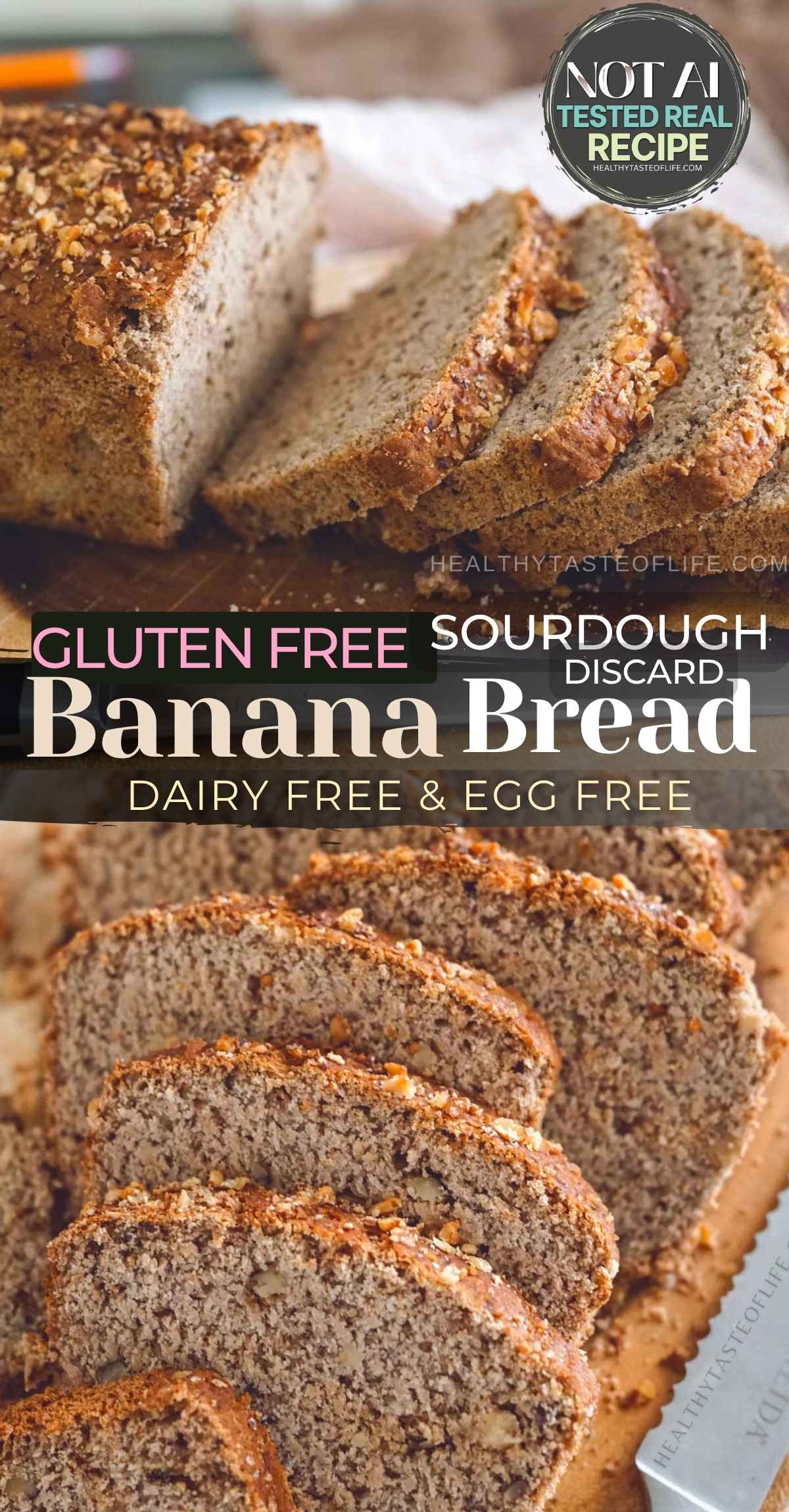
Gluten-Free Sourdough Banana Bread (Soft, Moist & Eggless)
This gluten-free sourdough banana bread has the soft, moist and tender crumb I want from a classic banana bread, with plenty of banana flavor and a little crunch from walnuts.
It’s also egg-free, dairy-free and made without xanthan gum. Thick dairy-free yogurt keeps the crumb moist and tender, while ground flax and a small amount of whole psyllium husk give the batter enough structure without making the loaf heavy or gummy.
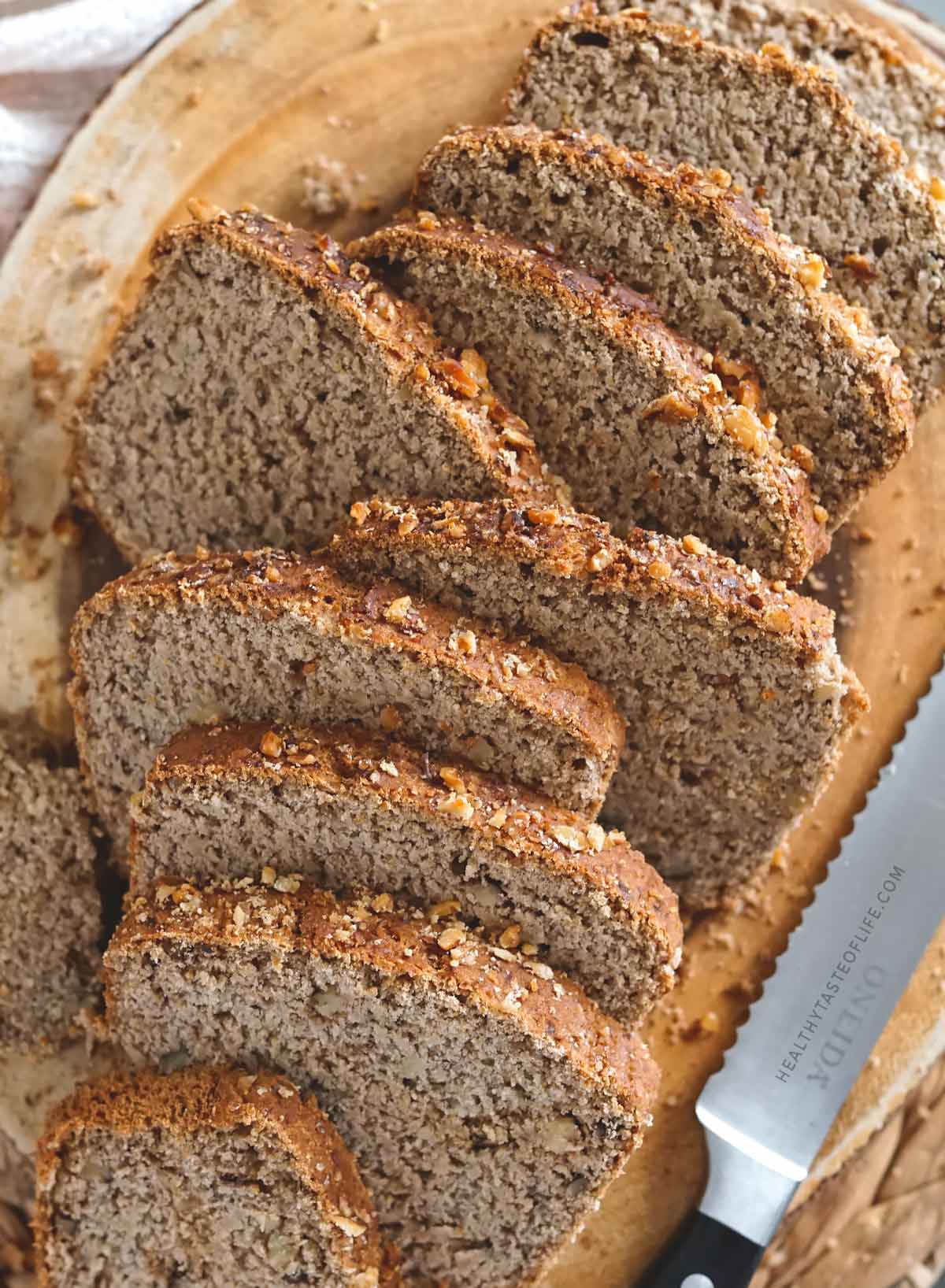
You can make it two ways: use active sourdough starter or discard and bake it right away as an easy quick bread, or use an active starter and give the batter several hours to naturally ferment before baking.
Prefer a more rustic whole-food banana bread? Try my vegan gluten-free sourdough banana bread with no added sugar. That version uses individual oat, tigernut and cassava flours with dried fruit and contains no eggs, oil, butter, yogurt, psyllium or gums.
Why This Banana Bread Is So Soft and Tender
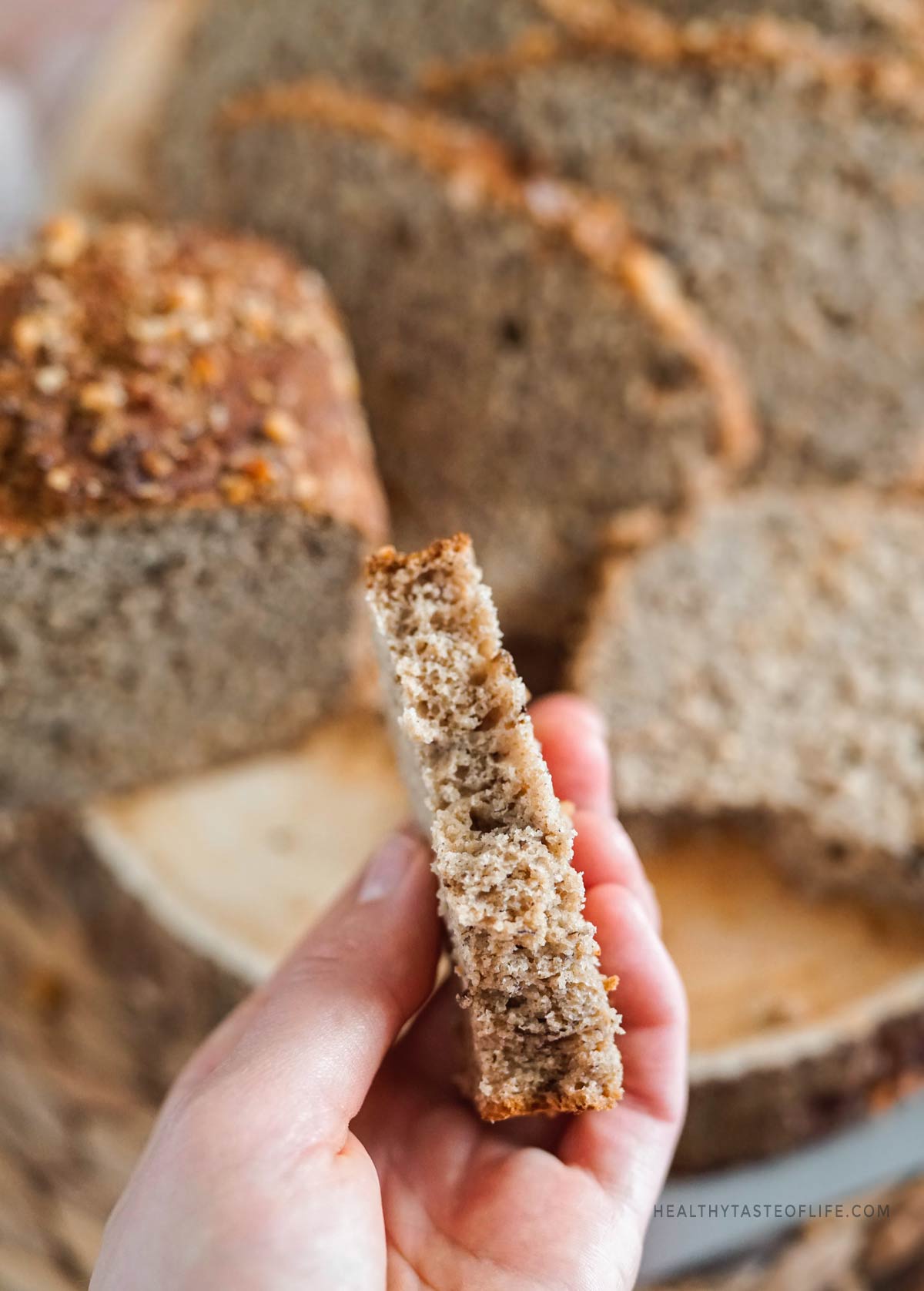
This recipe is intentionally different from my other sourdough banana bread. Here I’m going for the familiar texture of a classic banana bread: soft, moist, tender and slightly cake-like rather than dense or bread-like.
A few ingredients make the difference:
- Thick dairy-free yogurt adds moisture and gives the crumb a softer feel.
- My gluten-free flour blend is better suited to tender baked goods than the individual whole-food flours I use in my other banana bread.
- Ground flax + whole psyllium husk replace some of the structure normally provided by eggs and gluten.
- Ripe bananas add moisture, natural sweetness and softness.
- A little melted dairy-free butter gives the loaf a more traditional banana-bread mouthfeel.
- Sourdough starter adds moisture and subtle flavor without making the bread taste strongly sour. Also a great way to use your discard.
- Baking soda + baking powder provide reliable lift when making the quick version.
The result is an eggless gluten-free banana bread that still slices cleanly but feels soft rather than dry or crumbly.
Ingredients You’ll Need
- Ripe Banana: Use very ripe bananas, ideally yellow with plenty of brown spots. You’ll need about 1 cup mashed banana, which is approximately 3 small to medium bananas.
- Gluten-Free Sourdough Starter: For the quick-bread method, you can use either an active gluten-free sourdough starter or sourdough discard. Because baking soda and baking powder provide the main lift, the starter doesn’t need to be at peak activity. For the naturally fermented method, however, use a healthy active starter, since it will be responsible for the rise. If you’re just getting started with gluten-free sourdough, see my gluten-free sourdough starter guide.
- Dairy-Free Yogurt: I use a thick Greek-style coconut yogurt. The yogurt is one of the ingredients that gives this banana bread its particularly moist, tender crumb while allowing the recipe to remain dairy-free.
- Water or Plant Milk: Either works. Plant milk can add a little more richness, but water keeps the ingredient list simple.
- Gluten-Free Flour Blend: I use my homemade gluten-free pastry flour blend here. Unlike the individual hearty flours used in my other banana bread, this blend is better suited to the softer, finer crumb I’m looking for in this recipe. Different commercial gluten-free blends can absorb liquids differently, especially if they already contain xanthan gum or another binder, so results may vary with substitutions.
- Psyllium Husk: This recipe uses whole psyllium husk, not psyllium powder. Only a small amount is needed. Psyllium helps hold moisture and gives the eggless gluten-free batter enough cohesion to rise and slice well without using xanthan gum.
- Ground Flax Seeds: Grind the flax seeds into a fine meal before adding them. Flax works together with the psyllium to provide binding and structure in place of eggs.
- Dairy-Free Butter: A small amount of melted dairy-free butter adds richness and helps create the softer, more traditional banana-bread mouthfeel I wanted here.
- Walnuts: Crushed walnuts give the soft loaf some contrast and are a classic pairing with banana. You can leave them out or replace them with dairy free chocolate chips.
Two Ways to Make This Sourdough Banana Bread
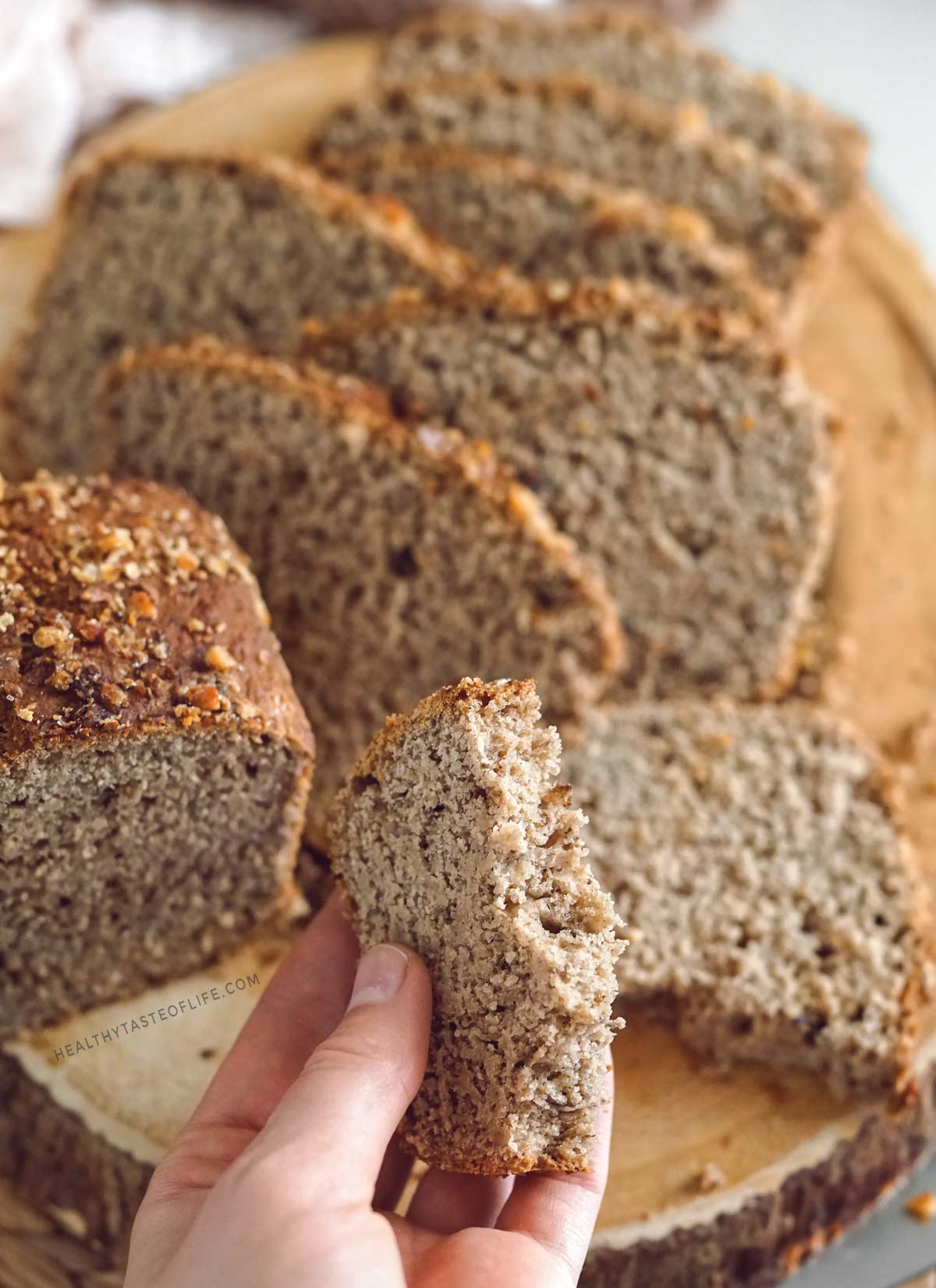
One of the useful things about this recipe is that you don’t have to decide between a discard recipe and a naturally fermented sourdough recipe. You can make either.
| Ingredient | Quick Method | Naturally Fermented |
|---|---|---|
| Starter | Active or discard | Relies on active sourdough starter |
| Baking soda | Yes | No |
| Baking powder | Yes | No |
| Lemon juice/ACV | Yes | No |
| Resting time | None, immediate rise | About 4–5 hours |
| Texture | Softer, lighter, more cake-like crumb | Slightly denser, more well-bonded crumb and a bit darker color |
| Best if you prefer | Classic same-day quick banana bread | Natural fermentation and a more bread-like texture |
Quick Sourdough Discard Method
This is the easiest option when you have ripe bananas and sourdough discard to use.
The baking soda, baking powder and acid provide the lift, so you can mix the batter and bake it immediately.
Naturally Fermented Method
If you prefer to rely on your active sourdough starter, leave out the baking soda, baking powder and acid.
Let the prepared batter sit for approximately 4–5 hours, or until you can see that it has become lighter, aerated and has slowly risen. Then bake as usual.
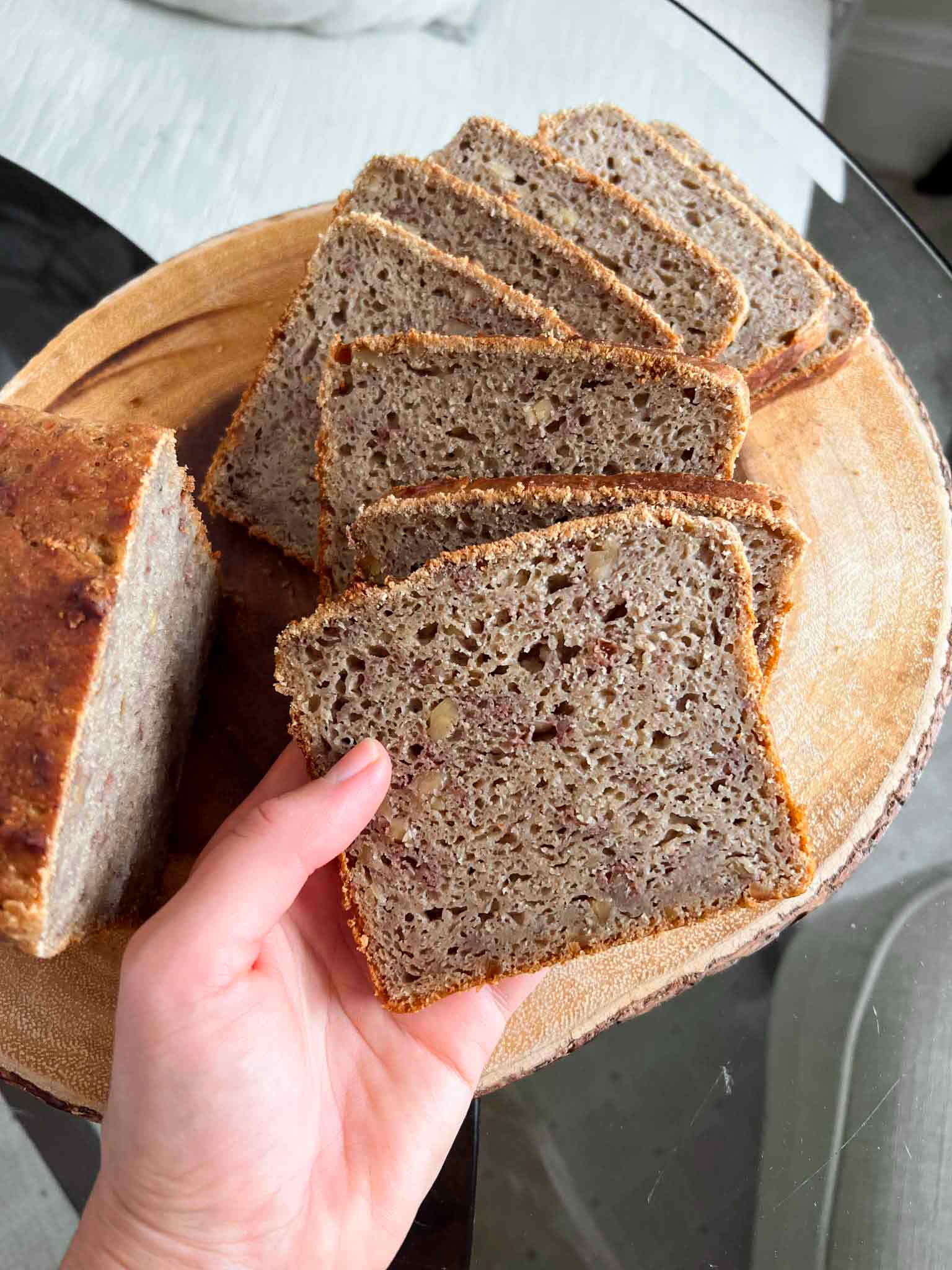
How to Make Gluten-Free Sourdough Banana Bread
1. Mix the Wet Ingredients With Psyllium
Mash the bananas in a large mixing bowl. Add the dairy-free yogurt, water or plant milk, melted dairy-free butter and vanilla. Mix until evenly combined.
Then add the gluten-free sourdough starter and the psyllium husk and mix to form a smooth, uniform gel before it meets the flour.
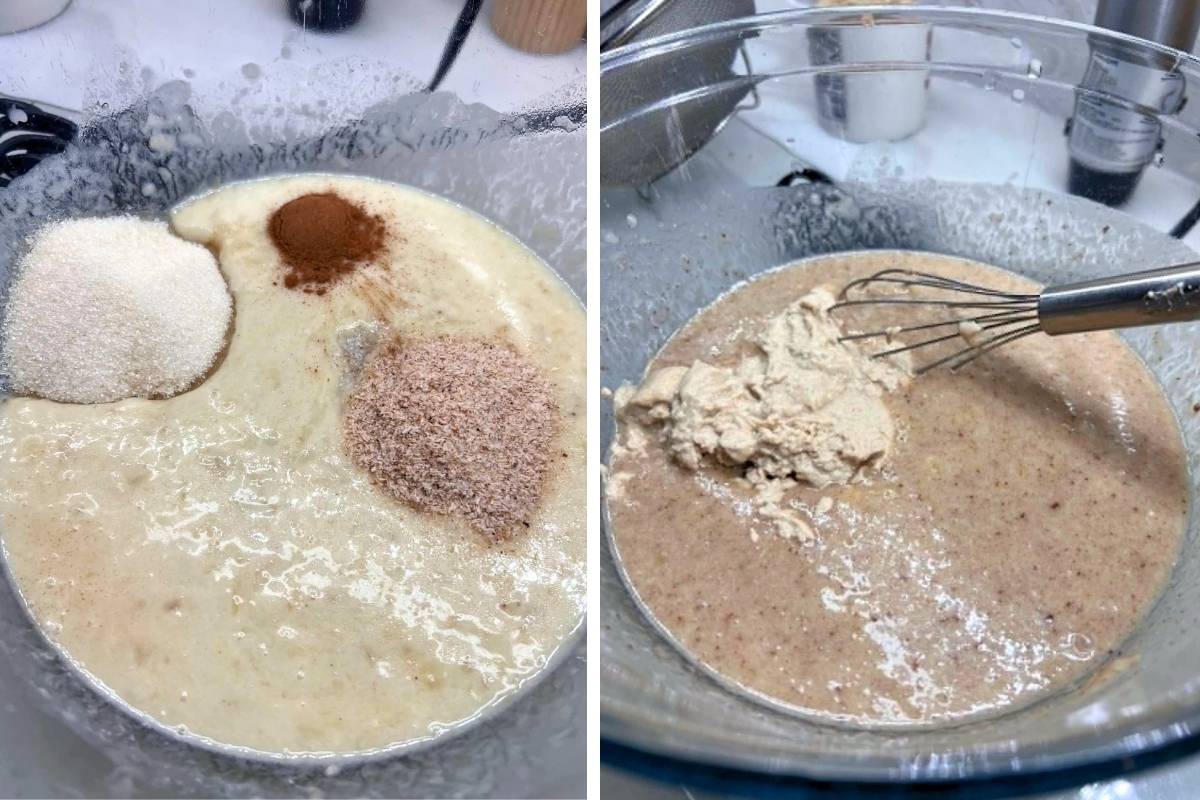
2. Add the Rest of Dry Ingredients
- Add the gluten-free flour blend, sugar (if you didn’t add it already), ground flax, cinnamon, sea salt and crushed walnuts at the end.
- Mix just until you have an evenly combined batter. Avoid excessive mixing while making sure there are no dry patches of unmixed flour.
- You should end up with a thick, semi-pourable batter consistency (slightly thicker than pancake batter).
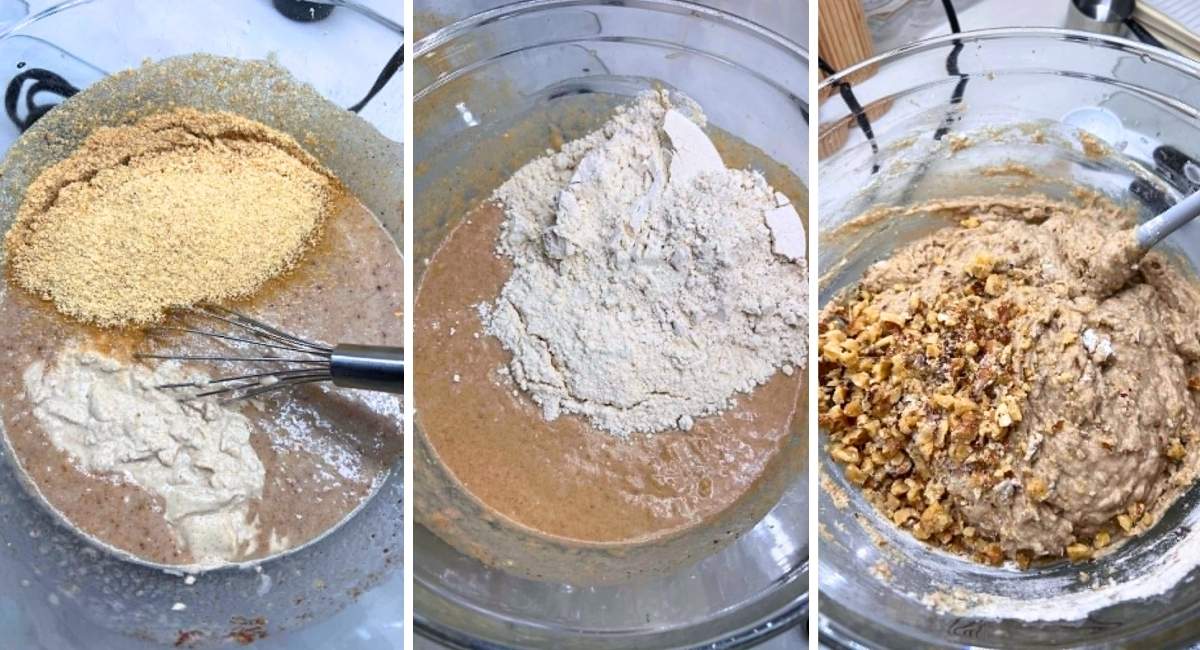
3. Choose Your Method
For the quick version, add the baking soda + baking powder, followed by the lemon juice or apple cider vinegar.
Mix briefly to distribute them through the batter. Transfer immediately to your prepared loaf pan. And finish with some extra crushed nuts on top.
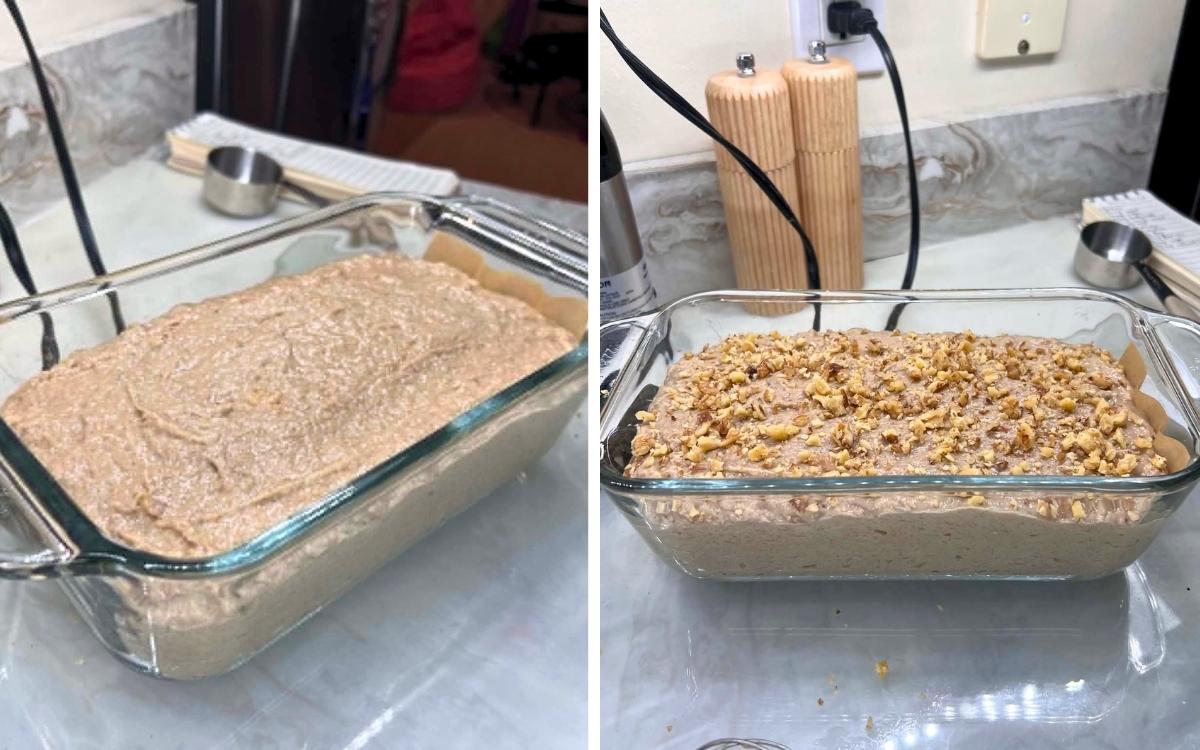
For the naturally fermented version, don’t add the baking soda, baking powder or acid. Transfer the batter to the loaf pan, cover and leave at room temperature for approximately 4–5 hours, until visibly lighter and slightly risen.
4. Bake
Bake at 350°F (175°C) for approximately 50–55 minutes, or until the center is baked through.
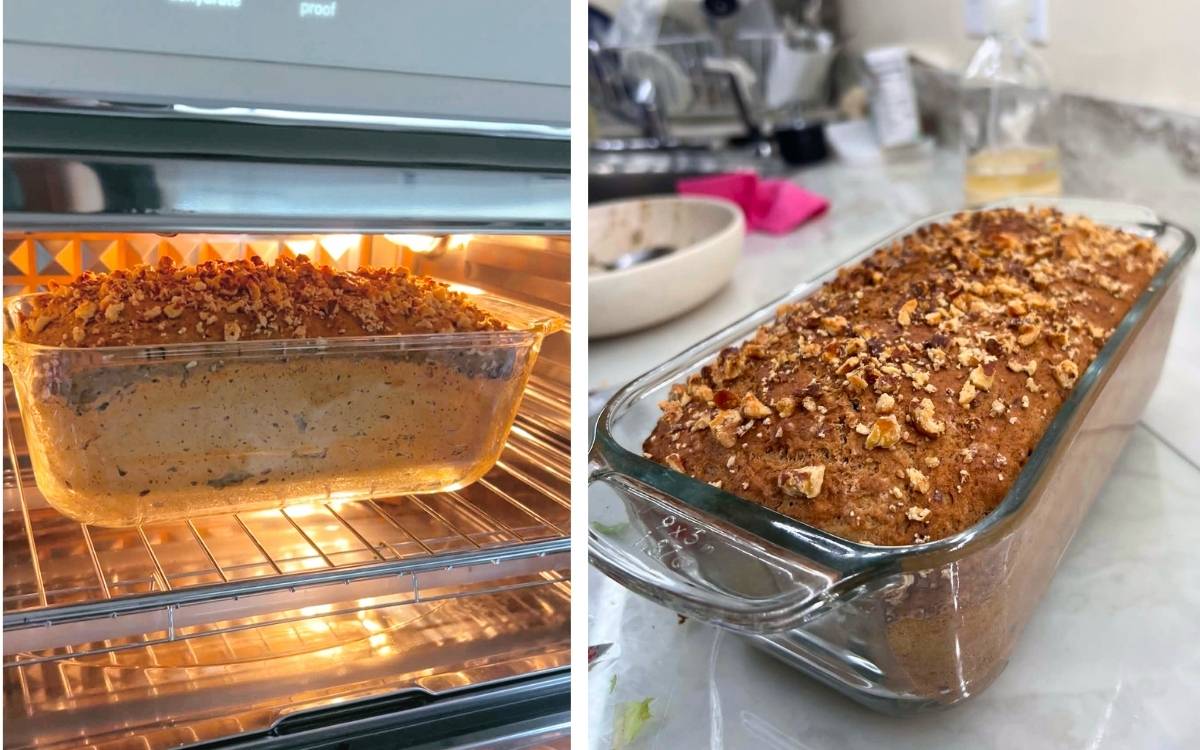
A toothpick inserted into the center should come out clean or with a few moist crumbs rather than wet batter.
5. Cool Before Slicing
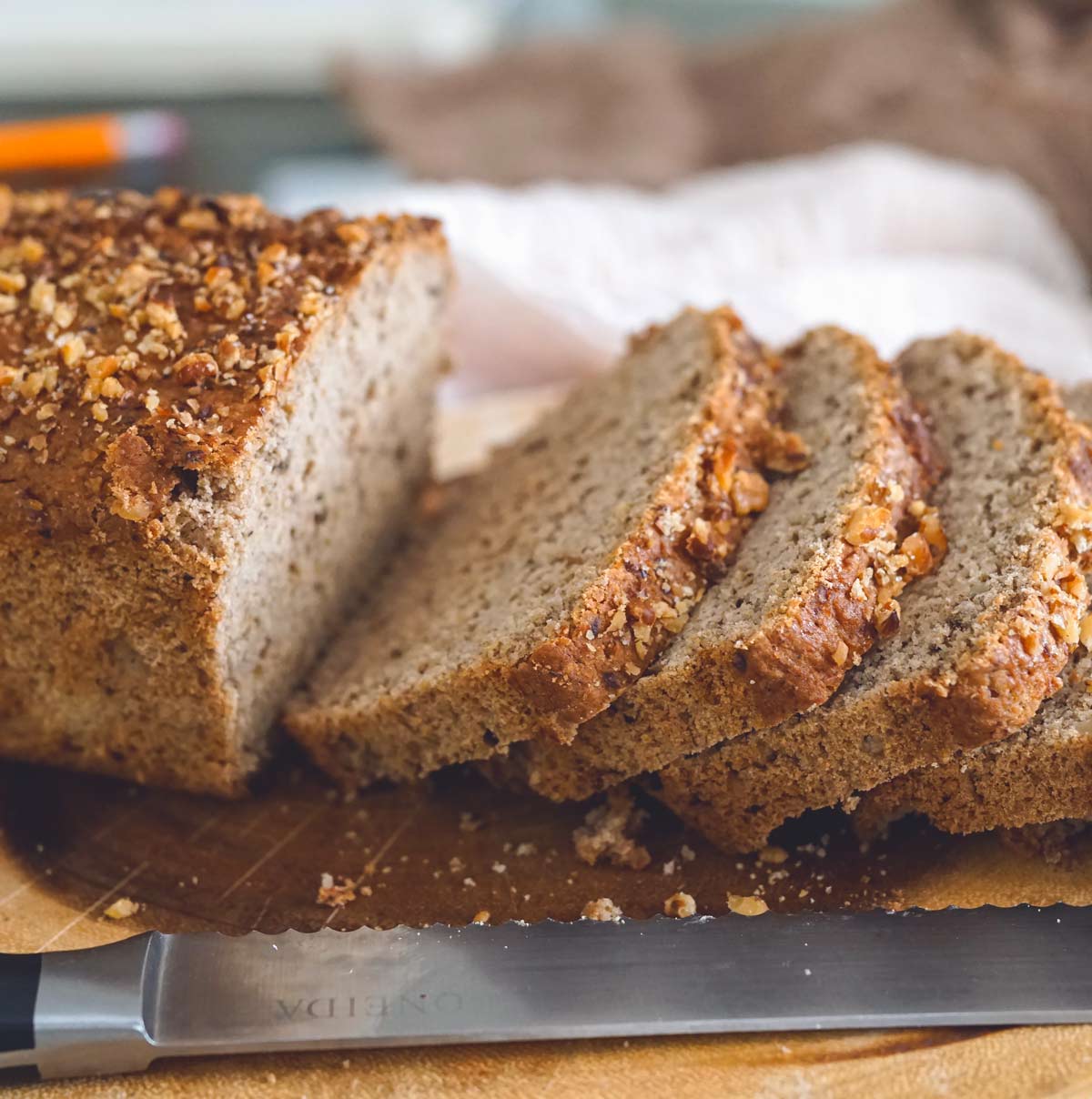
Allow the banana bread to cool before slicing.
The crumb continues to set as it cools, which is especially important in gluten-free and egg-free baking.
Chocolate Chip Sourdough Banana Bread Variation
Chocolate chips work very well with the soft banana crumb in this recipe. For a gluten-free sourdough chocolate chip banana bread, replace the ½ cup walnuts with approximately ½ cup dairy-free chocolate chips.
Or use a combination of the two:
- ¼ cup crushed walnuts
- ¼ cup dairy-free chocolate chips
Fold them into the batter just before transferring it to the loaf pan. You can also sprinkle a few chocolate chips over the top before baking.
The quick/discard method is especially convenient for this variation when you want an easy same-day banana bread.
Can You Make Banana Bread Without Eggs?
Yes, and this recipe was developed that way from the beginning rather than adapting an egg-based recipe afterward.
The combination of ground flax, whole psyllium husk and the gluten-free flour blend gives the batter enough binding and structure without eggs.
The yogurt, banana and small amount of butter provide the moisture and richness that eggs would normally contribute to the crumb.
Why I Don’t Use Xanthan Gum Here
You don’t need xanthan gum in this banana bread.
Instead, I use a small amount of whole psyllium husk together with ground flax. They help bind the gluten-free batter and retain moisture while still allowing the finished loaf to have a soft, tender texture.
If your commercial gluten-free flour blend already contains xanthan gum, keep in mind that the result may be different from the gum-free flour blend used to develop this recipe.
Tips for a Soft, Moist Banana Bread
✤ Don’t Add Too Much Flour: Gluten-free flour is easy to pack into a measuring cup. For the most consistent result, spoon the flour into the measuring cup and level it rather than scooping directly from the container.
✤ Use Thick Greek Style Yogurt: A very watery yogurt changes the hydration of the batter.
Greek-style coconut yogurt or another thick dairy-free yogurt works particularly well.
✤ Use Whole Psyllium Husk: Psyllium powder absorbs water more aggressively than whole husk and isn’t a direct 1:1 substitute here.
✤ Don’t Overmix: Once the flour is added, even if the batter looks a bit rugged or uneven, mix only until the dry lumps of flour are incorporated.
✤ Don’t Overbake: The loaf should be completely baked through, but leaving it in the oven much longer than necessary can take away some of the moist, tender texture.
✤ Let It Cool: The bread is very soft when hot. Give the crumb time to set before slicing for cleaner pieces and a better texture.
What Does Sourdough Do in Banana Bread?
In this recipe, sourdough starter isn’t there to make the banana bread taste like a loaf of sourdough bread. It contributes moisture and a subtle depth of flavor while also giving you a practical way to use gluten-free sourdough discard.
When using the quick method, the baking soda and baking powder provide most of the immediate rise. When using the fermented method, an active starter is given several hours to slowly aerate the batter instead. The end result will be different.
Storage
- Let the banana bread cool completely before storing. Keep it covered at room temperature for about 2–3 days, or refrigerate it for longer storage.
- For freezing, slice the cooled loaf first and place the slices in a freezer-safe container or bag. Individual slices are easier to thaw or warm as needed.
Gluten-Free Sourdough Banana Bread (Soft, Moist, Eggless)
Ingredients
Wet Ingredients
- 3 small to medium ripe bananas - mashed (about 1 cup)
- ½ cup thick dairy-free yogurt - such as Greek-style coconut yogurt
- ½ cup water - or plant milk
- 1 cup gluten-free sourdough starter - active or discard*
- 2 tbsp dairy-free butter - melted
- 1 tbsp vanilla extract
Dry Ingredients
- 2⅓ cups gluten-free flour blend - I used my flour mix
- ⅓ cup sugar
- 3 tbsp flax seeds - finely ground
- 1 tbsp whole psyllium husk - not powder
- 1 tsp cinnamon
- ½ tsp sea salt
- ½ cup crushed walnuts
For the Quick Rise Method
- 1 teaspoon baking soda
- 1 teaspoon baking powder
- 2 teaspoons lemon juice - or apple cider vinegar
Instructions
Mix the Batter
- Preheat the oven to 350°F (175°C) if making the quick version. Prepare a loaf pan. Use parchment paper if needed.
- Mash the bananas in a large mixing bowl.
- Add the dairy-free yogurt, water or plant milk, sourdough starter, melted butter and vanilla. Mix until evenly combined.
- Then add the psyllium husk and ground flax seeds so they could absorb the liquid and form an uniform gelatinous mixture.
- After this add the rest of dry ingredients: gluten-free flour blend, sugar, cinnamon and salt. Add the crushed walnuts after giving a short mix.
- Mix just until the batter is evenly combined. The batter should look thick and slightly heavier than regular cake batter or muffin batter with no visible dry pockets of flour.Finish with a sprinkle of more crushed walnuts on top if desired.
Quick Sourdough Discard Method
- Add the baking soda and baking powder.
- Add the lemon juice or apple cider vinegar and gently mix just until incorporated.
- Transfer the batter immediately to the prepared loaf pan and smooth the top.
- Bake at 350°F for 50–55 minutes, or until the center is baked through and a toothpick comes out clean or with a few moist crumbs.
- Cool before slicing.
Naturally Fermented Method
- Use an active gluten-free sourdough starter and omit the baking soda, baking powder and lemon juice or vinegar.
- Transfer the batter to the prepared loaf pan and smooth the top.
- Cover and leave at room temperature for approximately 4–5 hours, or until the batter looks visibly lighter, slightly aerated and has slowly risen.
- Toward the end of fermentation, preheat the oven to 350°F (175°C).
- Bake for approximately 50–55 minutes, or until cooked through.
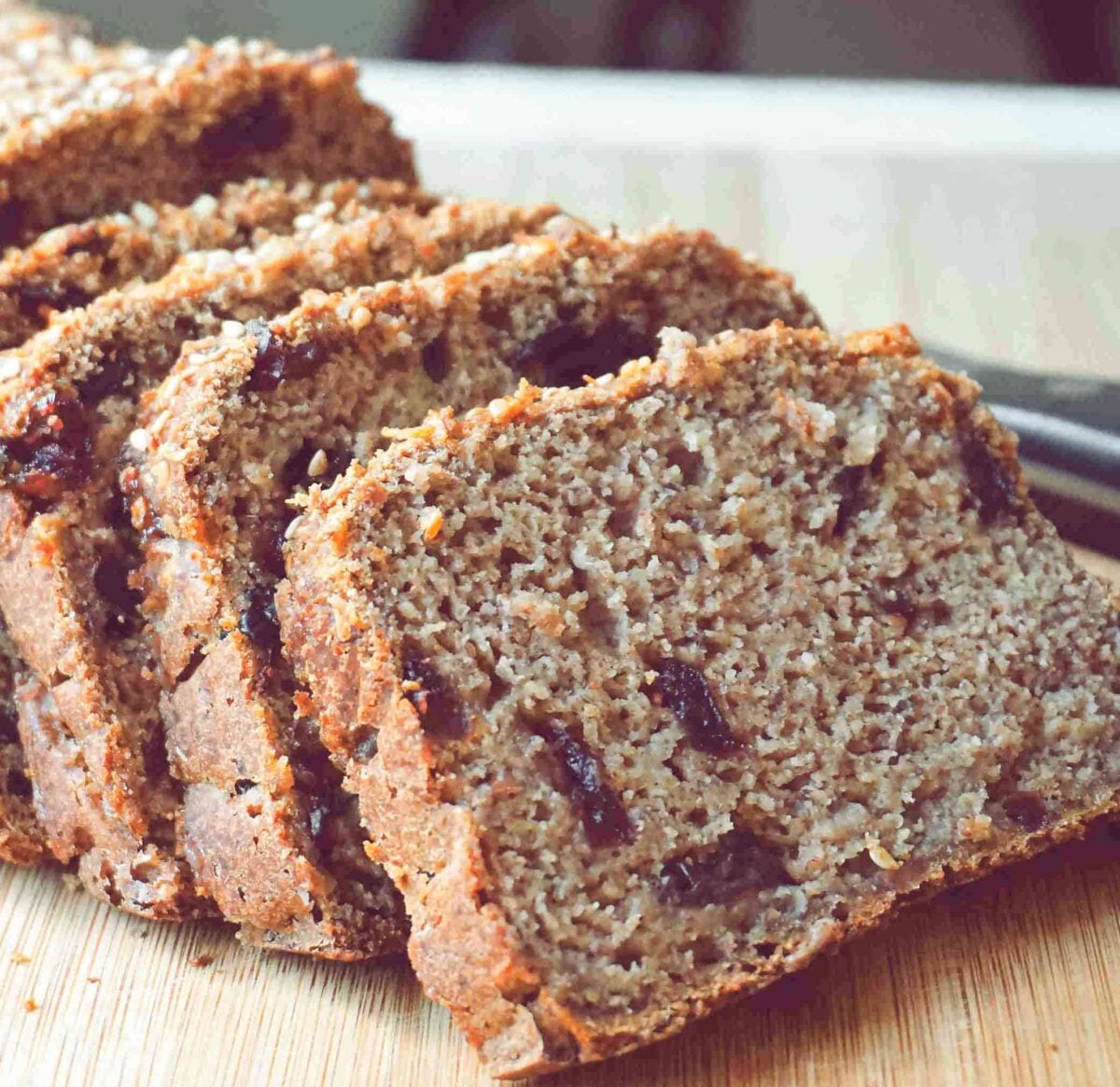
- Cool before slicing. See image in the post how the texture turns out different than the quick method.
Notes
Nutrition
The information shown is an estimate provided by an online nutrition calculator.
FAQs
Yes. Active starter or discard both work for the quick version because baking soda and baking powder provide the additional rise.
Use active starter for the naturally fermented method.
The sourdough flavor is almost unnoticeable and complements the banana rather than dominating it.
The strength of the sourdough flavor will vary depending on the time of fermentation.
Possibly, but results can vary considerably between blends. This recipe was developed using my gluten-free pastry flour blend, along with flax and whole psyllium husk. If your store-bought blend already contains xanthan gum, it may change the texture.
No. This recipe was developed without xanthan gum. Whole psyllium husk and ground flax provide the additional structure needed for the gluten-free, eggless batter.
This recipe uses whole psyllium husk. Powder is much more concentrated and absorbs liquid differently, so I don’t recommend replacing it measure-for-measure.
I wouldn’t omit it. This banana bread has no eggs or xanthan gum, so psyllium is one of the ingredients helping hold the crumb together.
For a banana bread specifically developed without psyllium, use my vegan gluten-free sourdough banana bread with no added sugar instead.
Yes. There are no eggs in the recipe. Ground flax and psyllium husk provide binding, while banana and yogurt help keep the crumb soft and moist.
Thick yogurt adds moisture and contributes to the soft, tender crumb. I use dairy-free Greek-style coconut yogurt so the banana bread remains dairy-free. If dairy isn’t an issue for you, a similarly thick plain yogurt should behave the same, although the recipe was developed using dairy-free coconut yogurt.
Yes. Replace the walnuts with about ½ cup dairy-free chocolate chips or use half walnuts and half chocolate chips.
Choose this recipe if you want a softer, tender, more traditional banana-bread texture made with yogurt and a gluten-free flour blend.
Choose my vegan sourdough banana bread with no added sugar if you want a more rustic whole-food loaf made without added sugar, eggs, oil, butter, yogurt, psyllium or gums.
More Banana & Gluten-Free Baking Recipes
©HealthyTasteOfLife. Content and photographs are copyright protected and need prior permission to use. Copying and/or pasting full recipes to other websites and any social media is strictly prohibited. Sharing and using the link of this recipe or article is both encouraged and appreciated!