

Gluten Free Dairy Free Crepes + Filling Ideas
These gluten free dairy free crepes are thin, soft and flexible enough to fold, roll or fill without cracking. The batter comes together quickly in a blender using whole-grain gluten-free flours, almond flour, unsweetened plant milk and avocado oil, with no xanthan gum or tapioca starch needed.
They’re a more wholesome homemade crepe option while still having the soft, flexible texture you want from a traditional crepe. Keep them neutral for savory fillings or add vanilla for a sweeter version.

Below you’ll also find dairy free sweet and savory crepe filling ideas, plus the small details that make a big difference with gluten-free crepes – how thin the batter should be, how hot to keep the pan and how to stop the finished crepes from drying out.
Use them for breakfast, brunch, dessert or as soft wraps for a quick lunch or dinner.
Why You’ll Love These Crepes
- Thin and flexible: easy to fold or roll around sweet and savory fillings.
- Gluten and dairy free: made without wheat flour, milk or butter.
- No xanthan gum: the eggs and balanced flour combination provide the structure.
- Wholesome ingredients: made with rice, sorghum and almond flour, unsweetened plant milk and avocado oil instead of relying on a highly refined starch-heavy blend. No tapioca or potato starch.
- Easy blender batter: blending creates a smooth batter quickly.
- Sweet or savory: leave out the vanilla for a completely neutral crepe.
- Make-ahead friendly: refrigerate or freeze them for quick meals later.
Ingredients You’ll Need
- The base recipe is simple: a gluten-free flour blend, eggs, plant milk, fat and salt.
- I use white rice flour for lightness, sorghum flour for body and almond flour for tenderness. Eggs provide most of the structure, while avocado oil (or melted dairy-free butter) keeps the crepes soft and flexible.
- Use an unsweetened plant milk such as almond, cashew or another neutral milk. Vanilla is optional and best reserved for sweet crepes.
Exact measurements are in the recipe card below.
Jump to Recipe
Best Gluten Free Flour for Crepes
Gluten-free crepes need enough structure to flip without tearing but should still be soft enough to bend after cooking.
For this recipe, I use a combination of white rice flour, sorghum flour and almond flour. The blend gives me a better balance than using one of these flours alone: rice flour keeps the batter light, sorghum adds body and almond flour contributes fat and tenderness.
If you need a nut-free version, tigernut flour can replace the almond flour.
For Even Softer, More Traditional Crepes
You can replace the ¾ cup total flour in this recipe with ¾ cup of my gluten free pastry flour mix.
Because that blend contains some starch, it produces a softer, more pliable crepe with a texture closer to a traditional wheat-flour crepe. When I use that blend, 2 eggs are usually enough instead of 3.
Commercial gluten-free flour blends can also behave differently from one another because their starch, gum and whole-grain ratios vary. If you use another blend, expect to adjust the liquid based on the batter consistency rather than relying only on the exact measurement.
For a grain-free alternative with a different flour combination, see my almond flour crepes.
How to Make Gluten Free Dairy Free Crepes
1. Blend the Batter
- Add the rice flour, sorghum flour, almond flour, plant milk, eggs, avocado oil, salt and vanilla, if using, to a blender.
- Blend until completely smooth.
- At this stage the batter may look quite thin. That’s normal.
- Let it rest for at least 30 minutes at room temperature. You can also make the batter ahead and refrigerate it overnight.
- During the resting time, the flours absorb liquid and the batter becomes slightly thicker.
- Before cooking, blend or whisk it again.

What Should Crepe Batter Look Like?
This is one of the most important parts of making thin gluten-free crepes.
- The batter should pour in a thin, continuous stream and spread across the pan almost immediately when you tilt it. Think closer to half-and-half cream than pancake batter.
- Because gluten-free flours continue absorbing moisture as the batter rests, don’t be surprised if a batter that looked perfect initially becomes too thick 30 minutes later.
- If it no longer spreads quickly around the skillet, add plant milk or water a tablespoon at a time and mix again.
- A batter that is too thick makes heavy, pancake-like crepes. A batter that is excessively watery can produce fragile crepes that tear easily.

2. Preheat the Pan
- Use a lightweight 9- to 10-inch nonstick skillet if possible. I prefer a ceramic-coated nonstick pan for crepes because they release easily, slide out cleanly, and need very little added oil.
- Heat it over low to medium-low heat for several minutes before cooking the first crepe.
- Lightly grease the surface with oil and wipe away any obvious excess.
- Too much oil can actually make the batter slide around instead of coating the pan evenly.
3. Pour and Swirl Immediately
- Pour about ¼ cup or slightly less of batter into the center of the heated skillet.
- Immediately lift the pan and tilt it in a circular motion so the batter spreads into a very thin layer.
- The faster you spread it, the thinner the finished crepe will be.
- Cook for about 1–2 minutes, until the surface no longer looks wet and the edges begin to dry and release from the pan.
- Flip and cook the second side briefly, just until set and lightly golden.

Let the First Crepe Tell You What to Adjust
The first crepe is useful because it tells you whether the pan temperature and batter consistency are working together.
- If the batter sets before you have time to swirl it across the pan, your skillet may be too hot or the batter may be too thick.
- If the crepe stays very pale and sticks even after the surface has set, the pan may not be hot enough.
- If it tears when you try to flip it, give it a little more time. Gluten-free crepes are much easier to turn once the first side is fully set and the edges begin releasing naturally.
- As you continue cooking, the pan gradually gets hotter, so you may need to lower the heat slightly or flip later crepes sooner.
- This is more useful than relying on one exact stove setting because every pan and stove behaves differently.
4. Stack and Cover the Crepes
- Transfer each cooked crepe onto a plate and stack the next one directly on top.
- Cover the stack with a clean kitchen towel or lid while you cook the remaining batter.
This small step makes a noticeable difference with gluten-free crepes. The residual warmth and moisture soften the surface as the crepes sit, making them more flexible after cooking than they were straight from the pan.
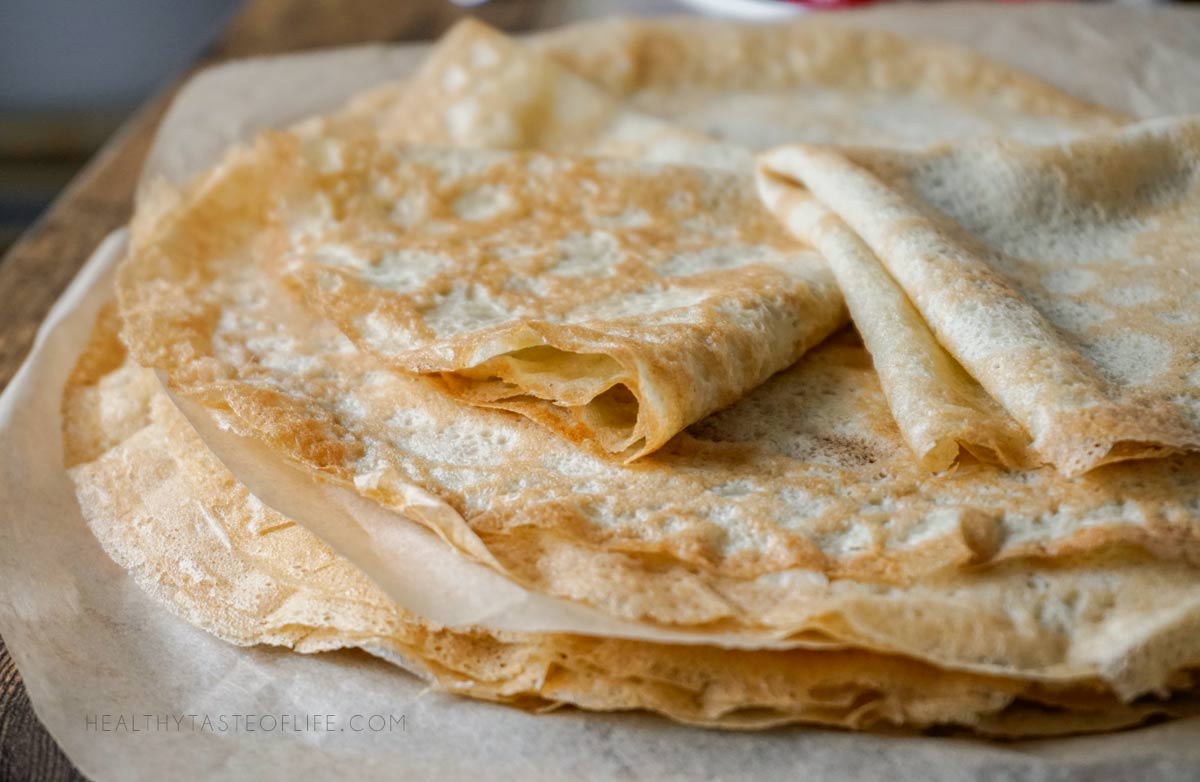
Don’t leave the finished crepes uncovered for a long time, especially if you plan to roll or fold them.

Tips for Thin, Flexible Gluten Free Crepes
➤ Rest the Batter. Give the batter at least 30 minutes before cooking. The gluten-free flours hydrate during this time, which changes both the thickness and how evenly the batter cooks.
➤ Adjust After Resting. The final consistency matters more than blindly keeping the original liquid measurement. Different flour brands absorb slightly different amounts of moisture, so add a little more plant milk or water when needed.
➤ Don’t Overheat the Pan. High heat sets the batter before it can spread and can make the finished crepes dry and crisp rather than soft and bendable.
➤ Use Enough Fat. The avocado oil or dairy-free butter in the batter contributes to tenderness and flexibility. I don’t recommend simply eliminating it.
➤ Keep the Stack Covered. Warm crepes soften slightly while resting together. This is particularly helpful when you’re making them ahead for wraps or filled crepes.
➤ Don’t Judge the Whole Batch by Crepe #1. The first one is often the test crepe. Once you adjust the heat and batter consistency, the rest usually cook much more evenly.
Sweet and Savory Gluten Free Crepe Filling Ideas
One reason I make these crepes often is that the same neutral batter can go in completely different directions.
- For savory crepes, omit the vanilla.
- For sweeter breakfast or dessert crepes, add vanilla to the batter and choose fruit, dairy-free cream, nut or seed butter, chocolate or another lightly sweet filling.

Sweet Dairy Free Crepe Filling
One of my original fillings for these crepes is a cashew-coconut espresso cream made with soaked cashews, coconut cream, maple syrup, lemon juice and a little coffee. Blend it until smooth and refrigerate until thick, preferably overnight. I used this in my mocha cake as well.
I like it with banana and cherries, but berries work well too.
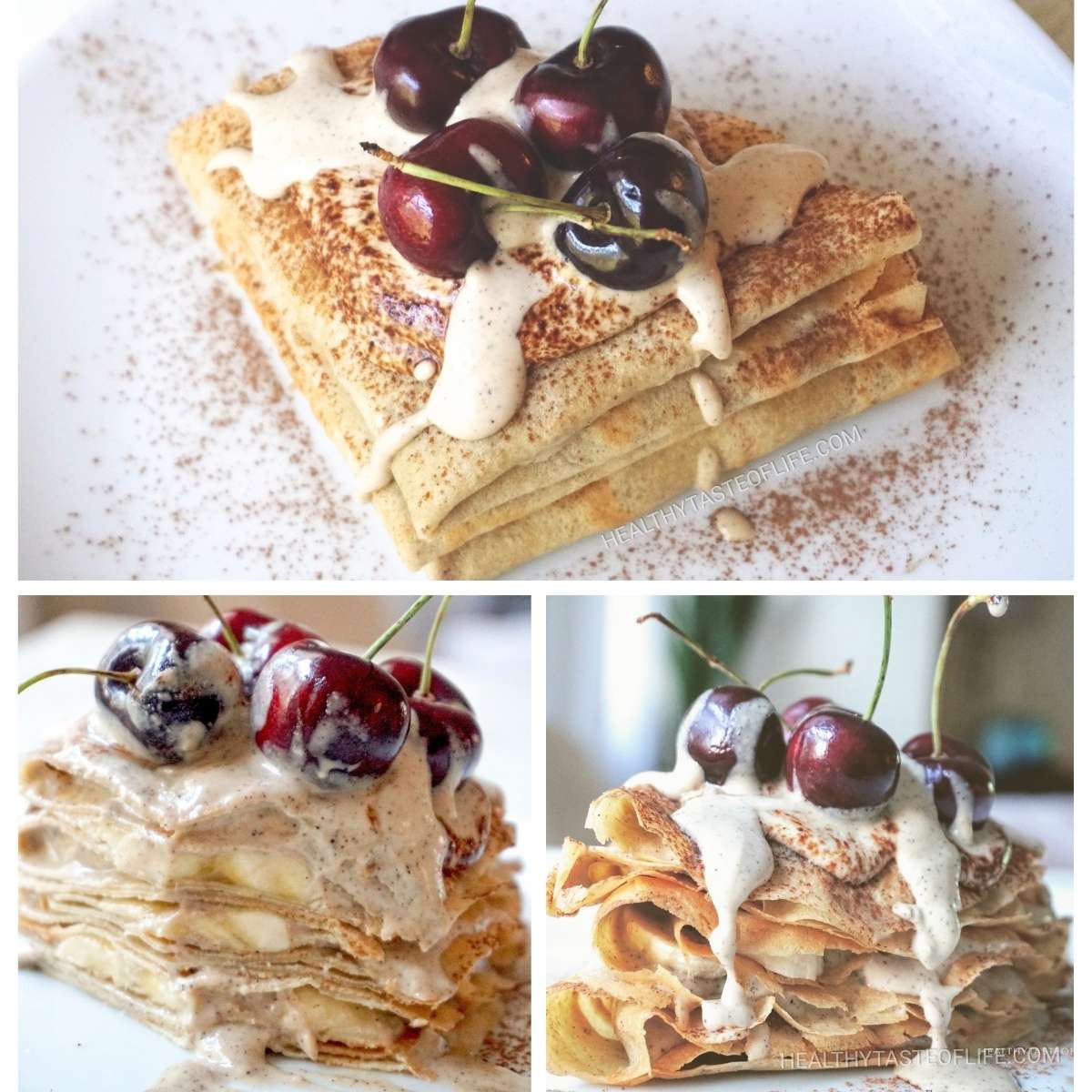
Other easy combinations include:
- banana with almond or peanut butter;
- berries with thick dairy-free yogurt;
- cinnamon apples;
- strawberries with dairy-free chocolate;
- or fruit with coconut whipped cream.

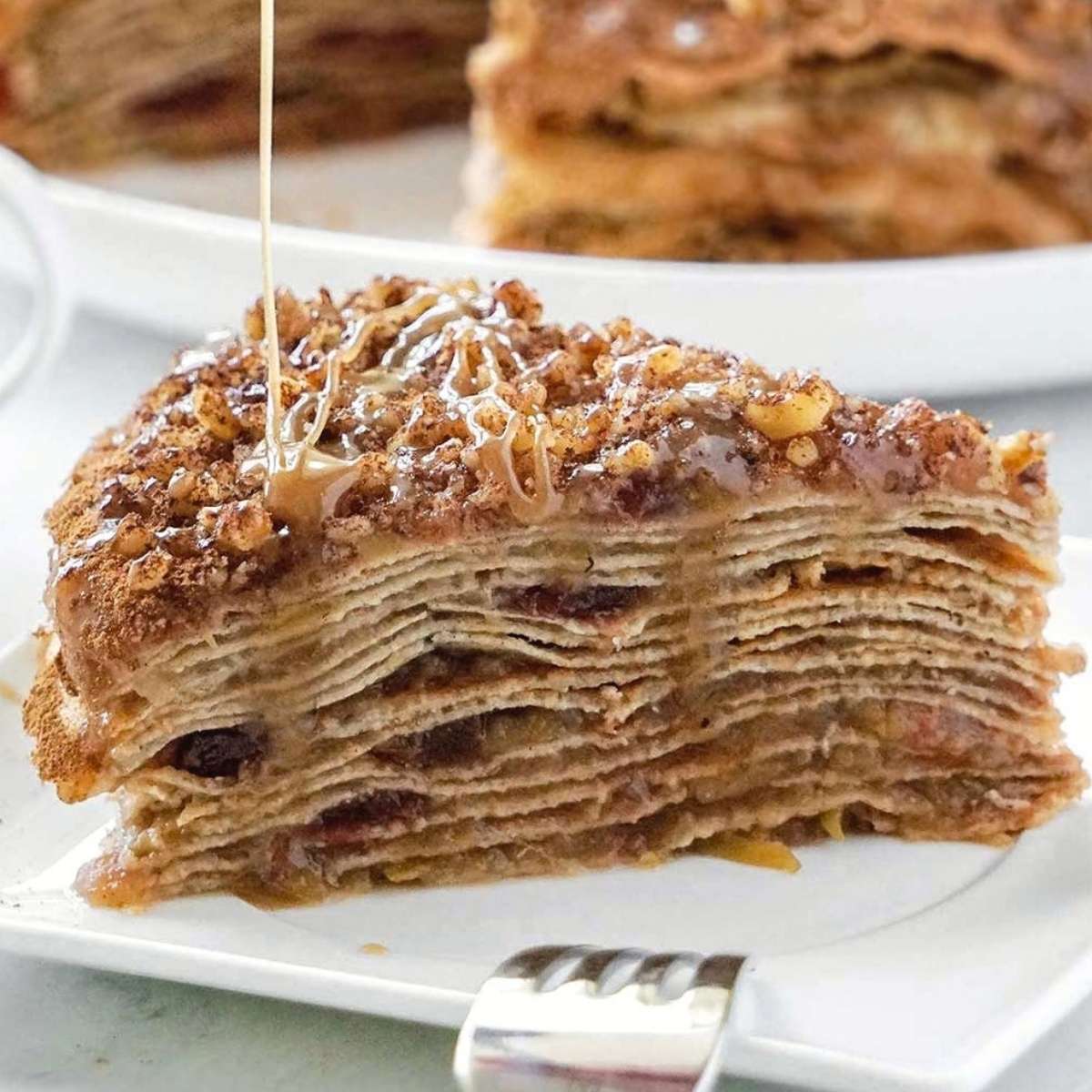
For a more festive layered dessert, use thin crepes to make my apple crepe cake with caramel sauce or this strawberry crepe cake.
Savory Gluten Free Crepe Filling
My savory version combines ground beef, mushrooms, onion and carrot with spices. I cook the filling until the vegetables are tender and the beef is fully cooked, then let it cool slightly before filling the crepes. I like to finish these with a creamy avocado sauce.

You could also fill savory crepes with:
- chicken and mushrooms,
- smoked salmon and cucumber,
- eggs with avocado,
- sautéed vegetables,
- or leftovers from dinner.
If you want another sauce to spoon over savory crepes, these creamy gluten free dairy free dressings give you several options.
Ways to Fold Crepes
How you fold them depends mostly on the filling.
- For a thin spread, fruit or dessert filling, fold the crepe in half and then into quarters.
- For a larger savory filling, place it toward the lower center of the crepe, fold in the sides and roll it into a packet. This keeps chunky fillings from falling out and makes the crepes easier to eat or pack.
- For crepe cakes, leave the crepes completely flat and layer them with a thin amount of filling between each one.
Make Ahead, Storage and Freezing
Make Ahead
- You can make the batter the night before and refrigerate it.
- Because the batter thickens while resting, blend or whisk it again before cooking and add a little extra liquid if necessary.
- Cooked crepes can also be prepared ahead. Keep them stacked and covered until completely cool, then refrigerate.
- They work especially well as make-ahead wraps, which is why I also include crepes in my gluten free dairy free breakfast ideas.
Storage
- Once cool, place the crepes in an airtight container or reusable storage bag.
- For longer storage, place small pieces of parchment between the crepes so they separate easily. Refrigerate for 2–3 days.
Freezing
- Crepes freeze well. Layer parchment between them, seal well and freeze for up to 2–3 months.
- Thaw overnight in the refrigerator. Reheat briefly in a skillet, microwave for about 20–30 seconds, or warm several together in a low oven.
- Avoid overheating them when reheating, the goal is to warm them, not crisp them.
Frequently Asked Questions
Traditional crepes commonly contain milk and butter, so they are not automatically dairy free.
These crepes use plant milk and avocado oil or dairy-free butter instead.
Yes. Plant milk works very well in crepes. Water can also work, although the crepes will have less richness and may brown less. If using water, keep the fat in the recipe rather than removing both the milk and oil.
No. This recipe does not use xanthan gum. The eggs provide important binding and structure, while the combination of rice, sorghum and almond flour gives the crepes enough body to cook and flip.
A few things can cause tearing. The batter may not have rested long enough, the crepe may be too thin to support the filling, or you may be trying to flip it before the first side has fully set. If the batter seems watery and the crepes remain fragile even when fully cooked, let the batter sit a little longer before adding more flour.
Gluten-free flours continue absorbing liquid after mixing. That’s why the batter may be noticeably thicker after its 30-minute rest or after sitting in the refrigerator overnight. Simply add a little plant milk or water until it flows easily again.
Yes. Carton coconut milk can be used like other plant milks. If using rich canned coconut milk, dilute it with another plant milk or water so the batter remains thin enough to spread quickly. Also coconut milk may make the crepes firmer once chilled because the fat solidifies when cold. For softer, more flexible make-ahead crepes, I prefer a lighter plant milk such as almond, cashew or oat milk.
Use tigernut flour instead of almond flour and choose a nut-free plant milk. O use my gluten free flour mix, which is also nut free.
Yes. If dairy isn’t an issue for you, absolutely.
Made these crepes? Tap the ⭐⭐⭐⭐⭐ rating in the recipe card and leave a quick comment below to tell me how they turned out. If you tried a different flour or filling combination, share that too – it may help someone else making the recipe.
For a completely grain-free version, try my almond flour crepes next.

Gluten Free Dairy Free Crepes (Sweet or Savory)
Ingredients
Gluten Free Dairy Free Crepes
- ¼ cup white rice flour - or cassava flour
- ¼ cup sorghum flour
- ¼ cup almond flour - or tigernut flour
- 1¾ cup plant milk - nut or seed milk
- 3 medium eggs
- ⅓ cup avocado oil - or melted vegan butter
- ¼ tsp salt
- 1 tsp vanilla extract + 2 tbsp sugar - if you make sweet crepes
Optional Sweet Cashew-Coconut Filling
- ½ cup cashews - raw, soaked
- ½ cup coconut cream
- 1 tsp espresso powder or instant coffee,
- ¼ cup maple syrup
- 2 tbsp non dairy milk
- 1 tbsp lemon juice
- pinch of salt
- 1 banana and a few cherries - topping
Optional Savory Beef and Mushroom Filling
Optional Avocado Sauce
- 1 large avocado - ripe
- 2 stalks of scallions - chopped
- 1 handful of parsley
- juice of half a lime
- ⅓ tsp sea salt
- 1 tbsp coconut aminos
- 2 tbsp water - to dilute, plus more if needed
Instructions
Make The Crepe Batter
- Mix all ingredients in a blender to form the batter. Blend until completely smooth.
- Let the batter rest for at least 30 minutes at room temperature. It will thicken slightly as the flours absorb liquid.
Cook The Crepes
- Preheat a 9- or 10-inch nonstick skillet over low to medium-low heat for several minutes.Lightly grease the pan, then wipe away excess oil.
- Pour about ¼ cup or slightly less of batter into the center of the hot skillet.Immediately lift and rotate the pan so the batter spreads into a thin layer.
- Cook for about 1–2 minutes, until the surface has set and the edges begin releasing.Flip and briefly cook the second side until lightly golden.
- Repeat with the remaining batter.Stack the cooked crepes on a plate and keep them covered with a clean towel or lid while you finish the batch.
Make the Sweet Filling, Optional
- Add the soaked cashews, coconut cream, espresso powder, maple syrup, dairy-free milk, lemon juice and salt to a blender.Blend until smooth and creamy.
- Refrigerate until thickened, preferably for several hours or overnight.
- Fill the crepes with the cream and serve with banana, cherries or berries.
Make the Savory Filling, Optional
- Saute chopped onion with olive oil, for 2 minutes, then add the carrots and mushrooms, stir and saute for another 3 minutes.
- Add the ground beef with all seasonings, stir and cook until the meat is done.
- Let it cool before assembling the crepes. You can make it the day before if you like.
Make the Avocado Sauce, Optional
- Blend the avocado, scallions, parsley, lime juice, salt, coconut aminos and water until smooth.
- Add more water if needed to reach a pourable consistency.Serve over the savory filled crepes.
Video
Notes
Nutrition
The information shown is an estimate provided by an online nutrition calculator.




©HealthyTasteOfLife. Content and photographs are copyright protected and need prior permission to use. Copying and/or pasting full recipes to other websites and any social media is strictly prohibited. Sharing and using the link of this recipe is both encouraged and appreciated!




Can I make these crepes with regular cows milk?
Sure, just use regular milk, same proportions.
That cashew/coconut cream looks so delicious, I’ll definitely try it with my crepes next time… thanks!
Thanks, the coffee flavor makes it so delicious, you can’t even taste the coconut nor the cashews in it!
I just made them this morning, they turned out so good, my brother ate about ten of them and couldn’t stop eating..and he is a picky eater )))
I’m glad you guys liked the crepes! My husband likes them too 🙂
Wow I didn’t know that gluten free crepes without gums can look so good, I’ll definitely give them a try! Thanks.
Intestinal irritation/damage is usually the reason why people go gluten free, that’s why I don’t like to use xanthan/guar gums (common ingredient in gluten-free recipes) – they have been associated with gastrointestinal upset in some people. You can achieve good results even without them.
Can I use buckwheat flour instead of rice flour?
Sure, the color will be darker though.
Do you think it would work if I substitute buckwheat flour for the sorghum flour? Or do you know of something else that would make a good substitute for sorghum flour? I’ve never used it so I don’t know what would be similar. Thank you! I’m excited to try this recipe. It makes crepes seem not as intimidating as I’ve always thought. 😉
Sure, buckwheat flour has a similar texture, I made crepes many times with buckwheat. The only drawback is that the color is a bit darker.