

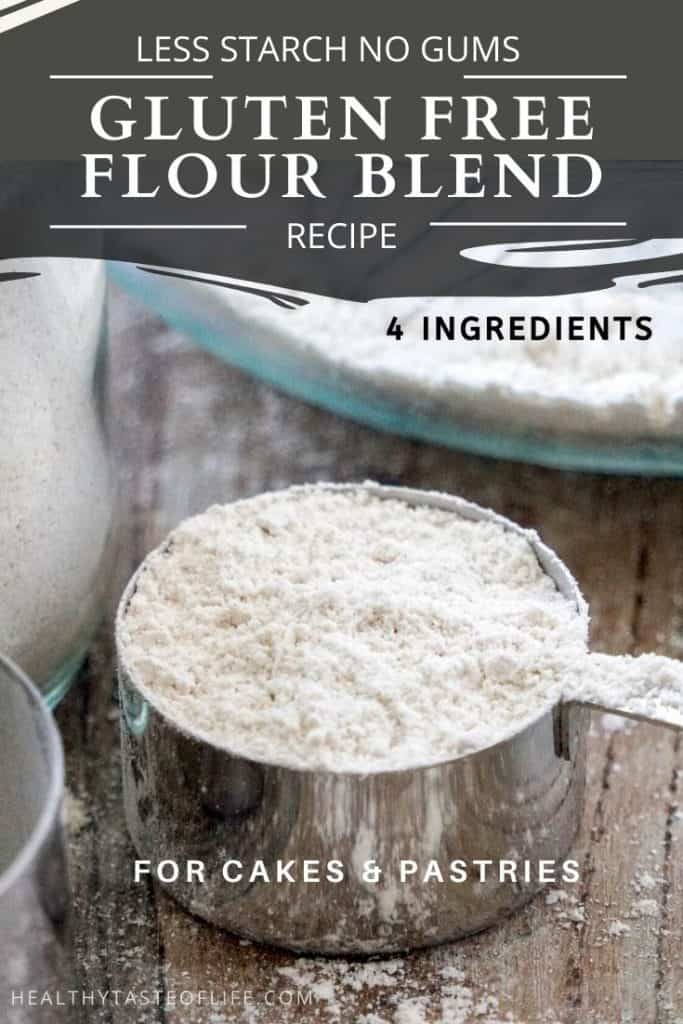
Gluten Free Pastry Flour Mix (Dairy Free, Less Starch)
Make your own gluten-free pastry flour that stays tender, light, gum-free and dairy free. This blend uses more whole-grains and less starch for a delicate crumb without potato or tapioca. Great for cakes, pie crusts, crepes, muffins, and soft cookies. Plus: easy swaps for different gluten free flours to match the same “all-purpose” feel.
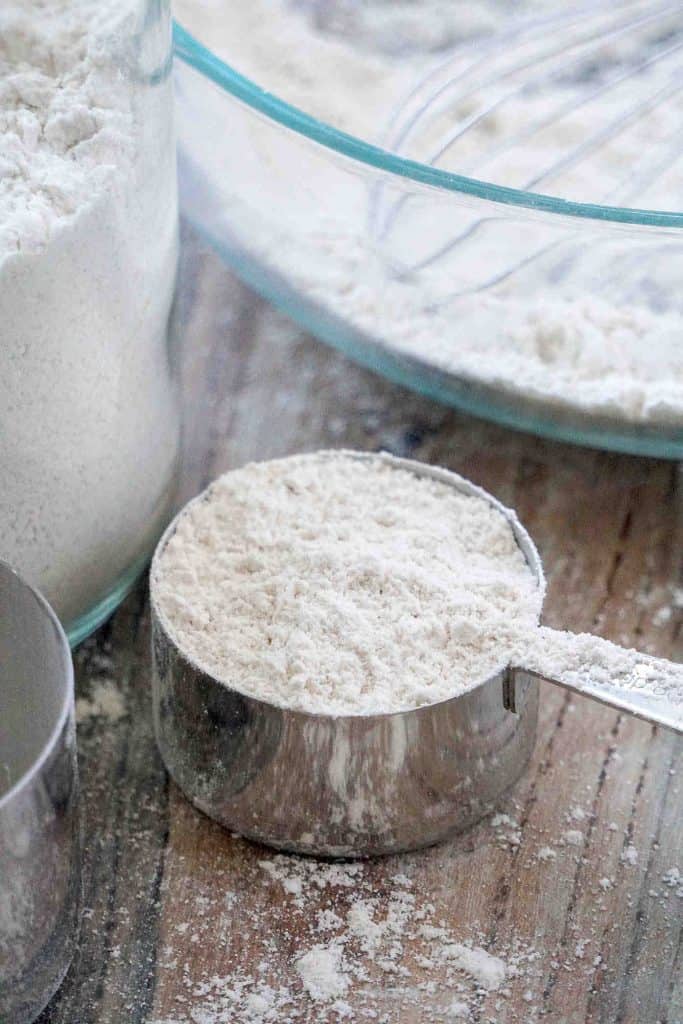
Why This Blend Works
- Texture: light, fine crumb for “pastry” results (not bready).
- Ratio: about 60–63% whole-grain to 37–40% starch keeps bakes tender without gums.
- Clean ingredients: no potato, tapioca, cornstarch, or dairy powders. Still versatile for most non-yeasted bakes.
Even though there is a large variety of gluten free flour mixes available in stores I still prefer mixing my own gluten free pastry flour recipe. It’s cheaper plus I’m avoiding those nutritionless starch flours and gums. So I can control exactly the ratio and and the quality of ingredients (I always opt for organic).
Gluten Free Flour Mix With Less Starch
Even though a gluten free pastry flour mix requires a more airy texture my preference is too use more whole grains than starches. Approximately 60% whole grain gluten free flours and 40% starch flours. I do not use potato starch, corn starch or tapioca because they are nutrition-less and usually come from genetically modified sources.
In my published cookbook I included this pastry flour mix plus 2 whole grain versions of gluten free flour blends and another grain free flour blend which I’m using throughout the book for most of my recipes. Make sure to check it out it you would like healthier gluten free baking and cooking options.
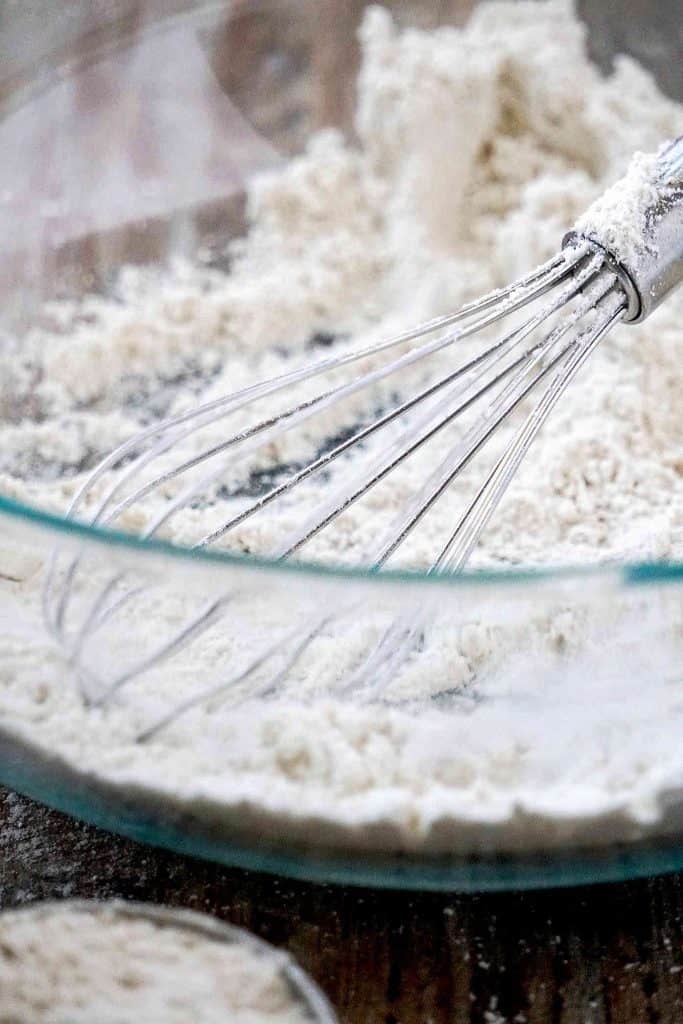
Gluten Free Pastry Flour Ingredients (Their Roles)
- Sorghum flour: mild, softly textured whole grain; adds body without grit. Sorghum flour is usually beige or white in color and is considered to be “sweet,” softly textured (smoother than rice flour) and mild-tasting. The growing gluten sensitivities and the gluten free diet trend in recent years made sorghum flour very popular. People also like it because it’s low on the glycemic index, plus high in starch, fiber and protein. For a healthier version – use sprouted flour (a bit darker in color) or for a finer grind and texture, use superfine sorghum flour.
- Brown rice flour: neutral base and light crisp edge. Brown rice has a mild flavour and texture, the tan color also gives baked goods a slightly browner look. I always opt for organic. I usually use this brown rice flour that is both organic in sprouted. Rice flour doesn’t absorb liquid and fat very well. That’s why a combination with other starches and flours will yield the best results.
- Cassava flour: whole-root flour adding tenderness; absorbs more liquid-use in balanced ratio. Cassava flour is not the same as tapioca flour. Tapioca is the bleached and extracted starch isolated from the rest of the cassava root, while cassava flour is made from the entire root. Cassava flour is very mild and neutral in flavor, it’s gluten free, grain free and offers all the taste and texture of wheat. But because it’s lighter and absorbs more liquid it’s best to use it in combination with other gluten free flours. And as with any root vegetables, it absorbs nutrients and pollutants within its vicinity, therefore it is important to choose organic cassava flour.
- Arrowroot: feather-light starch for lift and a delicate bite, it’s flavorless and is mostly used to lighten up the texture and structure in baking; clean alternative to cornstarch. I’m using organic arrowroot powder.
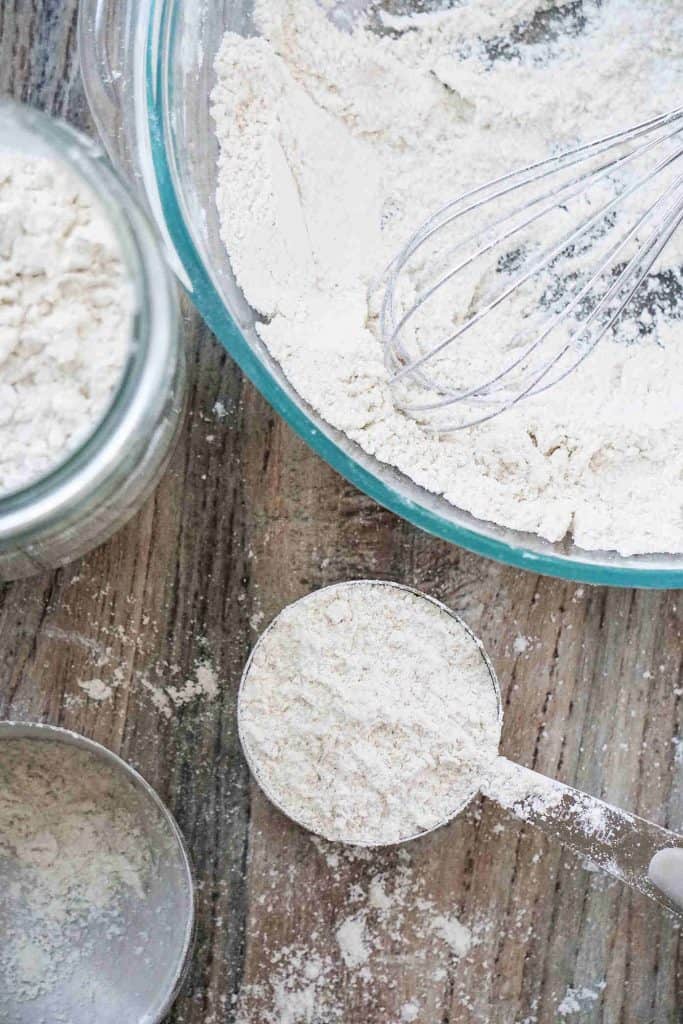
How To Use This Pastry Blend
- 1:1 with GF flour: use as a 1 : 1 replacement for flour or all-purpose gluten free flour blends: in most non-yeasted pastries (cakes, cupcakes, crepes, cookies, pie crusts).
- Leavening: add per recipe (don’t pre-mix into the jar). Gluten free flour does not rise like regular flour so you will need to add leavening agents like baking soda + an acid or baking powder.
- Binders: usually not needed; But for extra binding properties you can add 1 to 2 tbsp of golden flax meal or psyllium husk, per recipe especially when you don’t use eggs.
- Hydration tweaks: oat/buckwheat swaps can need +2–4% water; sweet-rice mixes may need slightly less in thin batters.
- Storage: You can store a portion of it in an airtight container at room temperature (up to 1–2 weeks) and refrigerate the rest for longer.
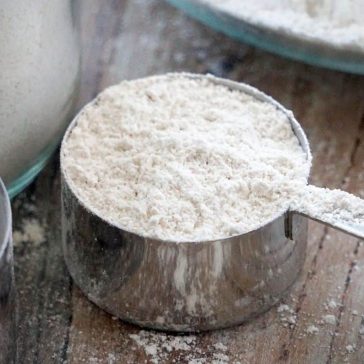
Gluten Free Pastry Flour Mix (Dairy Free, Less Starch & More Whole Grains)
Ingredients
- 1 cup (167g) brown rice flour - also sweet brown rice flour works beautifully
- 1 cup (121g) sorghum flour - choose a lighter color
- ⅔ cup (81g) cassava flour
- ⅔ cup (85g) arrowroot powder
Optional binder (see notes below)
- 2 Tbsp psyllium husk (whole) - or ~1½ Tbsp if psyllium powder;
Instructions
- Add the flours to a large mixing bowl.
- Mix until fully combined.
- Store flour mix in an airtight container in a dark cold place.
Optional
- For a simple all-purpose blend, add 1½ Tbsp psyllium husk powder (or 2 Tbsp whole husk) per 454g ( 3⅓ cups flour batch), and whisk it thoroughly into the dry mix (or gel it with the liquids for breads). I usually add it sperately because I'm not using the whole batch of flour at once.
Notes
- Recipe makes ~454 g (~3⅓ cups) total.
- For a simple all-purpose blend, add 1½ Tbsp psyllium husk powder (or 2 Tbsp whole husk) per 454g ( 3⅓ cups flour batch), and whisk it thoroughly into the dry mix (or gel it with the liquids for breads). I usually add it sperately because I’m not using the whole batch of flour at once.
- Measure flour by weight: Follow the grams listed. If using cups, fluff then spoon and level to avoid packing.
- Grind matters: Use superfine flours. If gritty, sift 1–2× (especially sorghum, oat, buckwheat).
- Arrowroot vs tapioca: Tapioca can add chew. If subbing for arrowroot, use ~95% of the weight and expect slightly more elasticity.
- Cassava note: Cassava absorbs more; too much can make dough tight. Keep to the stated grams.
Will puff pastry work with the original blend?
Classic full lamination is not going to give great results, it needs elasticity + cohesion, this mix is light and tender but has no “stretch” because there is no gluten and no gums. But rough-puff: yes, with this variant: 170 g sweet glutinous rice, 190 g superfine sorghum, 60 g cassava, 34 g arrowroot + 3 tsp psyllium powder (per 454 g flour). See post for more details.- Storage: Airtight jar, cool/dark 1–2 weeks. For longer, refrigerate or freeze; bring to room temp before using.
- Scaling formula: To scale, multiply each ingredient’s grams by your factor. Example: x1.5 batch → 167×1.5 = 251 g rice (or chosen swap), etc.
Nutrition
The information shown is an estimate provided by an online nutrition calculator.
Can I Make Puff Pastry With This blend?
Not reliably with the original mix, it tends to crack and crumble during folds. But you can use it for rough-puff (simpler lamination). See the variant below with finer grind flours, sweet rice for stickiness, and a small amount of psyllium for cohesion.
Rough-Puff Pastry Flour Variant
- 190 g sweet rice (glutinous) flour
- 170 g superfine sorghum flour (“superfine” matters)
- 70 g cassava flour
- 24 g arrowroot powder
- + Psyllium husk powder: 6 g (≈ 2 tsp)
Why these ratios work:
Sweet rice supplies “stickiness”/elastic feel for folds; superfine sorghum adds strength without grit; a small cassava portion softens bite; arrowroot keeps tenderness/snappiness, laminated rather than bready. Psyllium (~1.3% of flour) prevents cracking without gumminess.
Hydration & fat (same for both):
- Water: start 58–62% of flour = 260–280 g water per 454 g flour
- Fat: 60–65% of flour = 270–295 g cold fat per 454 g flour
- Salt: ~1.5% = 7 g (≈ 1¼ tsp fine sea salt)
Rice-Flour Alternatives
The recipe uses 1 cup / 167 g brown rice flour. Swap by weight and keep the blend’s whole-grain:starch balance. Pick one of these:
1) Millet flour (closest neutral stand-in)
- Swap: 160 g millet flour + 7 g arrowroot
- Use for: most “All-Purpose” pastry baking (cakes, crepes, tart shells).
- Notes: very neutral; that extra 7 g arrowroot restores crisp-tender bite.
2) Oat flour GF (soft, tender crumb)
- Swap: 150 g gluten free oat flour + 17 g arrowroot
- Use for: muffins, cookies, snack cakes.
- Notes: may need +1–2 Tbsp liquid per cup flour in wetter batters.
3) Light buckwheat + starch (balanced, slightly nutty)
- Swap: 125 g light (dehulled) buckwheat + 42 g arrowroot
- Use for: waffles, pancakes, rustic tart shells.
- Notes: mild nuttiness; starch addition keeps texture light.
4) Sweet rice + millet (extra binding, still not gummy)
- Swap: 90 g sweet rice (glutinous) + 77 g millet
- Use for: rolled doughs, cut-outs, crackers where cohesion helps.
- Notes: sweet rice adds chew/bind; millet prevents gumminess.
Swaps for Sorghum Flour
Swap by weight and keep your whole-grain : starch balance (~60–63% : ~37–40%) steady.
Best 1:1 (closest in taste/texture)
- Millet flour – 121 g (straight swap). Neutral, light, and the least change in color or flavor
Softer/creamier crumb
- Oat flour – 115 g oat + 6 g arrowroot. Oat is a touch heavier and more hydrating; the extra starch restores lightness. Expect to add 1–2 Tbsp liquid per cup of flour in some batters.
Slightly nutty, still light
- Light (dehulled) buckwheat – 105 g buckwheat + 16 g arrowroot. Choose light buckwheat to avoid gray tone and stronger flavor.
Fine, delicate but a bit darker
- Teff (light if possible) – 110 g teff + 11 g arrowroot. Adds gentle malty notes; great in cookies, tart shells, crepes.
Neutral & crisp (if you want more rice character)
- White rice flour – 121 g rice + optional +5 g arrowroot. Very neutral; crisp-tender edge similar to brown rice profiles.
Other workable (use when flavor suits)
- Quinoa flour – 110 g quinoa + 11 g arrowroot (rinse/sprout/dry/grind or buy deodorized to reduce bitterness)
- Tigernut (grain-free) – 115 g tigernut + 6–10 g arrowroot (sweeter, richer; great for cookies/tarts, less “pastry-fine”);
How The Full Blend Looks With Each Swap (454 g Total Target)
Original: 167 g brown rice • 121 g sorghum • 81 g cassava • 85 g arrowroot
- Millet version: 167 g brown rice • 121 g millet • 81 g cassava • 85 g arrowroot
- Oat version: 167 g brown rice • 115 g oat • 81 g cassava • 91 g arrowroot
- Light buckwheat version: 167 g brown rice • 105 g buckwheat • 81 g cassava • 101 g arrowroot
- Teff version: 167 g brown rice • 110 g teff • 81 g cassava • 96 g arrowroot
- White rice version: 167 g brown rice • 121 g white rice • 81 g cassava • 90 g arrowroot (85 + optional 5)
FAQs
For classic puff: no. The blend doesn’t have gums / starchy flours. But rough-puff: yes, switch to this variant: 150 g sweet rice, 140 g superfine sorghum, 90 g brown rice or millet, 50 g cassava, 24 g arrowroot + 6 g psyllium powder per 454 g flour. Hydrate to 58–62% water, keep everything cold, and rest between folds.
No. For rolled doughs or egg-free recipes, as a binder add ½–1 tsp psyllium powder per 150 g flour (or 1–2 Tbsp flax meal per recipe).
Millet (neutral): 160 g millet + 7 g arrowroot
Oat (softer): 150 g oat + 17 g arrowroot
Light buckwheat (balanced): 125 g buckwheat + 42 g arrowroot
Sweet rice + millet (more binding): 90 g sweet rice + 77 g millet
Millet: 121 g (1:1)
Oat: 115 g oat + 6 g arrowroot
Light buckwheat: 105 g buckwheat + 16 g arrowroot
Teff (light): 110 g teff + 11 g arrowroot
Yes. Tapioca works but adds chew; use ~95% of the arrowroot weight. Cornstarch is possible but less “clean” tasting.
Use grams. If using cups: fluff the flour, spoon it into the cup, then level it off. Fine-grind or sift 1–2× to avoid grit.

Can you sub the rice flour for another type of flour? My daughter is on a restricted diet right now and is sensitive to rice. I’ve been using cup 4 cup ancient grains flour and we were loving it, but can no longer get it from our source and not wanting to spend the up cost on shipping if I can recreate a rice free flour on my own without gums, bonus!
Hi Jess, I think millet flour would be a great substitute (closest all-purpose match (neutral, fine, not gritty) use 1:1 by weight; for tender bakes (like pancakes, crepes) you could use green banana flour, but it has a darker color.
Iam new to gluten free. What can I substitute for the Cassava flour? I am allergic to tapioca / tapioca starch,
commercial gluten free is not working for me and seems to be in almost all gluten free flour mixes. Would like to bake my own bread, ideas on a good alternative would be fantastic!
Arrowroot flour is a great alternative to cassava and tapioca.
what can i substitute for the rice flour in your gluten free flour mixture recipe? I am allergic to rice as I itch when I eat it? Thank you.
If you want to keep it’s light color just increase the amountof sorghum flour and cassava (50/50) to replace that 1 cup of rice flour. Or you can use fine ground buckwheat flour as rice flour substitution.
Will this recipe work for a chocolate bundt cake? If not, what are some suggestions? Trying for gluten free but not a must
Theoretically it should work, it depends on what other ingredients you will use.