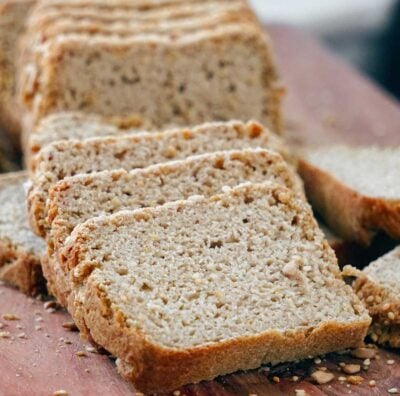
Gluten-Free Sourdough Bread (Vegan, No Yeast, No Xanthan, No Psyllium)
A sliceable gluten-free sourdough loaf that’s vegan, no commercial yeast, no psyllium and no xanthan gum. Built on sprouted whole-grain flours for a healthier and still soft crumb/toast. This recipe that doesn't require kneading shaping or a Dutch oven.
Servings 14 slices
Calories 136.5kcal
Ingredients
Activate The Gluten Free Sourdough Starter
- 1 cup gluten free sourdough starter active ~ 240 g (100% hydration)
- ½ cup brown rice flour (80g) to revive the starter
- ½ cup filtered water, room temperature 118 ml (adjust if needed)
Main Batter (Add to The Activated Starter)
- 1 cup buckwheat flour (120g) light color
- 1 cup millet flour (120g), if oat flour (100g) if sorghum flour (120g)
- ⅓ cup flax seeds (37g) ground
- 1½ cup filtered water (355 ml) or plant milk
- 1½ tsp pink salt or ¾ tsp sea salt
Optional
- 1 tbsp maple syrup (15 ml)
Instructions
Wake The Starter
- Take your (previously established) refrigerated starter and scoop 1 cup (that's all you need for this recipe).
- Feed it with brown rice flour (1/2 cup) and water (1/2 cup) mix in a large bowl; Rest in a warm place, covered: 3–5 hours until light and bubbly (depends on room temperature).Feed the rest of the starter in the jar and place it back in the fridge (or use for another recipe). See notes for troubleshooting.
Add The Rest of Ingredients and Mix The Batter
- Once the starter is awake (is bubbling regularly within a few hours of feeding) - in the same bowl, add the rest of ingredients: flours, ground flax (all sifted to prevent clumps) salt, and maple;
- Mix to a very thick, scoopable batter (like brownie batter). No kneading is required.
If your starter is already active, skip the activation step and just use 2 cups of your active starter as a base, then add the rest of ingredients (the water, the flours, salt and maple).
Pan and Proof
- In a high wall loaf tin, scrape in batter; Smooth it out with a wet spatula to produce a nice dome shape. Since the batter is very thick and sticky, I use parchment paper for my loaf pan (it has no bottom, just walls), so it's easy to remove while baking. See video.
- Add seeds or nuts on top if you want. Mist a cover (wrap, foil) or towel and cover. Proof warm until noticeably domed (about 4–5 hours, room-temp dependent).
See suggestions in the article regarding what type of pans to use.
Bake
- Preheat 425°F (220°C).
- Uncover, tent with foil (not touching batter, it's really sensitive and collapsible). Reduce to 390°F (200°C) and bake for 30 min.
- Then remove the foil (at this time you can also remove the baking tin if you used parchment paper inside, for an uniform baking on all sides) and bake for another 40-45 minutes until golden brown.
Cool And Slice
- Cool in tin 10–15 min, then on a rack until fully cool before handling. For best slices, wrap and slice next day with a serrated knife.
Video
If the video is not showing, try to disable your add blocker.
Notes
- Do not shake or touch the dough once it has risen and is ready to bake, it will collapse and lose it's shape.
- Topping bread dough with seeds and grains is a great way to develop even more crunch and depth of flavor. You can experiment with mixing seeds, nuts and dried fruit.
- For a lighter in color bread use lighter gluten free flours, read more about choosing the right flours in the post above.
- If you can't find gluten free (and organic) oat flour, use your blender to grind some rolled oats.
- If you want your gluten free sourdough bread to be more sour you can keep it 1 hour longer to ferment, otherwise you won't feel the sourness much.
- Whole grain flours tend to contain more organisms to feed the yeasts and bacteria. Switching from a whole grain flour to white flour may cause a decline in the health of the starter.
- Switch flours only when your sourdough starter has been fed for at least a week and is healthy, bubbling and growing.
- Pan choice: a tall loaf tin helps vertical lift, especially when the batter is soft and sticky.
- The ground flax seeds act as a binder and help the gluten free sourdough bread form a better structure. They are stable during baking and do not loose their health benefits like the flax seed oil does at high temperatures. I also experimented with adding more ground flax seeds (increased from 1/2 cup to 2/3 cup) and added 1/2 cup more water - turned out even better.
- More elasticity: if you add 1 tbsp psyllium husk to the batter - will add even more elasticity, flexibility and pliability to the bread). If you try it, make sure to mix it with 3 tbsp of water first.
Nutrition
Serving: 1slice | Calories: 136.5kcal | Carbohydrates: 26.5g | Protein: 4.1g | Sodium: 22mg | Potassium: 144.8mg | Fiber: 3.5g | Sugar: 1.2g | Calcium: 7mg | Iron: 1.5mg
