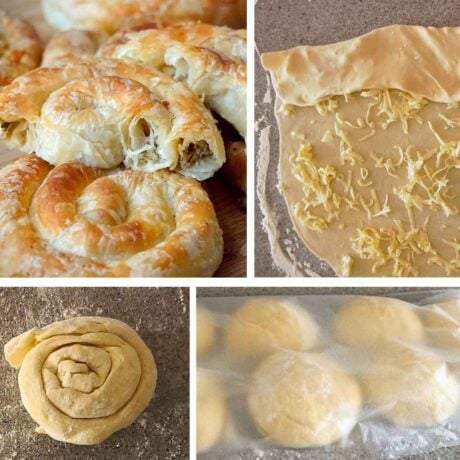
Healthy Puff Pastry (Lightened-Up Rough Puff) From Scratch
Flaky, party-size puff pastry the way my mom makes it: freeze and grate the butter onto paper-thin sheets, roll into logs, rest cold, then roll/fill/bake. Simple ingredients, big batch - consistent lift without a butter block. This healthy puff pastry dough recipe will yield about 4 laminated logs and each log can make about 4 pieces of filled pastries. Experiment with different fillings, sweet or savory, to make desserts, appetizers, breakfast, brunch and tasty meals for a large group of friends, families and holiday parties.
Servings 4 Laminated Logs
Calories 290kcal
Ingredients
For The Dough
- 8 oz ( ~ 240 ml) water room temp
- 2 tbsp (30 ml) apple cider vinegar
- 2 tbsp (27g) unflavored oil, avocado is my choice
- 2 eggs,
- ⅓ tsp sea salt
- 1¾ cups + 2 tbsp (235g) of all purpose flour plus 1-2 cups (125–250g) more for kneading/rolling
For Lamination
- 4 sticks (4 oz each) (454 g) butter unsalted (frozen)
Instructions
Make the base dough
- Freeze the butter: Place whole sticks in the freezer overnight (or at least 3 hours) so they grate cleanly. Another method: let the butter soften just enough to spread by hand, when the dough is rolled out.
- Mix the wet: In a large bowl whisk water, apple cider vinegar, oil, and eggs until smooth.
- Add dry & bring together: Add salt, then gradually add flour, mixing with a spatula until heavy, then switch to hands.
- Knead just until it holds: Turn onto a lightly floured surface and knead until the dough pulls away and feels soft, slightly tacky (not wet). If still very sticky after ~10 minutes, dust with a little flour and continue just until it holds. Do not over-knead.
Portion & cover
- Divide into fist-size pieces; knead each one into a tight, smooth ball. Cover the balls with a plastic wrap or towel while working to prevent drying.
Roll ultra-thin sheets & laminate with grated butter
- Working with one ball at a time on a lightly floured surface (and floured rolling pin), roll as thin as possible (paper thin). Across all pieces you may use about 1–2 cups extra flour total to prevent sticking.
- Grate frozen butter: Using the coarse side of a grater, cover the sheet with a light, even layer of grated frozen butter. Or if you have soft butter (not too soft, just enough to make it spreadable), smudge a thin layer all over the sheet, when the dough is rolled out.
- Roll into a log: Roll the butter-topped sheet into a tight log (quick lamination). Place in a sealed bag.
- Rest cold: Refrigerate logs at least 2 hours (overnight is best) to firm butter and set layers. Keep it cold until you're ready to fill it and bake.
Final roll, fill & shape
- Prep surface: Lightly oil the table. You'll need about 1 tbsp of oil per sheet. Keep remaining logs chilled while you work.Take one chilled log; roll into a thin rectangle; the dough should stretch easily.
- Spread filling: Add a thin, even layer of filling over (see choices in the post) about ¼–⅓ of the rectangle (the end you’ll start rolling from).
- Gently grab the dough and roll it up into a tight spiral, or fold it over (apple turnovers). Seal edges well. See video.
- Lift up the rolled dough, seam side down, and place it diagonally onto a cold sheet pan. Brush with egg wash if desired.
Bake
- Preheat fully: Heat oven to 390°F / 200°C. Start with a cold baking sheet so layers stay defined.
- Bake 30–40 minutes until puffed and evenly golden. If butter pools, blot lightly with paper towel and continue. Cool: Rest a few minutes on the pan, then move to a rack to finish crisping.
Video
In the video I'm making a double batch.
If the video is not showing, you might need to disable your ad-blocker in your browser.
Notes
Why it’s lighter: paper-thin sheets + more wraps = lift without a heavy butter block; portion sizes and thinner shapes help too.
Make-ahead & storage:
Chill/freeze logs: Keep laminated logs 3or 4 days in the fridge or up to 2 months in the freezer. Thaw overnight in the fridge before rolling and shaping. Keep dough cold during shaping for best lift. If you freeze the puff pastry dough, thaw it overnight in the refrigerator and be sure it’s pliable before working with it. When left at room temperature the butter in the dough will soften and melt. This leaves the dough sticky and really hard to work with.Temperature (keep it simple)
- Hot oven = better lift. Aim for 390–400°F. A higher temperature helps the pastry rise higher.
- Preheat fully. Heat the oven for about 20 minutes to reach 390°F before baking. If it isn’t hot enough, the butter melts instead of turning to steam; and steam is what creates lift.
- Keep the dough cold. Work quickly and chill as needed. If the butter warms, you’ll lose lamination (layers) and see butter leaking during baking.
Nutrition
Serving: 1plain pastry | Calories: 290kcal | Carbohydrates: 15.6g | Fat: 24.6g
